
 Published on and written by Cyril Jarnias
Lost in the middle of the South Pacific, the Cook Islands inspire dreams with their turquoise lagoons, tropical climate, and relaxed pace of life. But behind the postcard image, settling long-term in this archipelago of fifteen islands requires serious preparation: visas, cost of living, housing, health, school, taxation, importing your belongings… This guide gathers essential information to approach a Cook Islands expatriation project with numerical benchmarks and practical advice.
Understanding the country before you go
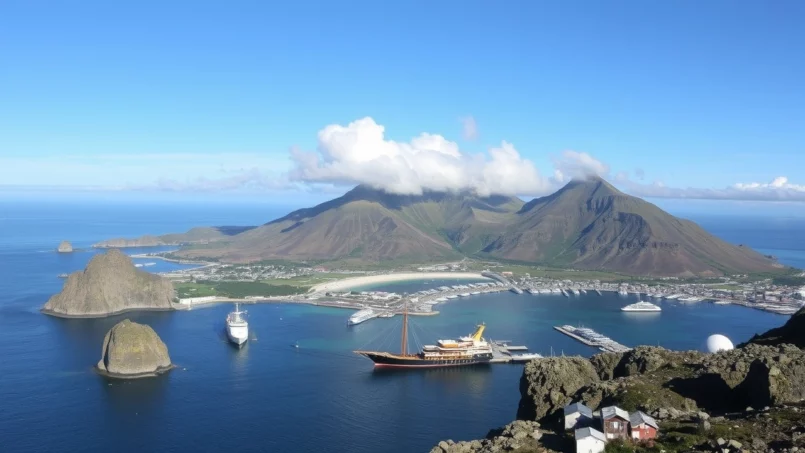
The Cook Islands form an autonomous Polynesian state, in free association with New Zealand. The archipelago stretches over more than 1.8 million km² of ocean for just over 200 km² of emerged land, divided between a northern group (remote atolls) and a more inhabited southern group, where Rarotonga, the main island, is located.
The capital Avarua, located on Rarotonga Island, concentrates most administrative services (ministries, banks, hospital, secondary schools…). The total population is about 15,000 to 20,000 inhabitants, nearly three-quarters of whom reside on Rarotonga. The official languages are English and Cook Islands Māori, and the currency used is the New Zealand dollar (NZD).
Politically, it is a parliamentary democracy. Inhabitants are also New Zealand citizens, which facilitates exchanges, particularly for health and education. The economy is based mainly on tourism, offshore financial services, fishing, and some agricultural products (tropical fruits, food processing, crafts).
For an expatriate, this means two important things. First, a very safe, warm, and community-oriented island lifestyle, but also one limited in terms of specialized services. Second, a strong dependence on the outside world: for imported goods, complex medical care, air links, and much of the skilled employment.
Cost of living: what to expect on site?
Available data shows that the cost of living in the Cook Islands is generally high for the Pacific, even if accommodation remains more affordable than in some benchmark Western markets. In 2026, the general price level would be about 14% higher than the United States average, with strong variations depending on the expense categories.
Typical monthly budget: single, couple, family
Estimates for an “average” lifestyle (including rent) provide useful orders of magnitude for planning your expatriation budget.
| Household profile | Average monthly expenses with rent (NZD) | Average monthly expenses excluding rent (NZD) |
|---|---|---|
| Single person (high source) | 4,259 | 1,723 |
| Single person (average source) | 2,923 | — |
| Couple | 4,055.90 | 2,855.90 |
| Family of 4 | 7,916 (high source) | 4,149.40 |
| Family of 4 (average source) | 5,709.40 | — |
The gap between sources reflects the diversity of lifestyles: high-end beachfront accommodation or a simple house in a more local neighborhood, meals at restaurants or home cooking, private car or bus and scooter, etc.
The extremes give an idea of the room for maneuver:
| Standard of living for a single person | Monthly budget with rent (NZD) | Monthly budget excluding rent (NZD) |
|---|---|---|
| Very tight budget | 1,576 | 826 |
| “Comfortable/luxury” level | 5,822 | 3,922 |
Compared to the average net salary in the city, around 1,700 NZD per month: without external income (remote work, pension, annuities), an expatriate employed locally must therefore significantly adapt their lifestyle to stay within reasonable limits.
How do prices compare to other cities?
Avarua, the archipelago’s main urban area, is more expensive than many “average” cities in the world, but less so than a portion of major Western metropolises.
To illustrate the orders of magnitude of electricity consumption, we can note a few indicative comparisons. For example, a 1000 W (1 kW) electric heater consumes, in one hour of continuous operation, the same amount of electricity as a 10 W LED bulb left on for 100 hours. Similarly, the consumption of a standard washing machine cycle can be equivalent to that of several hours of lighting for an entire house. These comparisons help visualize and prioritize energy-saving efforts.
| Comparison city | Cost of living difference compared to Avarua |
|---|---|
| Zurich (Switzerland) | Avarua ~37% cheaper |
| Oakland (California) | Avarua ~27% cheaper |
| Wellington (New Zealand) | Avarua ~12% cheaper |
| Manchester (United Kingdom) | Avarua ~17% cheaper |
| Madrid (Spain) | Similar cost of living |
| Palma de Mallorca (Spain) | Avarua ~6% cheaper |
| Verona (Italy) | Avarua ~8% more expensive |
| Chiang Mai (Thailand) | Avarua ~55% more expensive |
| Santiago, Chile | Avarua ~30% more expensive |
| Hurghada (Egypt) | Avarua ~133% more expensive |
Compared to Southeast Asia (Thailand, Bali, Cambodia), the Cook Islands appear significantly more expensive. Compared to Australia or New Zealand, prices are generally comparable, sometimes slightly higher for food and transport, but real estate remains cheaper than in Auckland, Wellington, or accommodation in Hawaii.
Details of everyday prices
The prices below are in New Zealand dollars (NZD) and give an order of magnitude for an expatriate living mainly on Rarotonga or in Avarua.
Food and restaurants
A significant portion of food is imported, which is reflected in the price of some processed products. On the other hand, some local fresh products (fish, taro, fruits) can be more affordable.
| Food / dining category | Range or average price (NZD) |
|---|---|
| Lunch menu with drink (business district) | ~15 |
| Meal in a small restaurant | 10 – 20 (average 15) |
| Typical fast-food menu (McDonald’s, etc.) | 10 – 15 |
| Dinner for two, mid-range restaurant (3 courses) | 60 – 153 |
| Local draught beer (1 pint) | 6 – 17 |
| Cappuccino | 5 – 9.50 |
| Chicken (500g boneless breast) | ~5 |
| Whole milk (1 L) | 2.40 – 3.50 |
| Dozen eggs | 6 – 10.80 |
| Tomatoes (1 kg) | ~5 |
| Apples (1 kg) | ~5 |
| Potatoes (1 kg) | 1.36 – 2.90 |
| Local cheese (500g) | ~16 |
| Fresh white bread (1 lb) | 4.31 – 5.35 |
| Bottle of mid-range table wine | 10 – 25 |
For an expatriate, home cooking with basic products and some market shopping (Punanga Nui on Rarotonga, for example) helps contain the bill, while frequent restaurant meals quickly weigh heavily on the budget.
Housing, internet, phone
Rent variations are very significant depending on the size of the accommodation, its location (beachfront, proximity to Muri or Titikaveka, more local areas) and its level of equipment. Some of the available figures correspond more to the tourist market than the local residential market, which is traditionally lower.
Nevertheless, we can outline an indicative grid:
| Type of accommodation / service | Monthly price (NZD) |
|---|---|
| Furnished studio 45 m² (“normal” area) | ~516 |
| Furnished apartment 85 m² (“normal” area) | ~5,000 (likely high-end data) |
| 1 bedroom in town or outside center | 260 – 800 |
| 3 bedrooms city center | 200 – 1,200 |
| 3 bedrooms outside center | 380 – 1,200 |
| Basic utilities (85 m², 2 people) | 60 – 183.33 |
| Fixed internet (8 to 60+ Mbps) | 100 – 183.67 |
| Mobile plan with calls + 10 GB data | 50 – 125 |
In practice, on Rarotonga, many 2 to 4 bedroom houses are rented weekly rather than monthly, with local rates around 200 to 450+ NZD per week, often furnished. Extrapolating, this commonly gives 800 to 1,800 NZD per month depending on size and location. On the outer islands (Pa Enua), rents are significantly lower, but accommodations are sometimes partially furnished and services more limited.
Internet remains relatively expensive and not always as fast as in Europe or North America. Prepaid plans via Vodafone (local SIM, Wi-Fi hotspots) complement the fixed connection.
Transport and vehicles
Rarotonga is small: you can drive around the island in less than thirty minutes, thanks to a single circular road. Daily, many residents prefer a scooter or a small car.
| Transport item | Indicative costs (NZD) |
|---|---|
| Single bus ticket | 5 |
| Monthly bus pass | ~200 |
| Taxi starting fare | 35 |
| Taxi waiting hour | 60 |
| Gasoline (1 L) | 2.00 – 3.00 |
| New scooter | ~3,000 |
| New small car | 12,000 – 40,000 |
| New Volkswagen Golf 1.4 type car | ~20,000 |
The bus runs in both directions (“clockwise” and “anti-clockwise“) around Rarotonga, but its operating hours remain limited. For an expatriate, especially with a family, purchasing a vehicle is often almost essential. You must then plan not only the purchase, but also the cost of importation if bringing your own car (freight, customs duties, import VAT).
Consumer goods and services
Some international brand products are significantly more expensive than in Europe or Asia, due to isolation and logistics costs.
| Product / service | Indicative price (NZD) |
|---|---|
| Levi’s 501 jeans or equivalent | 100 – 112 |
| Summer dress type Zara / H&M | ~80 |
| Nike / Adidas sports shoes | ~130 |
| Men’s leather city shoes | 100 – 123 |
| 40-inch flat-screen TV | 899 |
| iPad Wi‑Fi 128 GB | 2,900 |
| Men’s haircut in expat area | 10 |
| Monthly gym membership | 40 – 45 |
| Brief consultation with private doctor (15 min) | 38 |
| Pack of 20 Marlboro cigarettes | 20 – 30 |
| Simple dinner for 2 in a neighborhood pub | 60 |
| 2 movie tickets | 11.50 – 22 |
Consumption of tobacco and alcohol is heavily taxed, resulting in high prices. Overall, the categories “dining out,” “entertainment,” “transport,” and “clothing” remain on average cheaper than in major US cities, while food and some equipment are more expensive.
Synthetic comparison with the United States
Aggregated data indicates that on average, compared to the United States, the Cook Islands would be about 3.8 times cheaper overall if housing is included. In the detail of expense categories, the trends are as follows:
| Category | Average difference vs. United States |
|---|---|
| Restaurants | ~19.4% cheaper |
| Groceries | ~18.1% cheaper |
| Transport | ~66.1% cheaper |
| Housing | ~3.1 times cheaper |
| Childcare | ~16.8 times cheaper |
| Sports & leisure | ~44.3% cheaper |
| Clothing | ~18.4% cheaper |
These overall figures should be used with caution: they reflect averages that do not always reflect the daily reality of an expatriate on a small island, but provide a useful indication for international comparisons.
Immigration, visas, and permits: the framework for settling
The Cook Islands have implemented an online immigration system, the ASYPX Visa and Permit System, which centralizes most applications. Immigration is seen as a crucial lever for economic development (investments, missing skills, labor), but also as an issue of security, public health, and social stability.
The legislation is based on several principles: balance between openness and protection, fairness, clarity, compliance with international standards, use of technology, and attention to practical applicability.
Short-term entry: visitors
Air and sea borders are open. There are no longer any Covid‑19 vaccination requirements, nor systematic quarantine or isolation.
To enter as a visitor:
– Passport valid for at least six months after the intended departure date from the Cook Islands.
– Return or onward travel ticket.
– Proof of accommodation for the entire stay.
– Travel insurance strongly recommended, especially to cover medical evacuations to New Zealand.
Visa-free stay durations vary by nationality:
– New Zealand passport holders: 90-day stay granted on arrival.
– Most other nationalities (including Australians, US nationals): 31 days automatically on arrival, with possibility of paid extension.
– For US citizens, a 31-day visa on arrival is possible, subject to standard documents (signed passport with blank pages, application form, passport photos, itinerary, etc.).
Fee in New Zealand dollars for each 31-day tourist stay extension in the Cook Islands.
Living and working: the main long-stay permits
For installation as an expatriate, visitor visas are not enough. You must apply through one of the residence/work permit categories:
– International Worker Permit (International Worker Visa and Permit).
– Government Worker Permit (Government Worker).
– Specialist Worker Permit (Specialist Worker).
– Resident Investor Permit (Resident Investor).
– International Adult Student Permit.
– Research Permit.
– International Intern Permit.
– Long-Term Visitor Permit.
– Resident Spouse Permit (Resident Spouse).
– Dependent Child Permit / International Student Permit.
General common conditions
Regardless of the permit type, there is a common core of requirements:
– Proof of identity (passport, photos, possibly civil status certificates).
– Proof of “good character” (police certificates, references).
– “Acceptable” health standard according to Ministry of Health criteria (absence of disease on a regulatory list, no disproportionate risk to the health system).
– Proof of sufficient financial means to support yourself and your dependents, or a local sponsor.
– Payment of application fees.
– For some permits, proof of English proficiency.
– Sometimes, proof of onward ticket or deposit of a bond.
– Formal agreement for information sharing between Immigration and other ministries (health, education, Business Trade and Investment Board).
Fee amounts vary, but available data mentions for example:
– 960 NZD for a Government or International Worker Permit.
– 260 NZD for a Specialist Worker Permit.
– 470 NZD for a visitor visa extension.
– 55 NZD for additional processing fees.
A bond of up to 10,000 NZD may be required in some cases.
Working as an employee: the International Worker Permit
For most expatriates coming to fill a position in tourism, restaurants, hospitality, commerce, or administration, this is the central category.
The key conditions are essential and must be respected.
– Written job offer or contract compliant with the Employment Relations Act 2012.
– The employer must prove they have tried to recruit locally (Cook Islanders or permanent residents) without success.
– The employer commits to enrolling the worker in a values or language program (Kia Orana Values Programme, cultural training).
– For renewal, the holder must demonstrate having paid their taxes and completed the required training programs.
The maximum duration is regulated: generally, one cannot hold more than two consecutive international permits, i.e., up to six years, without leaving the country for at least one year. Furthermore, for each 36-month period of a permit, at least one month must be spent outside the Cook Islands. The goal is to avoid de facto permanent stay situations without going through long-term residence pathways.
The employer plays a central role: they must sponsor the permit and cannot pass their own administrative costs onto the employee by deducting these amounts from the salary.
Working for the government or as a specialist
The other professional pathways are:
– Government Worker Permit: reserved for those with a job offer in a government agency or a volunteer agreement with a public entity. The contract must comply with labor legislation.
– Specialist Worker Permit: for specialists recruited by a government agency, a registered local business, or an approved foreign company. This usually involves very specific skills difficult to find locally.
The conditions regarding health, character, and financial means remain similar.
Studying, researching, or interning
For expatriate children as well as adults coming to study or do research, specific permits exist.
[TIP title=”Permits for international students, researchers, and interns” description=”- **International Adult Student Permit**: requires a letter of offer from a registered public or private school. Work time is limited to 20 hours per week without special authorization, and the total stay as a student cannot exceed 6 continuous years. – **International Research Permit**: requires approval from the Cook Islands Research Committee. No paid activity is allowed, and the duration is limited to 3 continuous years, with an obligation to leave the country for at least 6 months before a new application. – **International Intern Permit**: for internships related to a current or recently completed degree. Paid work is prohibited, and this permit cannot be obtained more than once every five years.”]Long-term visitor and spouse of a resident
Semi-retirees or accompanying spouses are targeted by two main categories:
– Long-term Visitor Permit: intended for those wishing to stay beyond the tourist stay limits (up to 12 months for New Zealanders, 8 months for others). Health insurance covering the entire duration is mandatory.
– Resident Spouse Permit: for the spouse of a visa/residence holder. You must prove an authentic, stable, monogamous, and durable relationship, and the permit cannot be maintained for more than six years continuously without one year out of the country. It can only be granted if the sponsoring spouse is themselves in a regular situation.
Practical procedures and contacts
Visa and permit applications are submitted via the MFAI (Ministry of Foreign Affairs and Immigration), located at the Government Building, Takuvaine Road, Avarua district, Rarotonga.
– Opening hours: Monday to Friday, 8am – 4pm.
– General email: [email protected]
– Reference website: mfai.gov.ck
For customs matters (import of goods, vehicles, personal effects), the contact is the Cook Islands Customs Service ([email protected], tel. +682 29510). Private providers (VisaHQ, sherpa°, CIBTvisas, etc.) offer paid assistance with preparing applications.
Finding housing: getting a roof on Rarotonga or in the Pa Enua
For an expatriate, most often, installation will initially be on Rarotonga. That is where the secondary schools, the majority of jobs, the main hospital, and most shops are located.
Types of housing and island areas
The residential offer is concentrated around the circular road, with several areas with distinct atmospheres:
– Muri: tourist heart, very busy lagoon, many restaurants, bars, water activities, high-end accommodations.
– Titikaveka: calmer and rather expensive area, some of the most spectacular beaches on the island.
– Arorangi: west coast, known for its sunsets, mix of hotels, vacation homes, and local dwellings.
– Matavera: greener area, less developed for tourism.
– Nikao and Avarua (Town): proximity to administrative services, port, airport, supermarkets.
Discover the different types of accommodation you can find, whether for vacations or a long-term expatriate stay.
Spacious and private accommodations offering direct access or a view of the sea, ideal for families or groups.
Small independent dwellings, often with a garden or terrace, for a quiet stay close to nature.
Compact and functional housing, perfect for short stays or single people in urban or residential areas.
Accommodation with locals or seasonal rentals with a traditional character, for a local and authentic experience.
Resorts and hotels offering full services (dining, leisure, spa) for all-inclusive vacations.
For a prolonged stay, the market mainly offers apartments, villas, and individual houses for annual rent.
– Houses with 2 to 4 bedrooms, generally furnished.
– Studios or small apartments, sometimes associated with tourist complexes.
– Staff housing for certain positions (teachers, health personnel).
Typical weekly rents on Rarotonga for family-sized houses are around 200 to 450+ NZD. On the outer islands, the cost is reputed to be “significantly lower”, but with a more rustic comfort level and sometimes incomplete facilities.
Utilities, water, and waste
Water on Rarotonga comes from mountain catchments and remains a fragile resource, especially in the dry season. Tap water may be contaminated: it is recommended to only drink boiled or bottled water, or use the filtered water stations scattered around the island.
On Rarotonga, waste collection is weekly and includes sorting for recycling. However, on some outer islands, this service can be very limited or even non-existent, requiring autonomous waste management.
Basic utilities (electricity, water, garbage removal) for an 85 m² apartment occupied by two people are generally between 60 and 183 NZD per month, but air conditioning and power-hungry appliances can drive up the bill.
Buying real estate or investing
Available data mentions purchase prices per square foot, without detailing the legal framework of ownership (often complex on customary lands in the Pacific). As an indication, you can find:
| Type of property | Indicative price per square foot (NZD) |
|---|---|
| Apartment in city center | ~800 |
| Apartment outside center | 78.97 – 159.68 |
Expatriates often want to know about land ownership constraints (long-term leases, restrictions for non-nationals, role of traditional chiefs). It is necessary to refer to local legal advice before any purchase project.
Health: system, coverage, and precautions
The Cook Islands health system is largely public and based on principles of universality, accessibility, and equity. It is administered by Te Marae Ora, the Ministry of Health.
Structure of the care system
– Main hospital: Rarotonga Hospital (Nikao), which handles emergencies, surgery, maternity, several specialties, outpatient consultations, and diagnostics.
– Tupapa Clinic: complementary health center on Rarotonga.
– Outer islands: small hospitals or clinics, often with at least one doctor and a nurse, for common illnesses.
– Dentistry: public dental clinic in Tupapa, with free care for school children; some private dentists.
– Specialized services: for tertiary level care (complex cardiology, heavy oncology, neurosurgery, etc.), patients are generally transferred to New Zealand, according to bilateral agreements.
Equipment remains modest compared to Europe or Australia. In some cases, advance payment may be required before hospital procedures.
The emergency medical number, including ambulance, is 999.
Costs for expatriates and importance of insurance
Expatriates do not benefit from the same fee scales as citizens or permanent residents. The Ministry of Health charges:
– Consultation fees.
– Prescription fees.
– Hospitalization fees, at specific rates.
A recent policy, however, recognizes that workers under contract pay taxes and, after six months of residence, they can access some more favorable care rates.
For staff directly recruited by the Ministry of Education, emergency (A&E) and hospitalization fees may be covered by this ministry, according to the contract terms.
For the majority of expatriates, international health insurance is therefore essential, including:
– Routine care on site.
– Emergency evacuations to New Zealand (high costs).
– Specialized care abroad.
Local health risks
Several risks require particular attention:
Dengue outbreaks, transmitted by mosquitoes, are reported (notably on Rarotonga): use repellent (20-30% DEET or 20% picaridin), wear covering clothing, and protect your home. Ciguatera, poisoning from eating certain reef fish, is also present; inquire locally about risky species and areas. The territory has a high prevalence of non-communicable diseases (diabetes, cardiovascular diseases, cancers), highlighting the importance of regular medical follow-up and a balanced lifestyle for expatriates. When diving, note that not all islands have an operational decompression chamber to treat accidents, which may require evacuation.
The recommended vaccines (hepatitis A and B, typhoid, notably) should be checked with a travel medicine center, ideally eight weeks before departure.
Working, entrepreneurship, and managing your professional life
The Cook Islands need foreign labor, particularly in hospitality, restaurants, commerce, construction, and some public services. It is estimated that about 500 positions must be filled each year, often occupied by workers from the Philippines, Fiji, Samoa, or Tonga.
Job market and salaries
The market is narrow, and the public sector employs a significant portion of the local population. In the private sector, tourism dominates: resorts, travel agencies, restaurants, water activities, retail. The average net salary noted in the city is about 1,700 NZD per month, which imposes a relatively modest lifestyle if living solely on this income on site with family expenses.
To look for a job, you can rely on: professional social networks, job search websites, recruitment agencies, job fairs, and networking.
– The public platform Anga’anga Tūkatau (managed by the Ministry of Internal Affairs), when operational.
– The website cookislandsjobs.com, which centralizes offers (contact: [email protected]).
– Informal networks (contacts in hospitality, word of mouth, community groups).
Business, banking, and taxation
The taxation of the Cook Islands is relatively simple compared to many Western countries, with some specificities.
Personal income tax
Tax residents (presence of more than 183 days and home in the Cook Islands) are taxed on their worldwide income, with a progressive scale reaching 30%. An exempt income threshold (around 10,000 to 11,000 NZD) applies, then successive brackets.
Non‑residents are taxed only on their Cook Islands-sourced income, without benefiting from the basic exemption, with progressive rates (20%, 25%, 30%). The PAYE (Pay‑As‑You‑Earn) system requires employers to withhold tax at source and provide a withholding certificate to their employees.
Cook Islands Tax Authorities
Companies, VAT, and other levies
Most expatriate employees will not be directly concerned with corporate tax, but it is useful to know the broad outlines:
Standard corporate tax rate in the Cook Islands.
Tax treaties exist with New Zealand to avoid some double taxation and allow information exchange.
Banking and financial services
The banking sector is modest: four commercial banks operate in the country (ANZ, Bank of South Pacific, Bank of the Cook Islands, Capital Security Bank). The Financial Supervisory Commission regulates them.
For a resident expatriate, opening an account generally requires: proof of identity, proof of address, and resident status.
– Certified true copy of passport.
– Recent proof of address.
– Detailed CV.
– Proof of income (payslips, contract).
– Bank or professional reference letters in some cases.
Some banks allow remote opening, but the process can be more burdensome for pure non-residents. Capital Security Bank plays a specific role in international private banking, with significant minimum deposit requirements (250,000 USD) for offshore clients – which concerns more wealth management clientele than the “classic” expatriate.
Importing your belongings, your car, and managing customs
For a long-term installation, many expatriates want to send their furniture, personal effects, or a vehicle. Import procedures are regulated by the Customs Revenue and Border Protection Act and its regulations.
Personal effects and concessions for new residents
All goods arriving by sea, air, or post must be cleared through customs. Some are exempt from formal declaration if their value is low (less than 100 NZD) and if they are gifts or non-commercial personal effects.
For expatriates settling long-term, there are two preferential regimes:
– Concession 85.01: for non-Cook Islanders (expatriates). It exempts from duties and VAT certain unaccompanied personal goods (furniture, household effects, work tools, right-hand drive vehicles, boats, motorcycles), under conditions:
– Having lived abroad for at least 3 years.
– Coming to live or work in the Cook Islands for at least 3 years.
– Proving the effects have been owned and used for at least one year before departure.
– Concession 85.02: for Cook Islanders returning home. Similar criteria, with the additional possibility of including building materials for a residence.
Products like tobacco and alcohol are excluded from customs concessions. Moreover, if the required conditions are not met, import VAT (15% on the CIF value) and, where applicable, customs duties become payable.
The deadline to import unaccompanied effects benefiting from the concession is limited to one year after the first arrival (or after the first shipment, if it precedes arrival).
Some additional constraints exist:
– Limited to one single vehicle, motorcycle, plane, or boat per person.
– Left-hand drive vehicles require specific approval from the Minister of Transport.
– Vehicles over 10 years old require an import permit from the national environment service.
– Any weapon and ammunition requires police authorization.
Vehicles: cost and import procedures
Customs duties on vehicles depend on type, engine size, age, and value. A formula allows calculation of the tax due, to which 15% VAT and customs transaction fees (about 11.50 to 23 NZD per file) are added. A concession exists for recent electric or hybrid vehicles (less than 10 years old), which can be imported duty-free under reference 55.
Before importing your personal vehicle, have a simulation done by customs. This step is essential to accurately assess the implications related to driving rules, vehicle age, and freight costs, and thus compare this option with a local purchase with full knowledge.
Prohibited goods, biosecurity, and personal allowance
The Cook Islands apply strict biosecurity rules to protect their ecosystems. Upon arrival, every traveler must fill out a declaration card and declare:
– Food (meat, dairy products, eggs, honey, seeds, etc.). Fruits and vegetables are prohibited from importation by passengers.
– Products of animal or plant origin (feathers, skins, shells, wood, bamboo, dried flowers).
– Equipment that has been in contact with soil or animals (tents, hiking shoes, gardening tools, sports equipment, fishing gear).
– Non-prescribed medications, biological cultures, soils, waters, etc.
Unauthorized products are either destroyed or returned to sender, sometimes after paid treatment. Amnesty bins are available at the airport to spontaneously deposit risky items.
For adult travelers, the personal customs allowance permits duty-free:
– Up to 2 liters of wine or spirits (or combination within an overall limit), OR 4.5 liters of beer.
– Up to 200 cigarettes, 50 cigars, or 250g of tobacco (or equivalent combination).
– Other goods with a total value not exceeding 750 NZD and intended for personal use.
Cash amounts exceeding 10,000 NZD (or equivalent) must be declared.
Education: schooling your children
The education system, managed by the Ministry of Education, is closely aligned with that of New Zealand, while integrating the Māori language and culture of the Cook Islands (Te Peu e te Akonoanga Māori).
Structure and cost of school
Education is free and compulsory from age 5 to about 15‑16 for residents. The public sector includes about twenty schools, often “area schools” covering from kindergarten to secondary. Private schools, mainly religious, complete the offer. They are subsidized for salaries and operating costs, but families pay additional tuition fees, often perceived as high relative to local incomes but remaining modest on an international scale.
For expatriates, the most frequent option is:
– Enrollment in a public school, free up to Year 13 for residents.
– Or enrollment in one of the private schools more favored by expat families, with fees varying by level (for example, 25 to 40 NZD per week in a popular private primary school like Te Uki Ou School).
The school years follow a four-term calendar, with regular holidays (April/May, July/August, October, plus a long Christmas break).
Language and curriculum
All establishments – public and private – must follow the national curriculum and include:
– Learning Cook Islands Māori.
– Teaching of English.
– Content on local culture, history, and traditions.
Expatriate children quickly evolve in a bilingual environment, offering cultural richness but representing a challenge for non-English speakers. International establishments generally follow a New Zealand curriculum, sometimes complemented by accreditations like the International Baccalaureate (IB). These schools are mainly designed for children of NGO staff, diplomats, and multinational executives.
The inclusion of students with specific needs is a strong focus of education policy, with specific regulation (Disability Act, Inclusive Education Policy) and the presence of teacher-aides to support students in difficulty.
Daily life, local culture, and integration
Moving to the Cook Islands isn’t just about changing jobs or climate; it’s also entering a Polynesian society where community, family, and traditional values are central.
Culture, religion, and pace of life
The population is predominantly Christian, with a majority belonging to the Cook Islands Christian Church. Sundays are generally reserved for worship and rest: many shops are closed and alcohol sales are restricted.
Social life is very family-oriented, around large gatherings and celebrations. Hospitality (“Kia Orana”) is a strong cultural marker; expatriates are warmly welcomed if they respect the codes:
It is important to remove shoes when entering someone’s home, dress modestly (especially in villages and church), and avoid touching people’s heads, which is a sign of disrespect. Always ask permission before taking photos and respect traditional restrictions (ra’ui) that regulate the exploitation of certain natural resources like fishing or harvesting.
The pace is often described as “island time”: things take time, administrative or business procedures don’t always follow Western speed standards. The expatriate must adapt to avoid frustration.
Safety
The crime level is relatively low. Opportunistic theft can still occur, especially in tourist areas, but serious violence remains rare and often alcohol-related. However, the consequences of an offense can be severe for a foreigner: a local criminal record can jeopardize a work permit and lead to deportation.
Integrating: markets, events, and volunteering
To integrate into the community:
To immerse yourself in local life, it is recommended to participate in markets like Punanga Nui on Saturdays in Rarotonga or night markets in Muri, attend “Island Nights” (cultural evenings with dancing, singing, and local buffet), and get involved in associations (environmental protection, cultural revival, sports, clubs). During major festivals, like Te Maeva Nui around Constitution Day, you can go see performances by dance troupes from the outer islands. Finally, visiting libraries, museums, and cultural centers allows you to deepen your knowledge of the heritage.
Opportunities for volunteering exist in education, marine conservation, wildlife protection, culture, or sports. Some assignments require qualifications (teachers, educators) and sometimes a specific visa.
Conclusion: a project to calibrate with lucidity
Expatriating to the Cook Islands is choosing an island life in the heart of the Pacific, in a society both deeply traditional and connected to New Zealand. The advantages are obvious: spectacular natural environment, pleasant climate, safety, friendliness, strong cultural identity. But the constraints are just as real: sometimes high cost of living, limited specialized healthcare and education, restricted job market, dependence on imports and air links.
A successful installation project rests on a few pillars:
For a smooth installation, anticipate your budget including rent, food, transport, and robust health insurance. Choose and scrupulously respect your migration status (work permit, long stay, etc.). Prepare the import of your goods and vehicle in advance, taking advantage of customs concessions for a commitment of at least three years. Organize children’s schooling (language, public/private choice). Finally, adopt local cultural realities: importance of religion, community values, respect for elders, and a more peaceful pace of life.
With these elements in mind, the Cook Islands can offer an expatriate not only a postcard setting, but a coherent and sustainable life adventure, provided the project is approached with preparation, patience, and curiosity for the welcoming culture.
Disclaimer: The information provided on this website is for informational purposes only and does not constitute financial, legal, or professional advice. We encourage you to consult qualified experts before making any investment, real estate, or expatriation decisions. Although we strive to maintain up-to-date and accurate information, we do not guarantee the completeness, accuracy, or timeliness of the proposed content. As investment and expatriation involve risks, we disclaim any liability for potential losses or damages arising from the use of this site. Your use of this site confirms your acceptance of these terms and your understanding of the associated risks.

Cyril Jarnias is an independent expert in international wealth management with over 20 years of experience. As an expatriate himself, he is dedicated to helping individuals and business leaders build, protect, and pass on their wealth with complete peace of mind.
On his website, cyriljarnias.com, he shares his expertise on international real estate, offshore company formation, and expatriation.
Thanks to his expertise, he offers sound advice to optimize his clients' wealth management. Cyril Jarnias is also recognized for his appearances in many prestigious media outlets such as BFM Business, les Français de l’étranger, Le Figaro, Les Echos, and Mieux vivre votre argent, where he shares his knowledge and know-how in wealth management.





