
 Published on and written by Cyril Jarnias
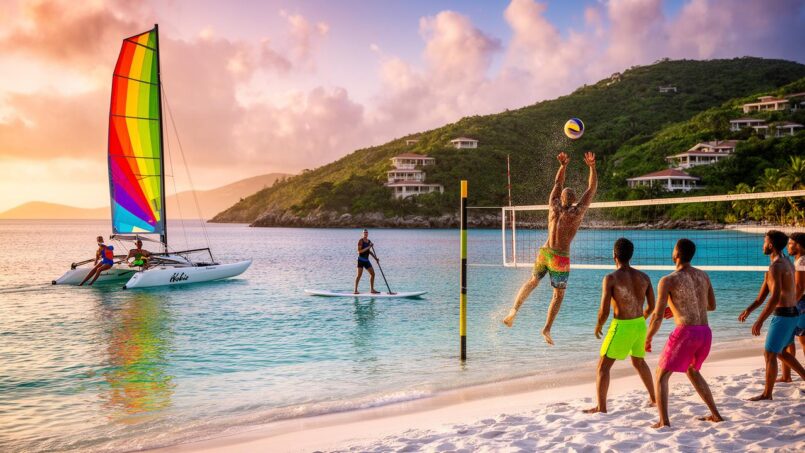
With their turquoise waters, hills covered in tropical vegetation, and national parks that extend beneath the sea’s surface, the U.S. Virgin Islands offer a true open-air playground. Here, sports are rarely practiced within four walls: they are lived in the water, on the water, by the water… and on the trails overlooking it all. Snorkeling, diving, hiking, sport fishing, kayaking, stand-up paddleboarding, sailing, or structured team sports: the archipelago multiplies possibilities, from leisurely relaxation to outright sporting challenges.
Sports activities vary by main island: St. Thomas, St. John, and St. Croix, as well as on islets like Water Island. This article provides a detailed overview of the most popular sports in this archipelago.
Snorkeling: The Premier Activity in the Waters of the U.S. Virgin Islands
In the archipelago, snorkeling isn’t just another activity: it’s often the first thing visitors want to do once their feet hit the sand. Conditions are particularly favorable: warm waters, visibility that can exceed 25 meters during the best periods, reefs accessible directly from the beach, and an abundance of tropical fish, sea turtles, and rays.
Virgin Islands National Park, which covers a large portion of St. John, concentrates what many consider the best snorkeling in the entire archipelago. The reefs are often just a few meters from shore, with depths typically between 1 and 5 meters, allowing for observation of coral and marine life without straying far from the beach.
Where to Snorkel on St. John
On St. John, most national park beaches are open to the public and easily accessible. Each has its own personality, whether it’s the configuration of the seafloor, the type of coral, or the species most commonly seen.
A comparative overview helps make sense of the options.
| Beach / Bay (St. John) | Snorkeling Highlights | Access & Vibe |
|---|---|---|
| Trunk Bay | Marked underwater trail, informational signs, iconic beach | Entry fee (amenity fee), equipment rental, food available |
| Maho Bay | Large seagrass meadow, high chance of seeing green sea turtles | Laid-back atmosphere, fin/mask rental on site, Maho Crossroads nearby |
| Francis Bay | Very good chances of spotting turtles, quieter than Maho | Large, calm bay; good balance between wildlife and serenity |
| Hawksnest Bay | Three shallow reefs, excellent visibility | Ideal for long sessions, direct entry from the beach |
| Waterlemon Cay | Small islet surrounded by a colorful and varied fringing reef | Requires a ~1-mile walk along Leinster Bay then a swim around the islet |
| Salt Pond Bay | Crescent-shaped bay, frequent turtles, starting point for Ram Head Trail | Wilder atmosphere, little shade, access via a sloping path |
| Lameshur & Grootpan Bay | More secluded spots, beautiful reefs, few people | Harder access, sometimes rough road, often needs 4×4 vehicle |
| Hurricane Hole | Mangroves, very unique atmosphere, nursery for juvenile fish | Far from crowds, ideal for a different experience |
Traveler accounts confirm the richness of these sites: six turtles spotted in a single session at Maho Bay, two hours spent circling Waterlemon Cay without noticing the time, or flattering comparisons between Francis Bay and renowned spots like Tres Trapi in Aruba or Salt Pier in Bonaire for turtle observation.
Although famous and photogenic, Trunk Bay is sometimes overlooked by experienced St. John visitors, who prefer wilder, less crowded bays, considering its atmosphere too touristy and less authentic.
Best Snorkeling Spots on St. Thomas
St. Thomas is not to be outdone. The island, more urban and frequented by cruise ships, nonetheless harbors several bays that have become Caribbean snorkeling classics.
A few sites stand out significantly.
| Site (St. Thomas) | Snorkeling Strengths | Practical Details |
|---|---|---|
| Coki Beach | Very lively reef, numerous fish, also popular for scuba diving | Located next to Coral World Marine Park, very popular, lively atmosphere |
| Secret Harbour Beach | Calm bay, reefs on both sides and center, varied marine life | Resort beach but public, bar/restaurant on site, limited parking |
| Sapphire Beach | Large cove, reef on the left side | Resort and restaurant on the beach, good balance of comfort and snorkeling |
| Brewers Bay | Impressive concentration of green sea turtles, frequent octopus sightings | Next to the airport runway, food trucks and some amenities |
| Magens Bay | Iconic beach, snorkeling interesting mainly at the eastern end | Can be very crowded, restaurant on site |
| Lindquist Beach | Seagrass and rocky areas, still relatively unknown spot | Located in Smith Bay Park, more preserved atmosphere |
| Buck Island (offshore) | Turtle Cove (turtles) and Shipwreck Cove (Cartanza Senora wreck) | Accessible only by boat, excursions offered almost daily |
| Christmas Cove | Protected cove, calm waters, shallow reef | Very popular with boats, famous for its floating pizzeria Pizza Pi |
Brewers Bay is regularly cited as a favorite spot by St. Thomas regulars, especially for the ease of seeing green sea turtles in the seagrass beds right in front of the beach. At Buck Island, the wreck of the Cartanza Senora – a nearly 60-meter cargo ship that served during World War II – offers a different snorkeling experience, blending history and exploration.
Snorkeling Safety, Seasonality, and Best Practices
Snorkeling quality heavily depends on conditions. In the U.S. Virgin Islands, several parameters consistently come into play:
The months of April through June are ideal, with calm seas and excellent visibility. Avoid the peak tourist season (December to April) and be cautious during hurricane season (June to November). September and October, less crowded, sometimes offer good conditions but with a cyclonic risk. Opt for morning dives to benefit from calmer seas, less wind, and better natural light.
Underwater, the golden rule remains caution. Some sites, like Waterlemon Cay, are subject to strong currents, especially at the tip of the islet. Wearing a flotation device (vest or belt) is recommended for average swimmers, as are dive booties on rocky entries.
The reefs harbor fire coral, which burns skin on contact, and sea urchins. It is crucial not to touch the coral with your hands, feet, or fins. Follow ‘Leave No Trace’ principles: do not take anything, do not feed animals, do not touch anything, and maintain a respectful distance from turtles, rays, and other species.
Equipment Rental and Organized Excursions
For those who don’t travel with fins, mask, and snorkel, logistics are very straightforward:
– On St. John, you can rent equipment in Cruz Bay, Coral Bay, as well as directly on some park beaches like Maho Bay, Cinnamon Bay, and Trunk Bay.
– On St. Thomas, many operators combine day cruises with snorkeling. Companies like Virgin Islands Eco Tours, VI Cat, Snorkel Cat, Ocean Surfari, or Aqua Marine Dive Center offer trips to Buck Island, Christmas Cove, Lindbergh Bay, or the mangrove lagoon.
Day cruises often mix several activities: snorkeling, sailing, wildlife watching, sometimes meals and drinks on board. At Little Buck Island, for instance, some excursions combine swimming, free diving, and visits to Turtle Cove to observe turtles.
Scuba Diving: A Paradise of Reefs, Wrecks, and Drop-offs
If snorkeling is already spectacular, scuba diving adds another dimension. The U.S. Virgin Islands host several dive centers affiliated with major training agencies like PADI or SSI, on St. Thomas, St. John, and St. Croix alike.
Comprehensive Training Offerings, from Try Dives to Instructor
The dive centers in the archipelago offer very complete programs, catering to both curious beginners and enthusiasts looking to progress up to professional levels.
In general, the curricula follow a fairly uniform structure.
| Level / Program | Target Audience | Content and Features |
|---|---|---|
| Discover Snorkeling / Guided Tours | All levels, non-divers | Guided snorkel outing, approx. 1.5 hours, ideal for getting familiar with the underwater world |
| Bubblemaker & Seal Team | Children ages 8 and up | Fun introduction to diving in a pool or confined water, no final certification |
| Discover Scuba Diving (DSD) | Adults and teens (ages 10+), beginners | Supervised “try dive,” a few shallow-water exercises then immersion to ~12 m |
| Scuba Diver | Beginners wanting a shortened course | Limited certification (max depth 12 m, under supervision), can be done in one day, convertible later to Open Water |
| Open Water Diver | Motivated beginner divers | Complete basic course (theory + practice), 2–3 days, autonomous to 18 m with certified buddy |
| Advanced Open Water Diver | Already certified divers | 5 themed dives (including deep and navigation), extends max depth to 30 m |
| Rescue Diver | Experienced divers | Incident management, assisting a buddy in distress, prerequisite for professional level |
| Divemaster & Instructor | Future professionals | Supervision, pedagogy, preparation to guide groups and teach |
Courses often rely on online modules for the theory part (eLearning), allowing the stay on-site to focus on open-water practice. Training dives generally start in shallow water (1.5–2 m) and gradually descend to 18–30 m depending on the level.
Various specialties are also offered: deep diving, drift diving, night diving, wreck diving, underwater photography, fish identification, sidemount, drysuit diving, reef conservation, etc. Some schools even offer technical (Tec) training for deep diving.
Major Dive Centers and Their Strengths
Several organizations serve as pillars for diving in the archipelago:
Discover the main PADI-certified dive operators on St. Croix and St. Thomas, offering a full range of services from try dives to professional training.
Located on St. Croix, this PADI 5 Star Dive Resort is renowned for its direct access to a spectacular drop-off and offers try dives, recreational dives, training, and equipment rental.
A major operator on St. Thomas, organizing boat trips for site exploration and offering comprehensive training programs.
PADI Five Star Instructor Development Center established in 1985 on St. Thomas, offering training up to instructor level.
Completes the offering, often associated with resorts or marinas, providing various water sports and diving activities.
Prices vary by level and content, but some examples give an idea of the cost for basic training:
| Dive Course | Example Price (indicative) | Typically Included |
|---|---|---|
| Discover Snorkeling | ~60 USD | Guide, snorkel gear, short guided session |
| Discover Scuba Diving | ~110 USD | Guide, full equipment, 1 supervised immersion |
| Scuba Diver | ~459 USD | eLearning (may be extra), dives, limited certification |
| Open Water Diver | ~630 USD | Theory, 4 open-water dives, gear rental, certification |
| Open Water Referral | ~325–450 USD | 4 open-water dives to finish a course started elsewhere |
| Advanced Open Water | ~640 USD | 5 specialty dives, certification |
| Rescue Diver | ~595 USD | Practical exercises, theory, certification (eLearning sometimes separate) |
Centers generally recommend dedicated dive insurance (e.g., DAN or DiveAssure), require good general health, and may ask for a medical certificate depending on the pre-questionnaire answers.
Diving Conditions and Marine Life
Water temperature hovers around 27–28 °C (80–82 °F) for much of the year (a reading near St. Croix gave 28 °C in early January), making dives comfortable in a shorty or thin wetsuit. Visibility is often excellent, especially outside periods of swell or heavy rain.
This is the depth in miles of the submarine trench, one of the deepest ocean faults in the world, located between St. Croix and St. Thomas.
Marine flora and fauna live up to the Caribbean reputation:
– Typical reef fish: parrotfish, blue tangs, sergeant majors, angelfish, hamlets, snappers, squirrelfish…
– Large pelagics or bigger fish: barracudas, tarpons, tunas, wahoo, occasionally sharks.
– Other frequent encounters: sea turtles, stingrays or eagle rays, moray eels, lobsters, nudibranchs, starfish, urchins, crabs, conchs, seahorses.
– Corals: elkhorn coral, gorgonian fans, fire coral, colorful sponges.
On St. Thomas, the combination of fringing reefs, accessible wrecks, and marine reserves allows for varied underwater environments in just a few dives. The wreck of the Cartanza Senora, already mentioned for snorkeling, becomes even more interesting on autonomous dives with visibility often exceeding 20 meters.
Kayaking and Eco-Tours: Exploring Lagoons, Mangroves, and Islets
Kayaking is one of the most popular sports in the archipelago, not only as a physical activity but also as a vehicle for eco-tourism. It allows access to shallow, often protected areas where motorized navigation is restricted.
The Mangrove Lagoon on St. Thomas: A Kayaking Classic
On the south coast of St. Thomas, the Mangrove Lagoon Wildlife Sanctuary and Marine Preserve has become a true open-air laboratory for kayak and snorkel excursions. Operators like Virgin Islands Ecotours offer several formats:
– St Thomas Mangrove Lagoon Kayak and Snorkel Tour
– Cas Cay – Kayak, Hike and Snorkel Adventure
– Best of Mangrove Lagoon Kayak, Hike and Snorkel Adventure with Picnic Lunch
These outings typically combine:
An adventure combining kayaking through the mangroves, hiking on the volcanic islet of Cas Cay to observe its cliffs and blowhole, and snorkeling among the mangrove roots—a crucial nursery ecosystem for young fish and many invertebrates.
The calm waters of the lagoon, sheltered from the swell, make it suitable for beginners as well as families. Wildlife observed includes stingrays and spotted rays, hermit crabs, reef fish, sea urchins, conchs, and occasionally moray eels or small sharks.
Night Kayaking and Bioluminescent Bays
Some excursions take place at dusk or at night, with kayaks equipped with LED lights (Glow Boats) or transparent bottoms. Trips like Night Kayak Tour St. Thomas – Westin Frenchman’s Reef or Illuminated Night Kayaking at the Elysian Resort offer paddling on waters sometimes filled with bioluminescent plankton, which sparkles with each paddle stroke.
On St. Croix, Salt River Bay National Historical Park and Ecological Preserve is renowned for its bioluminescent bay. Excursions, notably organized by Kayaking St. Croix, allow you to discover it, sometimes combined with observing turtles, eagle rays, and birds like snowy egrets or brown pelicans.
Kayaking and Wildlife Observation
Beyond mangroves, kayaking is also an excellent way to approach certain beaches or coves from the sea. On St. John, kayaks can be rented on beaches like Honeymoon Beach – accessible via the Lind Point Trail – and paddle along the coast, even as far as islets like Whistling Cay for the more experienced.
Excursions combining Kayak and Sea Turtle Snorkel with Beach Break or St Thomas Sea Turtle Snorkel Kayak Adventure Tour illustrate this synergy well: the physical effort of kayaking allows reaching less frequented areas, where seagrass beds are pristine and heavily used by turtles.
Stand Up Paddleboarding (SUP): Gliding on Glassy Water
Stand up paddleboarding has seen a true explosion of popularity in the Caribbean over the last five to six years, and the U.S. Virgin Islands are no exception. St. John, in particular, is often cited as an ideal spot: protected bays, calm waters, easy launch from white sand beaches.
Best SUP Areas on St. John
In practice, the choice of spot depends mainly on skill level and weather (wind, swell, current). Three main categories can be distinguished.
| Level | Recommended Spots (St. John) | Characteristics |
|---|---|---|
| Beginner | Maho Bay, Francis Bay, Salt Pond Bay, Little Lameshur Bay | Calm waters, easy launch, shallow bottom, close to parking |
| Intermediate | Hawksnest Bay, Cinnamon Bay | Possible light swell, more wind exposure, large beaches for maneuvering |
| Advanced | South coast (Salt Pond → Reef Bay), East End (Coral Bay → Hansen Bay) | More exposed areas, stronger winds and currents, longer paddling routes |
The appeal of SUP also lies in the ability to combine multiple pleasures: gliding silently on the water, observing turtles and rays beneath the board in the seagrass, then drifting for a swim or impromptu snorkeling session.
Several operators offer paddle activities on St. John. SUP St John provides lessons, rentals, and outings with GoPros. Organizations like Virgin Islands Ecotours / Honeymoon Beach Hut as well as the Cinnamon Bay Resort water sports center also offer board rentals, lessons, and for some, paddleboard yoga sessions.
SUP Yoga and More “Zen” Variations
Paddleboarding lends itself particularly well to yoga. On the calm waters of certain bays, SUP yoga classes are offered, where poses are performed on a slightly unstable board, requiring deep muscle engagement. Companies like SolShine SUP Yoga offer such sessions, sometimes combined with more classic outings.
Sailing, Catamarans, and Cruises: Sports to the Rhythm of the Trade Winds
The U.S. Virgin Islands are often described as one of the most beautiful cruising grounds in the world. The archipelago benefits from relatively protected waters, short distances between islands, and steady winds. Sailing here is sporty without being extreme, appealing to both seasoned crews and families seeking active vacations.
An Ideal Playground for Sailing
The wind regime, low tidal range (only 30 to 60 cm), the presence of many well-sheltered bays and mooring buoys greatly facilitate the practice. However, local rules do not allow nighttime navigation, requiring anchoring or mooring between 5 p.m. and 7 a.m., with a simplified payment system on registration rafts in certain areas.
The main bases and departure ports include:
– Charlotte Amalie and Yacht Haven Grande on St. Thomas.
– Red Hook and American Yacht Harbor on the east coast of St. Thomas.
– Cruz Bay and Coral Bay on St. John.
– Water Island as an extension easily accessible by ferry from St. Thomas.
Classic itineraries include loops around St. John, escapes to Water Island, or on longer cruises, round trips to St. Croix (allow 3 to 4 hours of sailing from St. Thomas).
Types of Cruises and Participant Profiles
Formats adapt to all sporting tastes:
Boat rental mainly comes in three formats. ‘Bareboat’ is for experienced sailors who take the helm themselves, subject to providing sufficient experience. ‘Skippered charter’ includes a professional skipper who handles navigation, leaving passengers the choice to participate in maneuvers. Finally, ‘Crewed yacht charter’ offers a full crew, where the experience focuses more on ancillary activities (like snorkeling, paddleboarding, or fishing) than on sailing itself.
Companies like Dream Yacht Charter, The Moorings, Epic Yacht Charters, or Virgin Island Sailing® emphasize the “active” dimension of stays: water toys (paddleboards, kayaks), snorkeling or scuba diving, trolling while sailing (mahi-mahi, tuna, wahoo, sailfish, or marlin), hiking ashore in national parks, etc.
Hiking: Traversing Virgin Islands National Park and Beyond
While the archipelago is most famous for its water sports, hiking holds an increasingly important place, especially on St. John, where the national park offers more than 27 miles (nearly 44 km) of marked trails.
A Dense and Varied Trail Network on St. John
Virgin Islands National Park covers most of St. John, an island about 9 miles long with very rugged terrain. About twenty trails of varying difficulty wind through tropical rainforest, dry cactus forests, mangroves, and white sand beaches.
Routes range from a simple family stroll along the shore to a more athletic circuit with significant elevation gain.
| Trail (St. John) | Distance (round trip) | Approximate Elevation | Level & Highlights |
|---|---|---|---|
| Lind Point → Honeymoon Beach | ~2.3 miles loop | Low | Easy, connects Cruz Bay to a dream beach, nice bay viewpoint |
| Francis Bay Trail | ~1 mile loop | ~10 m (33 ft) | Very easy, boardwalk, excellent bird and mangrove observation |
| Cinnamon Bay Nature Loop | ~1 mile | Moderate | Partially wheelchair/stroller accessible, plantation ruins, old cemetery |
| Peace Hill → Denis Bay | ~0.5 mile | ~27 m (89 ft) | Short climb, ruined windmill, panoramic view, access to a relatively secluded beach |
| Ram Head Trail (from Salt Pond) | ~2–3 miles | ~100 m (328 ft) | Moderate level, desert-like landscapes, spectacular sea view and south coast |
| Reef Bay Trail + Petroglyph Trail | ~6 miles | ~365 m (1,197 ft) | Most demanding on the island, big descent/ascent, seasonal waterfalls, Taíno petroglyphs and sugar mill ruins |
| L’Esperance Trail | ~5.2 miles | Significant | Wilder alternative to Reef Bay for reaching the same ruins |
| Bordeaux Mountain Trail | ~1.2 miles | Highest point at ~396 m (1,299 ft) | Strenuous hike, breathtaking view at sunrise or sunset |
The park also stands out for the richness of its cultural heritage: ruins of Danish sugar plantations, windmills, old paved roads, sites linked to the history of slavery and revolts, such as the Catherineberg ruins where an uprising led by Breffu – nicknamed the “Queen of St. John” – marked the island’s history.
Recommendations for Hiking Safely
The hot and humid climate, sun exposure, and very hilly topography make some hikes significantly more physical than they appear on the map.
Park managers and partners like the Friends of Virgin Islands National Park emphasize respecting a few basic rules for site preservation.
– Wear closed-toe, sturdy shoes, especially on downhill trails like Reef Bay where roots and rocks can be slippery.
– Bring at least half a gallon of water per person for four hours of walking, plus snacks.
– Start early in the morning, particularly for exposed routes like Ram Head or Salt Pond Trail, where shade is scarce and heat oppressive.
– Do not leave the trails, both to protect vegetation (tree roots, young plants) and avoid unpleasant encounters (stinging plants, biting insects).
– Inform someone of your itinerary and expected return time, especially since mobile coverage is very limited on many sections.
– Avoid solo hikes; prefer pairs or small groups.
A visitor center in Cruz Bay provides free or for-sale trail maps and a detailed hiking guide. Guided hikes are offered seasonally, which may include boat trips or cultural interpretation programs.
Hiking on St. Thomas and St. Croix
St. Thomas offers some interesting trails, including:
– Magens Bay Discovery Nature Trail: about 2.4 miles through several ecosystems – tropical forest then mangroves – between the Magens Bay road and the beach itself.
– Santa Maria Beach Path: small trail about 1 mile leading to the secluded Santa Maria Beach, perfect for combining a short walk with a swim and snorkel.
– Charlotte Amalie Harbor Trail: a 2.5-mile paved promenade along the capital’s waterfront, accessible to strollers and wheelchairs.
On St. Croix, three routes stand out particularly:
– Hams Bluff Light Trail: steep climb (0.8 mile) to a historic lighthouse perched about 110 meters above sea level, offering spectacular views of the north coast.
– Jack and Isaac Bay Preserve Trail: moderate 3.6-mile loop through a 300-acre reserve home to a great diversity of species, including threatened sea turtles that come to nest on the beaches.
– Carambola Trumbull Trail: 3.9 miles through a section of tropical rainforest leading to the Annaly Bay tidal pools, tide pools 1.2 to 1.5 meters deep where the ocean crashes in.
Sport Fishing: St. Croix, a Hotspot for Big Game Fish
For big game fishing enthusiasts, St. Croix is a hidden gem. The island sits on the edge of an extremely deep oceanic trench, just a few hundred meters from shore. This unique configuration – a “wall” plunging to about 1.5 miles deep – provides almost direct access to schools of migratory fish that follow the fault line.
An Exceptional Playground Minutes from the Port
While in many destinations you sometimes have to sail for hours to reach the most productive fishing grounds, on St. Croix the edge of the trench is often between 0.25 and 2 miles from the coast. The result: more time fishing and less time traveling.
The most effective techniques involve trolling lures, skirts, or natural baits (ballyhoo) along targeted depth lines, while carefully watching the surface for:
– Diving seabirds, a sign of baitfish schools.
– Floating debris, often associated with a concentration of prey and thus predators.
Species commonly targeted include: fish, crustaceans, mollusks, and other marine organisms.
– Wahoo
– Mahi-mahi (dolphin fish)
– Yellowfin tuna
– Marlin
– Sailfish
In coastal or lagoon areas, sport fishing for tarpons and bonefish is also practiced, with tarpon specimens common between 9 and 18 kg (20–40 lbs), and fish sometimes exceeding 54 kg (120 lbs).
Statistics speak for themselves: twenty-one world fishing records have reportedly been set in U.S. Virgin Islands waters recently, confirming the exceptional productivity of these areas.
Charters, Competitions, and Regulations
Companies like Lioness Sportfishing – a family-run charter led by Captain Ryan and his team – offer private trips suitable for both beginners and experienced anglers. Excursions are available for half-day or full-day, with a per-boat rate (up to six people) rather than a per person price.
The island also hosts a very active club, the Golden Hook Fishing Club, based on St. Croix, which organizes several fishing tournaments each year. Among them:
– A Dolphin Tournament whose 25th edition saw the boat Reel Lucky win with 81 pounds of mahi-mahi for angler Carl Holley.
– Events dedicated to wahoo, billfish, or “Guy/Gal” formats (mixed pairs).
The club, registered as a non-profit organization, supports many local marine organizations and relies on recurring sponsors (breweries, vodka brands, local businesses).
Regulation-wise, recreational fishermen must comply with rules set by NOAA Fisheries and local authorities: registration, permits in certain areas, minimum sizes, quotas, restrictions on harvesting marlins, swordfish, etc. A specific handbook (“Commercial & Recreational Fishers’ Information Handbook”) serves as a reference for technical details.
Organized Sports and Local Structures: Soccer, Swimming, Tennis, Cycling…
Beyond sea and nature-related activities, the U.S. Virgin Islands – and particularly St. Croix – have a structured sports network, with leagues, clubs, and facilities for practicing more traditional team or individual sports.
Soccer: A Structured League on St. Croix
The St. Croix Soccer League is the island’s regional soccer championship. Its top two teams earn a ticket each year to the U.S. Virgin Islands championship. Clubs competing in the 2025 season include notably:
– Helenites SC
– Prankton United SC
– Rovers SC
– CAPA
Number of titles won by Helenites SC between the late 1990s and the 2022–23 season.
This development is part of a broader environment, with youth-oriented structures such as:
– St. Croix American Youth Soccer Organization (AYSO), based in Christiansted.
– 340 Women’s Soccer Inc., focused on empowering women and girls through soccer, which manages the 340 Girls Soccer Academy for ages 6–18.
– Soccer Cric, offering programs combining soccer and cricket for children aged 1.5 to 14, as well as a travel club called Waterland FC.
Swimming, Tennis, Sailing: A Multisport Archipelago
On St. Croix, competitive swimming is particularly well established. The St. Croix Dolphins club has a complete infrastructure with a 50-meter, six-lane pool and a heated 15-meter teaching pool. It offers group classes and private lessons. Other teams like the Blue Marlin Swim Team complement the offering.
The St. Croix Tennis Foundation drives tennis practice, while the St. Croix Yacht Club – located in Teague Bay – structures the practice of small boat sailing and pleasure yachting.
Cycling is not forgotten, with the Virgin Islands Cycling Federation coordinating races, training, and development of this discipline across the territory.
Finally, the island has a St. Croix Women’s Dive Association, illustrating the growing importance of scuba diving in the local sports and community landscape.
Conclusion: An Archipelago Made for Outdoor Sports
Whether you’re a fan of turtles and reefs, a passionate hiker in tropical terrain, an angler in search of big fish, or an enthusiast of soccer, swimming, and club sports, the U.S. Virgin Islands offer an astonishing density and diversity of sports for such a compact territory.
The U.S. Virgin Islands offer a range of sports and outdoor activities for all tastes. Snorkeling and diving reveal some of the richest marine life in the Caribbean. For exploring coastal ecosystems, kayaking and stand-up paddleboarding allow silent navigation through mangroves, lagoons, and bays. Hikers, especially in St. John’s national park, have access to spectacular panoramas and discover a complex history. St. Croix confirms its status as a premier destination for sport fishing for big game fish. Finally, a dense network of clubs, leagues, and facilities allows year-round practice of sports like soccer, swimming, tennis, sailing, and cycling.
Ultimately, playing a sport in the U.S. Virgin Islands almost always means becoming one with the landscape: every effort, every swim, every stride is set against the backdrop of a translucent sea, a forest teeming with life, or a coast swept by the trade winds. An ideal playground for those who want their vacation to taste of movement.
Disclaimer: The information provided on this website is for informational purposes only and does not constitute financial, legal, or professional advice. We encourage you to consult qualified experts before making any investment, real estate, or expatriation decisions. Although we strive to maintain up-to-date and accurate information, we do not guarantee the completeness, accuracy, or timeliness of the proposed content. As investment and expatriation involve risks, we disclaim any liability for potential losses or damages arising from the use of this site. Your use of this site confirms your acceptance of these terms and your understanding of the associated risks.

Cyril Jarnias is an independent expert in international wealth management with over 20 years of experience. As an expatriate himself, he is dedicated to helping individuals and business leaders build, protect, and pass on their wealth with complete peace of mind.
On his website, cyriljarnias.com, he shares his expertise on international real estate, offshore company formation, and expatriation.
Thanks to his expertise, he offers sound advice to optimize his clients' wealth management. Cyril Jarnias is also recognized for his appearances in many prestigious media outlets such as BFM Business, les Français de l’étranger, Le Figaro, Les Echos, and Mieux vivre votre argent, where he shares his knowledge and know-how in wealth management.





