
 Published on and written by Cyril Jarnias
Setting down your bags in Tajikistan means choosing a country of extreme mountains, deeply rooted traditions, and some of the lowest living costs in Central Asia. A former Soviet republic landlocked between China, Afghanistan, Uzbekistan, and Kyrgyzstan, Tajikistan remains largely unknown, even within expatriate circles. Yet, its sustained economic growth, immense hydroelectric potential, and relative ease of access for certain passports make it a destination to seriously consider.
This guide covers the essential aspects of expatriation: visa procedures, cost of living, housing, employment, taxation, health and education systems, as well as cultural codes and security realities. Its goal is to enable informed decision-making and avoid common pitfalls of the first months on the ground.
Understanding Today’s Tajikistan
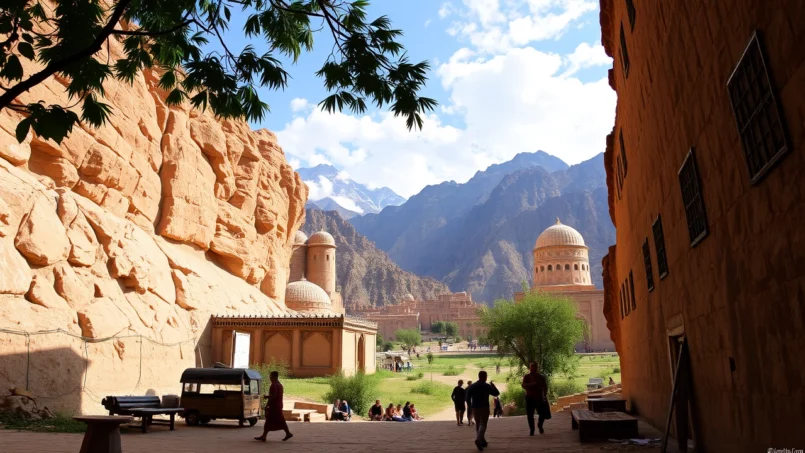
Before packing boxes, it’s useful to situate the country. Tajikistan covers approximately 143,000 km², about the size of a country like Greece, but 93% of its territory is mountainous. The Pamir and the Hissar or Alay ranges dominate the landscape, with passes regularly exceeding 4,000 meters. This spectacular terrain explains both the beauty of the places and the infrastructure difficulties.
The population is estimated at about 10.8 million inhabitants, ranking the country 89th in the world. The capital, Dushanbe, brings together nearly 863,000 inhabitants and concentrates the majority of political, economic, and… expatriate life. It is where almost all embassies, international NGOs, large organizations (World Bank, ADB, UNDP, WHO, etc.) and foreign companies are located.
The country is a semi-presidential republic with a strongly centralized power. Although Sunni Islam is the dominant religion, the state is secular and imposes strict rules to frame religious expression.
Languages and Daily Communication
The official language is Tajik, a variant of Persian written in the Cyrillic alphabet. Russian is widely used in administration, business, and between people of different ethnicities. In contrast, English remains marginal: it is estimated that about 5% of the population speaks it, mainly in diplomatic circles, NGOs, certain schools, and a few private healthcare facilities.
For an expatriate, it is highly recommended to master at least some basics in Russian or Tajik to facilitate daily procedures, discussions with a landlord, or medical consultations. At the same time, one must anticipate a cultural gap in interactions: communication is often indirect, politeness takes precedence over directness, and non-verbal language plays an important role.
A Poor Country but with Rapid Growth
Tajikistan remains one of the poorest countries in Central Asia. Over 20% of the population lives below the poverty line and GDP per capita is around $1,300. However, growth is impressive: +8.4% in 2024, with forecasts between 7.4% and 8.2% for 2025. This boom relies particularly on hydroelectricity, aluminum, certain minerals (gold, silver, uranium), agriculture (cotton, fruits, vegetables), and remittances from migrant workers.
For an expatriate, this combination of low local incomes and strong growth creates a contrast: the cost of living is extremely low, but so are local salary levels, except in a few sectors.
Why Consider Tajikistan as an Expatriation Destination
Most expatriates who choose Tajikistan do so for professional reasons (assignment to an international organization, a position in an embassy, a development project, a contract in hydroelectricity, mining, or IT) or for reasons of adventure and a taste for the novel. Few settle there by chance.
Several arguments regularly come up.
First, the cost of living. With a budget between $500 and $1,000 per month, a single person can live decently, even comfortably, especially if earning a salary in hard currency. Dushanbe is more expensive than the rest of the country but remains well below Western capitals.
The Pamirs, Lake Iskanderkul, as well as the Vakhsh and Rasht valleys, offer spectacular landscapes. These natural sites make it a prime destination for outdoor activities like trekking, mountaineering, or off-road road trips, providing a nearly endless playground for adventure enthusiasts.
Finally, the economic context. Tajikistan holds the 8th largest hydroelectric potential in the world (over 500 TWh theoretical) but only exploits about 4% of it. The gigantic Rogun Dam (3,600 MW, $4 billion investment, completion expected around 2030) symbolizes this direction. In its wake, needs are developing in engineering, finance, environment, infrastructure, and information systems.
Growing sectors likely to host expatriates include hydropower, mining and metallurgy, information technology (annual growth of about 15%, supported by digital modernization programs), tourism (international arrivals increasing by about 20% per year), as well as NGOs and international organizations.
Visas, Entry, and First Administrative Steps
One of Tajikistan’s assets is a visa policy considerably eased in recent years, but the rules remain technical and sometimes changing. It is crucial to distinguish what is suitable for a scouting trip and what is suitable for real expatriation.
Short Stays: Visa Exemption, E-Visa, and Visa on Arrival
Many nationals from Europe and North America can enter visa-free for a tourist stay of up to 30 days. Citizens of several former USSR states (Armenia, Belarus, Georgia, Kazakhstan, Kyrgyzstan, Moldova, Russia, Azerbaijan, Ukraine) benefit from visa-free stays of up to 90 days, or even unlimited for some.
For non-exempt nationalities, an e-visa system covers over 120 countries. The application is made online via the official portal evisa.tj. The cost is $30 for a single entry and $50 for multiple entries, with a right of stay of 60 days over a 90-day period. The e-visa has two major advantages: it is simple to obtain and holders do not have to register with OVIR (the visa and registration office), an obligation that applies to most other categories after 10 days of presence.
Cost in dollars of a visa on arrival to Tajikistan, excluding processing fee.
For an initial reconnaissance trip of 2 to 4 weeks, visa exemption (if eligible) or an e-visa are largely sufficient.
Working in Tajikistan: Work Visa and Permit
As soon as one wishes to work, even if remaining an employee of a foreign entity, the logic changes. The Tajik employer must generally sponsor a type M work visa. Large NGOs and international organizations are familiar with the procedure, which is not always the case with local companies.
The work visa is initially issued for a period of three months. To go beyond, one must obtain a work permit from the Migration Service of the Ministry of Internal Affairs, which will then allow extending the visa for up to a year. Required documents include a passport valid for at least six months, a signed employment contract, and a letter of invitation from the employer.
In practice, one must anticipate a sometimes bureaucratic process, with variable delays (count several weeks) and marked formalism (translated documents, apostille, etc.). Errors on visa stickers (misspelled name, incorrect dates) are not rare; it is necessary to carefully verify every element.
On-site Registration and Ancillary Obligations
Any stay exceeding ten days, except for e-visa cases, requires registration with the OVIR within ten days of arrival. Traditionally, employers or landlords handle this procedure. The cost is about 250 somonis, roughly twenty dollars, and requires ID photos and a copy of the rental contract.
Beyond 60 days of presence, a surprising obligation for a recent expatriate concerns the phone: one must register the IMEI code of their device with a local operator (T-Cell, Megafon, Babilon). Registration was free until recently, but an import tax was recently introduced on certain models; for example, an iPhone 11 can incur a charge of about $50. Payment is made via a system like “Dushanbe City / Express Pay,” which is also used to pay certain bills.
Finally, travel to the Gorno-Badakhshan Autonomous Region (GBAO, Pamir) requires a specific permit (about 15 somonis plus 5 somonis in fees). To access Lake Sarez, an additional, free permit is necessary.
Cost of Living: A “Low-Cost” Expatriation… with Nuances
Overall, Tajikistan is one of the least expensive environments in Central Asia. But raw statistics don’t tell the whole story: Dushanbe is significantly more expensive than the rest of the country, certain imported services (electronics, branded goods, international schools, private healthcare) can reach or exceed European prices, and local salaries are very low.
To get a concrete idea, it is useful to look at average figures for Dushanbe.
General Budget Overview
A synthesis of cost of living estimates provides a sense of scale.
| Profile | Dushanbe (with rent) | Dushanbe (without rent) | Tajikistan overall |
|---|---|---|---|
| Single person | 712 $ / month | 396 $ / month | 684 $ / month |
| Family of 4 | 1,759 $ / month | 1,211 $ / month | 2,202 $ / month (≈ 24,073 somonis) |
These figures should be taken as orders of magnitude based on a limited number of prices, but they reflect a reality: for an expatriate paid in euros or dollars, daily life is very affordable, including decent housing, regular outings, and some internal travel.
These costs can be compared to local salaries: the average net monthly salary is around $187 nationwide, and about $140 in Dushanbe. The indicated net median salary for the capital is about 2,293 somonis. This illustrates how high an expatriate’s purchasing power can be relative to the local population.
Housing: Moderate Rents, but Significant Variations
Housing is one of the key items in an expatriate’s budget. In Dushanbe, there is a varied offer: renovated or unrenovated old Soviet apartments, recent upscale buildings, small houses on the outskirts, even cottages with mountain views a few minutes from the center.
Key data to better know the capital of Tajikistan.
Approximately 863,400 inhabitants (2020 estimate), making it the country’s largest city.
Located between 750 and 930 meters above sea level, in the Hissar valley.
The city was officially founded in 1924 under the name Stalinabad, before resuming its historical name in 1961.
Dushanbe has been the political, economic, and cultural capital of Tajikistan since 1929.
| Type of property | Average monthly rent |
|---|---|
| Furnished 45 m² studio, “expensive” neighborhood | ≈ 4,017 somonis (≈ 367 $) |
| Furnished 45 m² studio, “normal” neighborhood | ≈ 2,000 somonis (≈ 183 $) |
| 1-bedroom apartment city center | ≈ 4,667 somonis (range: 3,500–5,500) |
| 1-bedroom apartment outside center | ≈ 2,625 somonis (range: 2,000–4,500) |
| 3-bedroom apartment city center | ≈ 7,404 somonis (range: 5,000–10,000) |
| 3-bedroom apartment outside center | ≈ 4,786 somonis (range: 3,000–8,000) |
Even in sought-after neighborhoods (Rudaki, Dom Pechati, areas near central parks or Somoni Square), an expatriate can rent a comfortable apartment for $300 to $600 per month, sometimes less outside the center.
Utilities are a non-negligible expense: estimates range from about 600 somonis per month for an approximately 85 m² apartment up to over 4,000 somonis in some very high readings (which seem to include heating, intensive air conditioning, and other services). For a 45 m² studio, a bill of 2,000 somonis for all services (electricity, water, heating, perhaps internet) is mentioned in some sources, but most expatriates report more moderate amounts outside of intensive use.
Small additional fees, rarely exceeding a dozen dollars, are sometimes required for building security, elevator, or waste removal.
Food, Outings, and Daily Life
Markets and supermarkets in Dushanbe offer a mix of very affordable local products and more expensive imported items. Seasonal fruits and vegetables are particularly inexpensive.
A typical price basket, like the one used to calculate the consumer price index, gives a more accurate idea of the evolution of the cost of living by grouping a representative set of goods and services commonly purchased by households.
| Product / service | Average price in somonis | Approximate equivalent in dollars |
|---|---|---|
| Simple lunch in business center | 45 somonis | ≈ 4.1 $ |
| Fast-food meal (combo type) | 35 somonis | ≈ 3.2 $ |
| Bread for 2 people (1 day) | 5.4 somonis | ≈ 0.5 $ |
| 500g of chicken breast | 55 somonis | ≈ 5 $ |
| 1 liter of whole milk | 13 somonis | ≈ 1.15 $ |
| 12 eggs | 18 somonis | ≈ 1.65 $ |
| 1 kg of tomatoes | 23 somonis | ≈ 2.1 $ |
| 1 kg of apples | 15 somonis | ≈ 1.3 $ |
| 1 kg of potatoes | 6 somonis | ≈ 0.55 $ |
| Local beer 0.5 l in supermarket | 15 somonis | ≈ 1.37 $ |
| Bottle of decent red wine | 42 somonis | ≈ 3.85 $ |
| Dinner for 2 in a neighborhood restaurant | 168 somonis | ≈ 15 $ |
| Dinner for 2 in an Italian “expat” restaurant | 401 somonis | ≈ 37 $ |
| Cappuccino in an area frequented by expats | 35 somonis | ≈ 3.2 $ |
| Men’s haircut in expat area | 50 somonis | ≈ 4.6 $ |
Even going out two or three times a week, the budget remains contained, provided one avoids excessive consumption of imported products or high-end wines and spirits.
Transportation and Communications
Urban public transport (bus, trolleybus, minibus “marshrutka”) costs very little but remains basic. For an expatriate, taxis, including via the local app (like Yandex Go), remain very affordable, provided the price is agreed upon or platforms are preferred.
A few useful figures:
| Item | Average amount |
|---|---|
| Single bus / local transport ticket | ≈ 2.5 somonis |
| Monthly public transport pass | ≈ 100–300 somonis (depending on source) |
| Gasoline, 1 liter | ≈ 9–10.4 somonis (0.8–0.9 $) |
| Taxi starting fare | ≈ 10 somonis |
| 1 mile of taxi | ≈ 4.8–8 somonis |
Regarding connectivity, mobile coverage is generally decent in the city, more uncertain in rural areas, and very patchy in the high valleys of the Pamir. Mobile and internet subscriptions remain reasonable:
| Service | Average price |
|---|---|
| Monthly mobile plan (calls + ~10 GB data) | ≈ 132 somonis |
| Fixed high-speed internet (60 Mbps +) | ≈ 168–287 somonis |
Electronic payments are developing, but society remains largely cash-based. Bank cards are accepted in some restaurants and hotels in Dushanbe, much less elsewhere. ATMs can run out of bills, hence the usefulness of keeping a reserve of clean, recent dollar bills.
Employment, Salaries, and Starting a Business
Moving to Tajikistan without a solid professional plan is risky: official unemployment exceeded 11% in 2024, and over 70% of the workforce is still employed in agriculture, at very low wages. The key for an expatriate is either to benefit from an assignment via an international organization, embassy, or company, or to come with a structured entrepreneurial project.
Local Salary Levels
The official minimum wage was raised to 1,000 somonis per month (about $100) in autumn 2025. The national average salary is between 2,500 and 3,100 somonis monthly (250–310 $), with strong sector disparities. In the fields, an agricultural worker earns around 1,082 somonis (just over $100), while finance or insurance can offer average salaries beyond 7,700 somonis.
Large NGOs, UN agencies, or certain multinationals pay well above these levels, especially for technical or management positions, but these opportunities remain numerically limited.
The law provides for a 40-hour week over 5 days, with a maximum of 8 hours per day, at least 24 days of paid annual leave, and 18 official holidays. However, in practice, especially in the local private sector, flexibility and overtime are common.
Opportunities for Expatriates
The areas where foreign profiles are sought or appreciated largely overlap with the country’s development axes:
– Hydroelectric projects (engineering, environment, project financing, site management);
– Extraction and processing of minerals and metals (gold, silver, aluminum);
– IT and digital transformation (system architecture, cybersecurity, management of projects funded by international donors);
– Adventure tourism and ecotourism (specialized guides, tour operators, accommodation);
– Health, education, and capacity building via NGOs and international agencies.
Most expatriates not seconded by institutions come with very specific skills and a good knowledge of international funding mechanisms. For other profiles, the entrepreneurial option may be more relevant.
Starting Your Own Business
The legal business framework allows foreigners to hold up to 100% of capital in most sectors, sometimes with constraints in areas considered strategic (defense, certain natural resource deposits). The main legal forms are:
– Limited Liability Company (LLC);
– Joint-Stock Company;
– Individual Entrepreneur status.
The minimum authorized capital required to create an LLC in Tajikistan is 500 somonis, approximately 50 dollars.
The country has established Special Economic Zones (SEZs) with tax relief (reduced corporate tax rate, customs facilities, etc.). For an industrial or logistical project, these SEZs can represent a significant lever.
Taxation: A Relatively Favorable Environment
For resident individuals, personal income tax is capped at 12%, with an exemption for the first 600 somonis of monthly salary. Anyone spending more than 183 days per year in the country is considered a tax resident; these residents are taxed on their worldwide income, while non-residents are only taxed on their Tajik-source income, at the same rate of 12%. Dividends are subject to a 12% withholding tax. Self-employed individuals must pay social contributions generally between 10% and 15% of their declared income.
The annual turnover threshold from which VAT registration becomes mandatory for businesses in Tajikistan.
Tajikistan has concluded double taxation avoidance treaties with about thirty countries, which helps reduce the risk of excessive taxation for an expatriate linked to two tax systems. However, there is no specific agreement like FATCA with the United States.
For a foreign entrepreneur, outsourcing accounting is common, but this service costs between $300 and $800 per month, a significant sum in the local context.
Housing: How to Find Accommodation Effectively
Finding adequate housing is a priority upon arrival. The rental market remains largely informal, with heavy reliance on word-of-mouth, “one-man-show” agents, and social media groups.
Where to Look and How to Negotiate
International platforms (Airbnb, Booking) are useful for the first weeks, while getting one’s bearings. But for a long-term rental, the most effective approach is often:
To find housing in Dushanbe, first book a hotel, guesthouse, or serviced apartment in the city center for 2 to 4 weeks. Then, activate your networks: colleagues, expatriates met on-site, Facebook or Telegram groups, and possibly local real estate agencies. Visit several apartments, carefully checking water pressure, heating, exposure, noise, finish quality, and the neighborhood. Finally, negotiate the rent and minimum lease duration, knowing that landlords often ask for 2 to 3 months’ rent in advance.
Local sites, like Somon.tj, publish many listings, with a large number of properties in Dushanbe: 2-3 room apartments in the city center, houses on the outskirts, large villas or cottages for families. Note that many “brokers” do not have a real office or license and receive their fees directly from the owner.
Rents are in principle paid in somonis, in cash. It is always useful to obtain, at a minimum, a simple written contract in Russian or Tajik, if only for registration with OVIR and to avoid arbitrary increases.
Practical Particularities
One must integrate some specifics of daily real estate life in Tajikistan:
Water, electricity, and gas bills are often left as small slips of paper in the doorjamb. Heating can be collective or individual, and in some neighborhoods, hot water and heating can be intermittent, especially in winter. Additional contributions (for guards, elevator maintenance, garbage) are collected in cash by building representatives. The “Dushanbe City” app is gradually allowing some bills to be paid from a smartphone.
Finally, air quality in Dushanbe, affected by traffic, certain industrial processes, and combustion heating, is officially rated as poor (on average over 40 µg/m³ of particles). For sensitive individuals, this can influence neighborhood choice and the need for an air purifier at home.
Health: A System in Transition, to be Supplemented by International Insurance
For any expatriation project, the state of the healthcare system is a key parameter. In Tajikistan, the situation is mixed and requires great caution.
An Underfunded Public System
The Soviet legacy, the flight of doctors abroad, and the chronic lack of resources have left a very fragile public system. Public health expenditures represent less than 2% of GDP, one of the lowest in the WHO European region, and direct patient payments (official or informal) constitute over 60% of total health expenditures.
Most public hospitals were built between the 1930s and 1970s and suffer from significant aging of buildings, obsolete equipment, drug stock shortages, and even difficulties paying electricity bills. Doctors and nurses are poorly paid (often $80 to $100 per month for a doctor, even less for a nurse), which fosters the development of under-the-table payments.
The government has launched a national health strategy until 2030, focused on strengthening primary care and family medicine, as well as cooperation with international donors like WHO and the World Bank. These reforms, however, are long-term and will take time to implement.
Realistic Options for an Expatriate
For an expatriate, the rule is clear: secure solid international health coverage, including medical evacuation to a better-equipped country (Kazakhstan, United Arab Emirates, Turkey, even Europe). Large international insurance companies (Cigna Global, Allianz, GeoBlue, etc.) offer policies with annual premiums ranging mostly from $1,000 to $5,000 depending on age, coverage, and deductibles.
In Dushanbe, some private facilities offer more acceptable standards, sometimes with English-speaking staff:
– Prospekt Medical Center;
– Sino-Tajik Friendship Hospital;
– various diagnostic clinics (Nurafzo, private clinics);
– a few well-equipped dental clinics, like Dent Plus.
A general practitioner consultation in this type of facility generally costs between 200 and 500 somonis ($20–50). Specialized care, advanced imaging exams, or certain procedures can quickly rise to several hundred dollars.
Outside the capital of Tajikistan, healthcare provision is very limited, even in large cities. On the Pamir Highway (M41), health points are rare and poorly equipped, and there is practically no mountain rescue service.
Prevention: Vaccines, Water, Altitude
Before departure, it is recommended to update basic vaccinations, and get vaccinated against hepatitis A, hepatitis B, and typhoid. A rabies vaccine is advised for people likely to spend time in rural areas, in contact with dogs or wild animals.
Tap water is not potable. It is prudent to drink only sealed bottled water, or boiled/filtered water. Digestive issues are common among new arrivals.
In mountainous regions, altitude is a real risk. The Pamir Highway peaks at over 4,600 meters, and many hikes cross the 4,000–5,000 meter mark. Acute mountain sickness (headache, nausea, loss of appetite, shortness of breath with minimal effort) is common. Slow progression, abundant hydration, and, if needed, taking appropriate medication in consultation with a doctor before departure are essential.
Finally, diseases like tuberculosis or certain tick-borne infections remain present. A well-stocked first aid kit and a supply of personal medications are strongly advised.
Education: Schooling Your Children in Dushanbe
The Tajik public education system, mostly in Tajik or Russian, and often under-resourced, does not always meet the expectations of expatriate families. In Dushanbe, however, a few private international institutions allow for curriculum continuity.
Notably:
Presentation of the main international schools in the Tajik capital, offering English-language programs from kindergarten to high school.
Accredited international school in central Dushanbe. British program enriched with a STEM component, from kindergarten to high school. Teaching in English with expatriate and local teachers, welcoming students from nearly 30 nationalities.
The only officially recognized Cambridge International School in the country, a member of international networks. Offers the Cambridge program (kindergarten to AS/A Levels) with English as the language of instruction, and Tajik and Russian as compulsory languages.
Branch of the Quality Schools International network, founded in 2004, based on an American model. Primary and secondary program in English with foreign language options (Russian, German, French, Chinese) and awarding of high school-level diplomas.
These schools generally have smaller class sizes, more modern facilities than the national average, and a multilingual environment. In return, tuition fees are high relative to the local cost of living, and capacity remains limited. Waiting lists are not uncommon, so it is preferable to make contact several months before the move.
For short stays or for families whose children are already following an international online curriculum, hybrid solutions combining distance learning with local social activities are sometimes favored. This approach maintains pedagogical continuity while promoting integration and socialization in the host country.
Banking and Money: Opening an Account and Getting Organized
Even though the economy remains largely based on cash, opening a local bank account can be useful for receiving a salary in somonis, paying rent, or covering certain services.
Several commercial banks dominate the landscape: Spitamen Bank, Alif Bank, Amonatbank, Eskhata Bank, Humo, etc. Foreigners have the right to open accounts, often in local currency and sometimes in foreign currencies (dollar, euro, ruble).
For a standard personal account, banks generally require:
– a valid passport;
– sometimes a local tax identification number (TIN);
– an address in Tajikistan.
Opening an account is done in-branch with documents often in Russian to sign. The duration varies from 20 minutes to several days depending on the institution and account type. Issuing a card (often Visa) is paid (about 20 somonis) and requires setting a PIN code.
For entrepreneurial structures (company, independent activity), the range of required documents expands: registration certificate, letters from tax authorities, signature card, etc. Non-residents can open investment and operational accounts, but under conditions regulated by the National Bank.
In all cases, it is prudent to check fees (account maintenance, transfers, exchange) and any card limitations (limits, use abroad).
Culture, Society, and Integration
Moving to Tajikistan is not just changing time zones or scenery; it is entering a very communal society, where family, religion, and hospitality play a central role.
Essential Social Codes
Tajiks place great importance on respect for elders, family reputation, and a sense of honor. Foreign visitors are generally welcomed with benevolent curiosity. Invitations to drink tea, share a plate of plov (rice pilaf with meat) or shashlik (kebabs) are frequent, especially outside large institutions where relationships are more formalized.
Accepting these gestures of hospitality, sampling the tea and dishes, complimenting the house or children, are important markers of respect. Conversely, systematically refusing or showing distrust towards food or customs can be perceived as a form of contempt.
Greetings often follow traditional formulas like “As-salaam alaykum,” accompanied by the gesture of hand to heart. Among men, handshakes are common practice. However, between men and women, it is preferable to maintain greater distance. In case of doubt, settle for a verbal greeting and wait for the other person to initiate any physical contact.
Dress is generally modest. For women, it is recommended to cover shoulders and knees, avoid clothes that are too tight or flashy, especially in rural areas and near mosques. Men generally adopt sober attire (long pants, shirt).
Religion and Conservative Norms
Although the constitution is secular, Islam deeply marks daily life. Mosques are found in every neighborhood, religious holidays structure the calendar, and social norms are generally conservative. Alcohol consumption is tolerated (and quite widespread in certain circles) but still frowned upon in public spaces or during religious events.
Authorities closely monitor religious signs (like beards or clothing) and public expressions. For an expatriate, it is prudent to avoid any public comment on religion or politics, especially on social media, under penalty of fines or prosecution for disrespect of national or religious symbols.
On issues of gender and sexual orientation, the law does not prohibit homosexual relations, but society remains largely hostile, especially outside major cities. Displays of affection, regardless of gender, are rather reserved for the private sphere.
Social Life and Expatriate Network
The expatriate community is numerically small but very active, especially in Dushanbe. Networks like InterNations regularly organize meetups, outings, clubs (hiking, cycling, languages, reading). These events are useful for finding professional contacts, trekking partners, or simply friends.
Many expatriates choose to join local hiking or sports groups, which allows them to explore the mountains safely and integrate faster. Practicing Russian or Tajik, even roughly, greatly facilitates these interactions.
Safety, Risks, and Precautions
Contrary to some images associated with neighboring Afghanistan, Tajikistan is generally perceived as relatively safe for foreigners, particularly in Dushanbe. This does not mean there are no risks, but that they are often linked to geographical factors (roads, mountains, altitude), border tensions, and a diffuse terrorist presence in the region.
Crime and Relations with Police
Petty crime (pickpocketing, theft in markets or transport, sometimes nighttime assaults) exists, especially in crowded areas and at night, but remains moderate compared to many large cities. Violent crimes against foreigners are rare, though they have been reported.
Corruption and unofficial payment for “services” by some police or officials exist. It is advised to:
When traveling, it is recommended to always carry either the original passport or at least a certified true copy, as the law allows police to check identity. Avoid handing over your passport unnecessarily; prefer showing it at a distance or providing a copy. In case of a dubious fine demand, do not hesitate to ask to speak to the agent’s superior. For any serious conflict, immediately contact your diplomatic representation (embassy or consulate).
Emergency numbers are 112 (general) and 102 for police. A tourist police also operates in Dushanbe.
Borders, Sensitive Areas, and Terrorism
The main sources of security tension are not in Dushanbe itself, but in border areas and certain autonomous regions:
The border with Afghanistan is officially closed and presents risks of illegal infiltrations, smuggling, and presence of armed groups, with sometimes deadly clashes. The border with Kyrgyzstan has seen deadly clashes related to territorial disputes; although some border crossings have partially reopened, caution is advised. In the Gorno-Badakhshan Autonomous Region (GBAO), traversed by the Pamir Highway, violence and restrictions (internet cuts, suspension of special permits required for visits) can occur.
Furthermore, the presence of regional jihadist groups (IMU, IJU, Jamaat Ansarallah) and affiliates of Islamic State in the broader area, combined with past attacks against foreigners, leads authorities and embassies to recommend vigilance in crowded places (shopping centers, large events, official sites, places of worship). In practice, the vast majority of expatriates are never directly confronted with this risk, but it must be acknowledged.
Roads, Mountains, and Natural Disasters
The most tangible risks for many expatriates are on the roads and mountain trails. The condition of the road network varies enormously: some sections are asphalted and relatively decent, others remain in very poor condition, narrow, without safety rails, and exposed to rockfalls, landslides, and avalanches, especially in spring and winter.
The road between Dushanbe and Khujand, notably via the tunnel, and the Pamir Highway present dangers in winter (ice, reduced visibility, closures). The absence of frequent gas stations and breakdown service makes a 4×4 in perfect condition essential, with reserve fuel and appropriate winter equipment.
The country is located in an active seismic zone. Earthquakes can trigger landslides, mudflows, or collapses of poorly constructed buildings. Spring and early summer are also prone to flash floods and sudden flooding, especially in certain valleys (Vakhsh, Rasht, regions of Khatlon and GBAO).
Caution is also required during hikes: do not go alone, inform someone of your itinerary, hire a local guide if possible, carry an emergency communication device (satellite beacon, satellite phone), a complete first aid kit, and equipment to face unexpected nights at altitude.
Daily Life: Adapting Without Getting Lost
Living in Tajikistan requires a certain flexibility: the concept of time is less rigid than in Northern Europe, power or water outages are part of daily life in some neighborhoods, bureaucracy can be bewildering, and the language barrier complicates things.
A few reflexes facilitate adaptation:
For a successful setup, it is advisable to learn a few key phrases in Tajik and Russian (greetings, numbers, basic concepts like contract or health). Accepting the unexpected as a structural given is essential. Plan equipment for four seasons, including proper shoes for broken sidewalks and warm clothes for the continental winter. Anticipate the unavailability of certain toiletries or health products (tampons, contact lens solutions) by building up a stock upon arrival. Finally, patiently build a local network (neighbors, shopkeepers, other parents), often more useful than a mere expat address book.
By respecting local codes – removing shoes before entering someone’s home, not wasting bread, avoiding gestures considered impolite like pointing, responding to invitations – integration generally proceeds without major hitches.
—
Moving to Tajikistan as an expatriate is not reproducing one’s Western life against a mountain backdrop; it is accepting a paradigm shift: sometimes failing infrastructure, a fragile healthcare system, heavy bureaucracy, but also ultra-low cost of living, breathtaking natural environments, a very hospitable society, and a real possibility to have an impact, especially in development, energy, or education sectors.
For those who come with a clear project, good administrative preparation, serious health coverage, and a desire to learn, Tajikistan today offers one of the most unique expatriation grounds in Asia. For others, an exploratory stay of a few weeks will already be enough to gauge whether one feels ready to trade a certain comfort for an extraordinary human and professional adventure.
Disclaimer: The information provided on this website is for informational purposes only and does not constitute financial, legal, or professional advice. We encourage you to consult qualified experts before making any investment, real estate, or expatriation decisions. Although we strive to maintain up-to-date and accurate information, we do not guarantee the completeness, accuracy, or timeliness of the proposed content. As investment and expatriation involve risks, we disclaim any liability for potential losses or damages arising from the use of this site. Your use of this site confirms your acceptance of these terms and your understanding of the associated risks.

Cyril Jarnias is an independent expert in international wealth management with over 20 years of experience. As an expatriate himself, he is dedicated to helping individuals and business leaders build, protect, and pass on their wealth with complete peace of mind.
On his website, cyriljarnias.com, he shares his expertise on international real estate, offshore company formation, and expatriation.
Thanks to his expertise, he offers sound advice to optimize his clients' wealth management. Cyril Jarnias is also recognized for his appearances in many prestigious media outlets such as BFM Business, les Français de l’étranger, Le Figaro, Les Echos, and Mieux vivre votre argent, where he shares his knowledge and know-how in wealth management.





