
 Published on and written by Cyril Jarnias
Moving to Nepal as an expatriate means accepting a permanent gap: between the Himalayas and the valleys, omnipresent spirituality and nitpicking bureaucracy, a low cost of living and fragile infrastructure. For many, the country is a lasting love affair. But to turn it into a life project rather than just an extended trip, you need to prepare your relocation seriously.
This practical guide gathers all the key information to prepare for your expatriation: understanding the country, choosing your city, housing, managing your budget, obtaining the appropriate visa, working legally, healthcare, schooling for your children, opening a bank account, and facilitating your integration.
Understanding Nepal Before Packing Your Bags
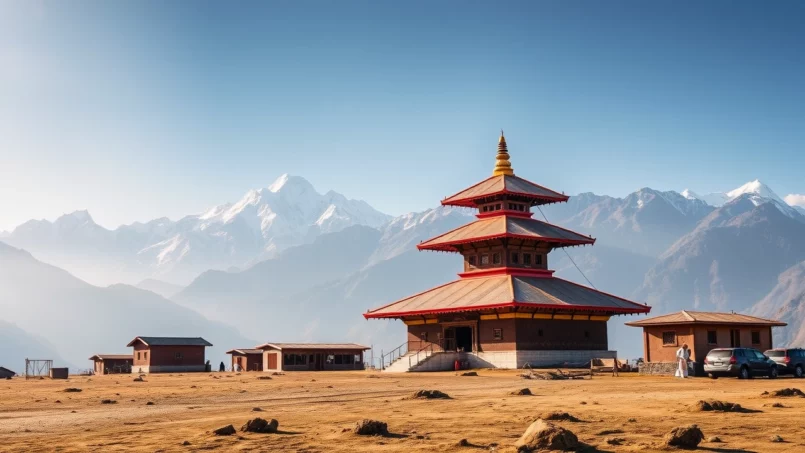
Nestled between India and China, Nepal’s terrain ranges from the plains of the Terai to the world’s highest peaks. Eight of the planet’s ten highest mountains are within its territory, including the iconic Everest. This spectacular scenery, however, masks a country with limited infrastructure, a fragile economy, and sometimes bewildering bureaucracy.
The capital, Kathmandu, is the country’s political, economic, and cultural center. It concentrates the majority of expatriates, the best international schools, most private hospitals, and nearly all international institutions. The Kathmandu Valley, a UNESCO World Heritage site for its seven monument zones, also encompasses the historic cities of Patan (Lalitpur) and Bhaktapur.
Nepalese society is a patchwork: over 125 ethnic groups, 123 languages, a mosaic of religions dominated by a unique blend of Hinduism and Buddhism. Daily life remains very community-based, centered on family and neighborhood, with great importance placed on respect for elders, rituals, and festivals.
The country’s GDP per capita is about 722 dollars per year, reflecting a low standard of living.
Key points to keep in mind before committing:
– uneven road and electrical infrastructure, especially outside major cities
– significant natural risks (earthquakes, landslides, floods)
– weak public healthcare system, requiring reliance on private care for expatriates
– very welcoming society, but specific social and cultural codes
– very low cost of living, but expensive imports and international schools
Where to Live: Kathmandu, Pokhara… and Other Options
For an expatriate, the choice of city greatly conditions quality of life. Two main hubs dominate: Kathmandu and Pokhara. Other cities exist but remain more specialized or less structured for long-term hosting of foreigners.
Kathmandu and Its Valley: The Expatriate Nerve Center
Nearly a million people live in the municipality of Kathmandu, many more if you consider the entire valley. The city is a whirlwind: dense traffic, dust, noise, tangled power lines, but also temples and stupas on every street corner, small cafes, and a unique mix of ancient and modern.
Each neighborhood offers a different atmosphere and lifestyle profile.
Neighborhoods in North Kathmandu
In the north of the city, several areas are particularly popular with expatriates.
Lazimpat is one of the historic strongholds for diplomats and NGOs. It’s a relatively quiet sector, with many embassies (British, Indian notably), upscale hotels like the Radisson or Hotel Shanker, restaurants, and especially the CIWEC Clinic, a reference in travel medicine for foreigners. Thamel and Durbar Marg are within walking distance, making it a practical compromise between tranquility and activity.
A few minutes’ walk away, Baluwatar and Maharajgunj form another sought-after residential hub. Baluwatar is home to the Prime Minister’s residence, several embassies, and very beautiful houses. Maharajgunj is also considered a “prime” location for high-level expatriate residences.
Thamel is Kathmandu’s most central and well-known neighborhood for travelers. Its alleys are filled with hotels, trekking agencies, shops, cafes, bars, and nightclubs. Part of the streets have been pedestrianized, improving the quality of life on-site. The neighborhood attracts many young expats and digital nomads for its lively nightlife and high density of services, despite the downsides of noise and pollution.
Durbar Marg lines up luxury hotels, shopping malls, banks, and international restaurants. It’s more of a commercial artery than a residential neighborhood, but some apartments can be found there.
Further east, Boudha (Boudhanath) is a Tibetan village within the city. Around its enormous Buddhist stupa, a UNESCO site, unfolds a whole world of monasteries, cafes, vegetarian restaurants, meditation centers. The atmosphere is more peaceful, deeply marked by Tibetan culture. Nearby, the Hindu temple of Pashupatinath adds another spiritual dimension.
On the northern edge of the valley, Budhanilkantha and Golfutar benefit from fresher air, views of the Shivapuri National Park hills, and a greener residential environment. Budhanilkantha is known for its temple, Golfutar for well-managed real estate projects. It’s an interesting choice for families seeking a bit of calm, provided they accept longer commutes to the center.
Areas like Swayambhu (around the famous “Monkey Temple”), Raniban/Banasthali, or Gokarna also offer a more breathable setting, with organized residential neighborhoods and relatively easy access to the rest of the city.
Neighborhoods in South Kathmandu and Patan
South of the Bagmati, the city of Patan (Lalitpur) was long a distinct kingdom. Its historic heart, around Patan Durbar Square and the Patan Museum, preserves an extraordinary Newar heritage: temples, inner courtyards, carved brick houses. It has seen the development of small boutique hotels, renovated traditional houses turned into apartments, and many artisan workshops.
The neighborhoods of Jawalakhel, Jhamsikhel, Sanepa, and Kupondole, located southwest of the city, form the most sought-after cluster by the expatriate community for their comprehensive range of services and amenities.
Known for its historic stadium and the Kathmandu Zoo. Also home to the Jawalakhel Handicraft Centre, famous for its woolen products.
A lively neighborhood with an excellent selection of international restaurants, trendy cafes, and small shops. A convenient commercial and service hub.
Residential and green, appreciated for its traditional Newari houses and embassies. Offers local markets and a relatively peaceful setting.
Renowned for its shopping street (Patan Dhoka) with numerous art galleries, handicraft shops, and bookstores. A cultural crossroads.
– the United Nations headquarters on Pulchowk Road
– a high concentration of international restaurants (Italian, Japanese, Vietnamese, French, etc.)
– trendy cafes, art galleries, small boutiques
– establishments like Labim Mall
– reputable schools like St. Xavier’s or St. Mary’s
Jhamsikhel, in particular, concentrates many modern apartments, houses with gardens, and services geared towards the international clientele. Bhaisepati, just to the south, behind the ring road, offers newer housing developments, often gated communities, both quiet and more spacious.
Closer to the administrative center, Thapathali is known for the Baber Mahal Revisited complex, which houses upscale boutiques, restaurants like Chez Caroline, a small hotel (3 Rooms by Pauline), and the Siddhartha Art Gallery. It’s an excellent place to meet the local bourgeoisie and expatriates.
Other more affordable residential sectors, like Kuleshwor, Imadol, or Dallu, attract middle-class Nepali families and some foreigners who want to distance themselves from the highest rents.
Living in the Historic Towns around Kathmandu
Bhaktapur, east of the valley, is a magnificent Newar town, once a royal capital, known for its Durbar Square, the Nyatapola Temple, and pottery. It was hard hit by the 2015 earthquake but remains an architectural gem. A few expatriates choose to live there for the calmer, more traditional atmosphere, accepting the commute to Kathmandu for certain services.
Other destinations like Godavari (southeast, near institutes like ICIMOD) or hill villages (Nagarkot, Dhulikhel, Shivapuri) are primarily weekend or retreat spots, not main bases for living, although residential projects exist there.
Pokhara, the “Nature” Alternative to Kathmandu
Pokhara, the country’s second-largest city, stretches along Phewa Lake, with the Annapurna range as a backdrop. It’s the major trekking hub for the west (Annapurna, Mardi Himal, etc.). The cost of living is generally lower than in Kathmandu, rents are softer, the air is more breathable, and the pace of life is more relaxed.
For an expatriate working remotely or in tourism who doesn’t need to be close to international institutions, Pokhara is an excellent option: decent comfort, exceptional landscape, outdoor activities (paragliding, hiking, mountain biking), and a small network of foreigners.
Other Cities: Good to Know, But More Specialized
Other cities can host expatriates, often within the framework of specific projects:
– Chitwan, famous for its UNESCO-listed national park, attracts those working in wildlife conservation or safari tourism (one-horned rhinos, tigers).
– Dharan, Biratnagar, or Butwal are regional hubs, more for those following a specific project (NGO, company, university).
– Tansen, Ilam, Bandipur, Daman are charming towns, pleasant for medium stays, but with more limited services in the long term.
For a family relocation with children in international schools, Kathmandu and its valley remain by far the most realistic choice.
Cost of Living: A Light Budget, But Understand It Well
Living in Nepal costs significantly less than in Europe or North America, especially for housing and basic food. But certain items – international schools, high-level private healthcare, imports – can quickly drive up the bill.
Budget Estimates
Available estimates give a fairly consistent range. Here is a summary of average monthly costs (excluding extravagances), converted to dollars for easier comparison.
| Profile | Estimated Monthly Cost (USD) | Summary Comment |
|---|---|---|
| Nomad / digital nomad | 900–1,000+ | Decent housing, regular outings |
| Single expatriate | 500–700 | Simple lifestyle, modest housing |
| Family (4 people) | 1,000–1,700+ | Varies greatly with type of school and housing |
| Local resident | ~300 | Without international school or “expat” lifestyle |
Cost of living indices (like Numbeo/Expatistan) place Kathmandu around 25–32 on a base of 100 (New York). Rent, however, has a very low index (around 4), reflecting very modest prices compared to major capitals.
Housing: Rents, Types of Housing, and Pitfalls to Avoid
Rents vary greatly depending on the neighborhood, size and condition of the property, as well as the degree of furnishing.
In practice:
– in Kathmandu, a decent small apartment (one bedroom) often rents for between 200 and 400 dollars per month
– a comfortable two or three-bedroom apartment is generally between 400 and 800 dollars
– a large independent house for a family can go up to 800 dollars and beyond, especially in very sought-after neighborhoods (Sanepa, Jhamsikhel, Baluwatar, Bhaisepati)
Specific ranges for certain central neighborhoods in Kathmandu give a good idea:
| Neighborhood (Kathmandu) | Type of Housing | Average Monthly Rent (USD) |
|---|---|---|
| Thamel | Studio / 1 bedroom | 300–500 |
| Patan (center) | 1 bedroom | 200–400 |
| Boudha | 1 bedroom | 250–350 |
| Jhamsikhel | 1–2 bedrooms | 400–600 |
Furnished or semi-furnished accommodations are common and more expensive. If you plan to stay more than a year, buying some of the furniture yourself may be cheaper than an “all-inclusive” rent.
It is advisable to start your stay with a serviced apartment or an Airbnb for a few months. This gives you time to get your bearings, explore different neighborhoods, and spot good real estate listings on platforms like Hamrobazaar, through local agencies, or in Facebook groups.
Beyond the price, some practical points are crucial:
Tap water is often irregular, supplemented by wells or deliveries; check its source and color. Planned power outages have stopped, but sporadic cuts remain; upscale apartments often have inverters. Waste collection is not always regular; confirm the arrangements with the landlord. Although the country is generally safe, petty crime exists; a standalone house may require a guard or a dog. Following the 2015 earthquake, avoid dilapidated buildings or those over three stories and inquire about any structural reinforcements. Air pollution is severe inside the ring road; it’s better outside and near the hills. Quality anti-pollution masks are recommended.
Food and Restaurants: Cheap, Varied, But Mind the Hygiene
The basis of Nepali diet is dal bhat (rice, lentils, and accompaniments), complemented by momos (dumplings) and thukpa (noodle soup). Prices remain very affordable:
– simple meal in a small local restaurant: 150 to 500 NPR (roughly 1 to 4 dollars)
– meal for two in a mid-range restaurant: 1,600 to 5,000 NPR
– cappuccino-type coffee: 120 to 550 NPR, depending on the place
– local draught beer: 200 to 600 NPR
Basic products (vegetables, eggs, chicken, rice) are cheap at markets or small grocery stores. Shopping and cooking for yourself is much cheaper than eating out every day, even if local restaurants are economical.
On the other hand, imported products (European cheeses, cured meats, wines, Western-brand cereals) are expensive. If you have strong “expat” dietary habits, budget accordingly.
Tap water is not drinkable. You must systematically drink filtered, boiled, or bottled water. Expatriates often equip their homes with water filters.
Transportation: Very Cheap, But Not Always Comfortable
The road network combines major congested arteries around the Kathmandu ring road and winding, sometimes dangerous mountain roads outside the valley. Driving is on the left.
The most commonly used means of transport:
– local buses and minibuses, extremely cheap (20–50 NPR per trip) but crowded and disorganized;
– taxis, with starting fares around 200–500 NPR and a very variable per-kilometer cost;
– ride-hailing apps like Sarathi for more predictability;
– “green” buses Sajha Yatayat on some structured routes;
– motorcycle or scooter (the most used solution by urban middle classes, but requiring defensive driving).
A monthly pass for public transport generally costs between 600 and 3,000 NPR. Gasoline is around 600–700 NPR per gallon.
Getting around takes a lot of time during rush hour, and road accidents – especially involving buses and motorcycles – are frequent. Driving at night on major mountain roads is strongly discouraged.
Other Regular Expenses: Internet, Utilities, Coworking
Electricity, water, garbage, and sometimes gas are grouped into “utilities”. For an apartment of about 85 m² in Kathmandu, the monthly bill is most often between 2,000 and 10,000 NPR.
A fixed high-speed internet connection (60 Mbps or more) generally costs between 800 and 2,500 NPR per month. With the average speed around 5–6 Mbps, it’s worth choosing a good provider if you work online.
Mobile plans (calls + 10 GB of data and more) are very affordable, often between 250 and 1,000 NPR per month.
Coworking spaces are multiplying. A nomadic workstation (“hot desk”) is billed around 170–180 dollars per month, sometimes with shorter packages for occasional users.
Visas and Residency Status: How to Stay Legally
Nepal does not offer a dedicated “nomad visa”, and working remotely for a foreign employer while officially a tourist is a gray area. However, several options exist for a more formal setup: business visas, work visas, student visas, resident visas, etc.
The Tourist Visa: Entry Point, But Limited Duration
For most nationalities, entry is with a tourist visa, obtained either on arrival (Kathmandu airport and some land border posts) or in advance from an embassy.
Standard durations are 15, 30, or 90 days, with fees around 30, 50, and 125 dollars. In total, the maximum stay as a tourist is 150 days per calendar year. The visa can be extended at immigration offices (Kathmandu, Pokhara), for a fee (lump sum for the first 15 days, then an amount per additional day).
It is illegal to engage in remunerated activity or even volunteer work under the cover of a tourist visa. This doesn’t stop some from doing it, but risks exist if checked.
Working in Nepal: Work Permit and Work Visa
To hold a job legally, two elements are essential:
– a work permit issued by the labor authorities (Department of Labor and Occupational Safety)
– a work visa (non-tourist category) issued by the Department of Immigration based on this permit
The general scheme is as follows:
1. Job offer: You first need a proposal from a registered entity in Nepal (NGO, company, school, international organization…). 2. Employer’s steps: The employer must prove they could not recruit locally (ads posted on a dedicated portal, press advertisement, etc.) and that the position genuinely requires a foreigner. 3. Work permit application: Submission of a file with company documents (registration, tax certificate, social audit, etc.) and the candidate’s documents (diplomas, CV, experience certificates, police clearance certificate, medical certificate). Processing can take 15 to 30 working days. 4. Visa conversion: Once the permit is obtained, the candidate – often already present on a tourist visa – applies for a work visa at immigration.
This is the average number of weeks needed, on average, to obtain a work visa, from application to issuance.
The costs are not negligible:
– work permit fees (NPR 15,000 for 6 months, 20,000 beyond)
– work visa around 75 dollars per month, plus extra for multiple entries
Ultimately, the entire process can represent 500 to 1,500 dollars, depending on the duration, consulting services used, and any back-and-forth.
Other Types of Visas: Business, Study, Residence, Family
Alongside the work visa, other categories allow for long-term stays, under conditions.
Several visas allow stays in Nepal, each with specific conditions: the business visa requires an investment of about $50,000 and supporting documents; the investment/residence visa demands larger commitments (e.g., $100,000 in an industrial enterprise); the student visa requires admission to a recognized institution, approval from the Ministry of Education, and proof of financial means; the spouse visa is based on a registered marriage with a Nepali citizen; and the resident (retirement) visa is for retirees with a sufficient regular income (about $20,000/year to spend in Nepal) or major investors.
In all cases, the essential rule is the same: you must initially arrive on a tourist visa, then convert it once in the country, by submitting a robust file.
Non-Resident Nepalis and Ties with the Diaspora
For people of Nepali origin who have acquired another nationality, the status of “Non-Resident Nepali” (NRN), defined by the 2008 law, grants certain rights: facilitated visa, possibility to open specific bank accounts, investments, property ownership, inheritance. The 2015 Constitution also provided for a status of “NRN citizenship” for certain categories, although its implementation remains imperfect.
For an expatriate without Nepali ancestry, these rules mainly concern money transfers and banking relations, when they have family or professional ties with NRNs.
Working, Teaching, Doing Business: What Are the Realities?
The job market for foreigners remains limited. Most expatriates stationed in the country work in:
– international organizations (UN, major NGOs, donors like the World Bank, cooperation agencies)
– NGOs and development projects in the fields of health, education, agriculture, environment
– the tourism sector (trekking agencies, hospitality, consulting, sometimes infrastructure management)
– teaching English or specialized subjects in international schools and some private institutions
– a few local or international companies, particularly in IT, engineering, energy (hydropower)
The average local monthly salary is about 190-200 dollars, with a minimum around 130 dollars. Expatriates recruited abroad generally benefit from higher salaries, but must anticipate specific expenses like healthcare, schooling, and international flights.
Setting up a business in Nepal is possible but reputed to be complex: slow administrative procedures, changing legal frameworks, difficulties enforcing contracts. Many foreigners go through local partners or “Employer of Record” companies that manage the legal and payroll aspects for them.
For digital nomads, the key is not to sell services on the local market or be employed by a Nepali entity as long as no work visa is obtained, to remain compliant.
Health: A Fragile System, International Insurance Essential
The Nepali healthcare system relies on a mix of under-resourced public structures and a rapidly growing private sector, particularly in Kathmandu and Pokhara. For an expatriate, relying on public hospitals is not realistic, except for very basic care.
Access and Level of Care
In cities, especially the capital, you can find private hospitals and clinics with:
– doctors who often have partial or complete training abroad
– decent basic equipment for emergencies, common exams, certain surgical procedures
– possibility to have exams like MRI or CT scan for costs much lower than in the West (count, for example, 70 dollars for an ER visit, 250 dollars for an MRI)
In Kathmandu, establishments like CIWEC Clinic, HAMS, Grande, Mediciti, Norvic International Hospital, or Om Hospital are among the most cited by the expatriate community. In Pokhara, CIWEC also has a branch, and the regional hospital provides certain treatments.
In rural areas, access to healthcare is limited by a lack of equipment, medication, and medical personnel, as well as long distances to reach health centers. This stark contrast with urban areas illustrates territorial inequalities in healthcare.
Health Risks to Know
Main risks for an expatriate:
– digestive disorders (diarrhea, parasites, food poisoning) related to water and hygiene
– respiratory infections, exacerbated by air pollution in the Kathmandu Valley
– mosquito-borne diseases in certain areas and seasons (dengue notably)
– rabies, with many stray dogs in cities
– endemic diseases like tuberculosis or, more rarely, leprosy
– Acute Mountain Sickness (AMS) and its severe forms (pulmonary or cerebral edema) during treks above 2,500 m
For trekking, regulations now require going through an authorized guide and declaring your itinerary. Helicopter evacuations are frequent in high-altitude areas once symptoms of altitude sickness are not treated in time.
Why International Insurance is Non-Negotiable
Even in the city, the limits of the medical system make it essential to have the possibility of evacuation to a better-equipped neighboring country (India, Thailand, Singapore).
Good expatriate coverage should therefore include: comprehensive health protection, liability insurance, repatriation assistance, and coverage for personal belongings.
– coverage of medical expenses in private clinics, including hospitalization
– emergency medical evacuation, including helicopter rescue in the mountains
– medical repatriation to your home country or to a third country
– coverage for chronic conditions, follow-up care, possibly maternity
– direct payment (“cashless”) method with some hospitals to avoid having to advance large sums
International insurers like Cigna Global, Allianz, MSH International, NOW Health, SafetyWing, William Russell or specialized brokers (Pacific Prime, Alea, Expat Financial) offer suitable contracts, with coverage ceilings often in the millions of dollars.
It is essential to check the exclusions: some contracts do not cover trekking beyond a certain altitude (3,500–4,000 m) or require specific extensions. You must also read carefully what concerns pre-existing conditions and waiting periods.
Family and Schooling: A Real Asset, But at a Cost
The Kathmandu Valley offers a significant choice of international schools, suited to the educational plans of expatriate families, but fees can be very high compared to the local cost of living.
Local Education System: Limits and Complementarity
The national Nepali system starts at 6 years old (grade 1) and is organized into primary cycle (1–5), lower secondary (6–8), secondary (9–10) with the School Leaving Certificate exam, then grades 11–12. Quality remains generally below Western standards, especially outside the best institutions in the capital.
Many expatriate families therefore choose accredited international schools, particularly when children will continue their studies in other countries afterwards.
Main International Schools in the Kathmandu Valley
The capital and its periphery have several reference institutions:
– Lincoln School (Kathmandu, Rabi Bhawan / Kuleshwor) American school from kindergarten to high school, with a curriculum preparing for North American universities and Advanced Placement (AP) courses. Very international community, recognized accreditations.
– The British School Kathmandu (TBS) (Sanepa, Jhamsikhel, Lalitpur) Follows the English national curriculum, from Early Years to A-Levels, with IGCSE in secondary. Member of British Schools networks (FOBISIA, COBIS).
– Kathmandu International Study Centre (KISC) (Dhobighat / Thecho, Lalitpur) Christian international school from kindergarten to post-secondary (K–13), accredited by both American bodies and Cambridge International.
– French International School of Kathmandu (École Française Internationale de Katmandou, in Sanepa) Offers bilingual French-English education aligned with the French program.
– Ullens School (Khumaltar, Lalitpur) First school to offer the International Baccalaureate (IB) in Nepal, combining this program with the national curriculum.
Other schools have varying fee and quality levels: Rato Bangala School, Budhanilkantha School, institutions affiliated with the CBSE (Indian curriculum) or Cambridge, etc.
Fees can be significant. For example, an international primary school can charge from 240,000 to nearly 1,800,000 NPR per year. For a family of four with two children in this type of school, the “education” item can far exceed the rest of the monthly budget.
For preschool, the offer of nurseries and “Montessori” kindergartens is very wide. Check the language of instruction (often English), the seriousness of the program, and the quality of the premises.
Bank, Money, and Transfers: Daily Practice
Nepal is an economy largely based on cash, especially for foreigners. The currency is the Nepalese rupee (NPR). You cannot (or with great difficulty) reconvert NPR into foreign currency outside the country, hence the interest in limiting excessive conversions.
Withdrawals and Everyday Payments
ATMs are present in all major cities. Fees vary, but a withdrawal with a foreign card can cost about 400 NPR on the Nepali side, plus commissions from your home bank. Some international banks (e.g., Standard Chartered, in certain branches) have more favorable policies.
It is often advised to withdraw in increments of 10,000 NPR, or more if the ATM limit allows (some go up to 35,000 NPR), to limit fees. For large expenses (rent, school), it’s common to pay in cash.
Card payments remain limited to hotels, restaurants, and upscale shops. Nepal remains very “cash first,” and this is even more true once you leave central neighborhoods.
Opening a Bank Account: Possible, But Regulated
For a foreigner staying beyond a few weeks, opening a local account can be useful to receive a salary in NPR, pay fewer withdrawal fees, or manage regular transfers.
Regulations distinguish several cases:
– “classic” foreigners, holders of a work visa, business or student visa, who can open an account, often in foreign currency (USD, EUR…) or sometimes in NPR depending on the bank;
– Non-Resident Nepalis (NRN), who benefit from dedicated accounts (savings, term deposits, current accounts, foreign currency accounts), with certain tax advantages;
– tourists, more restricted, for whom banks may refuse to open an NPR account.
Major commercial banks (Nabil, Global IME, Standard Chartered, NIC Asia, NMB, etc.) now offer online account opening processes for NRNs, with video verification, but for a non-Nepali expatriate, a branch visit is almost always necessary, with:
– passport (and valid visa)
– sometimes proof of local address
– ID photos
– signature forms, etc.
You must ensure you maintain the required minimum balance, otherwise you risk fees or account closure. An account is often linked to the validity of the visa: an unrenewed expiration can lead to the account being frozen if documents are not updated.
For international transfers, services like Wise often allow for better exchange rates and more transparent fees than traditional bank transfers, which can carry significant margins on rates.
Sending and Receiving Money
In addition to international bank transfers, expatriates use:
– Western Union or MoneyGram (the latter generally being a bit cheaper)
– online transfer services like Wise, which offer an exchange rate close to the “mid-market rate” with an explicit commission
– cash deposits and withdrawals via local agent networks for internal transfers or from the diaspora
A particular point: Nepali citizens are not allowed, under normal circumstances, to freely transfer funds abroad in foreign currency. On the other hand, foreigners can in principle repatriate foreign currency, provided they have properly documented the origin of the converted funds.
Daily Life, Cultural Codes, and Integration
Beyond material aspects, settling in Nepal implies familiarizing yourself with a culture marked by religion, hierarchical respect, and specific sociability norms.
Basic Cultural Reference Points
Certain implicit rules greatly facilitate relations with locals:
– the traditional greeting is “Namaste”, with hands joined in front of the chest;
– you remove your shoes before entering houses and almost all sacred places;
– dress modestly, covering shoulders and knees, especially in villages and temples;
– the right hand is used for giving or receiving objects, eating (in traditional contexts); the left hand is considered impure;
– public displays of affection (kissing, hugging) are frowned upon;
– pointing your feet at someone or touching someone with your foot is insulting;
– you walk around temples and stupas clockwise;
– it’s preferable not to touch others’ heads, especially children’s, as it’s perceived as a sacred part of the body;
– ask for permission before taking people’s photos, especially in religious contexts.
Nepali society remains strongly hierarchical, where age, status, and caste (although officially abolished) significantly influence interactions. Communication is often indirect, favoring conflict avoidance over direct expression of disagreement. Furthermore, “Nepali time” reflects a more flexible and less rigid relationship to agreed-upon schedules and deadlines.
Working with Nepali Colleagues
At work, you find this hierarchical structure and this taste for harmony:
– decisions often come from the top down, even if informal consultations exist;
– criticisms are formulated with caution, sometimes implicitly;
– meetings can drag on, and delays are not uncommon;
– tea breaks (chiya) punctuate the day;
– the standard week runs from Sunday to Friday, with only Saturday off.
Major festivals, like Dashain and Tihar, cause near-complete stops in activity for several days, even two weeks. Employees traditionally receive a “thirteenth month” bonus around Dashain.
Building a Network: Expatriate Community and Social Life
Kathmandu has a significant foreign community, among diplomats, development workers, NGO staff, company employees, and digital nomads. Integration is generally easy, thanks to:
Discover the main channels for meeting other expatriates and integrating locally, from online groups to physical meetups and community engagement.
Join dedicated Facebook groups (Kathmandu Expats, Pokhara Expats, nomad groups) and participate in specialized forums to exchange tips and good deals.
Sign up on platforms like InterNations to participate in regular meetups and social events organized in the capital.
Join informal clubs: hiking communities, running groups, book clubs, or art workshops to share your passions.
Get involved in local life by participating in associative or volunteer projects, an excellent way to build connections.
Nepalis themselves are generally very welcoming. A handful of phrases in Nepali, a sincere interest in festivals, culinary traditions, or religious practices quickly opens doors. Social life is organized much around food, tea, ceremonies, weddings, neighborhood festivals.
Culture Shock and Adaptation
As in any culturally very different country, many expatriates go through several phases:
– euphoria of the first months (discovery, fascination, sense of adventure);
– frustration phase (bureaucracy, slowness, pollution, power cuts, cultural misunderstandings);
– adjustment period (learning basic language, creating a social circle, adopting routines);
– relative integration (you find your place, understand codes better, can anticipate dysfunctions).
Getting involved in local life (Nepali language classes, participation in festivals, volunteering, team sports) is often the best antidote to discouragement. You must accept that some Western norms (absolute punctuality, predictability, administrative formalism) will not be found as such in Nepal.
Security, Risks, and Quality of Life
Despite political tensions and a recent rise in crime, Nepal is still generally considered safe for foreigners. Violent assaults are rare, with petty crime (pickpocketing, scams) being the main threat.
Security indices classify the country as “medium risk”, with:
– moderate risk in transport and for pickpockets
– low risk of terrorism or serious assaults
– some instances of corruption or requests for bribes in certain procedures
Although the country is relatively safe, women are advised to adopt conservative dress codes and exercise caution, especially at night and outside very crowded areas.
The most serious risks for quality of life are often:
– air pollution, especially in Kathmandu during certain seasons;
– climate hazards (monsoon, landslides) if you travel a lot;
– quality of care outside major cities;
– fragility of infrastructure (power cuts, degraded roads).
In return, the presence of the mountains, the offer of trekking, hiking, yoga, and meditation, the low cost of sports activities, and the human warmth of the population significantly enhance the appeal of daily life.
In Summary: For Whom is Nepal a Good Expatriation Destination?
Moving to Nepal as an expatriate is not for everyone. The country is an excellent choice if:
– you appreciate very different cultural environments and are ready to downplay material comfort;
– you have a clear project (position in an NGO, international organization, flexible remote work, active retirement, etc.);
– you are prepared to manage a slow administrative system, an imperfect road network, and improvable healthcare infrastructure, while equipping yourself with good insurance;
– you seek a quality of life based on simplicity, nature, human relationships, more than a massive urban leisure offer.
For a family with young children, Nepal can be an extremely enriching experience, provided you anticipate:
– the high cost of international schools;
– the need to resort to healthcare abroad for certain complex medical problems;
– the impact of pollution in Kathmandu (with the option of residing in greener neighborhoods like Budhanilkantha or Bhaisepati, or combining with regular stays in Pokhara).
This combination offers a very moderate cost of living, active communities, coworking spaces, and spectacular landscapes. However, you must anticipate sometimes unreliable internet with occasional outages and navigate a regulatory framework where online work is not explicitly recognized.
Finally, for a retiree with comfortable income and good international health insurance, settling in Nepal can offer a unique living environment: reduced living expenses, warm social environment, opportunities to engage in local projects, and the Himalayas as a daily horizon.
The key, in all cases, is to come for reconnaissance for a few weeks or months, in long-stay traveler mode, to test different neighborhoods, feel the climate in different seasons, meet expatriates already settled, and refine your project before taking the step towards long-term relocation.
Disclaimer: The information provided on this website is for informational purposes only and does not constitute financial, legal, or professional advice. We encourage you to consult qualified experts before making any investment, real estate, or expatriation decisions. Although we strive to maintain up-to-date and accurate information, we do not guarantee the completeness, accuracy, or timeliness of the proposed content. As investment and expatriation involve risks, we disclaim any liability for potential losses or damages arising from the use of this site. Your use of this site confirms your acceptance of these terms and your understanding of the associated risks.

Cyril Jarnias is an independent expert in international wealth management with over 20 years of experience. As an expatriate himself, he is dedicated to helping individuals and business leaders build, protect, and pass on their wealth with complete peace of mind.
On his website, cyriljarnias.com, he shares his expertise on international real estate, offshore company formation, and expatriation.
Thanks to his expertise, he offers sound advice to optimize his clients' wealth management. Cyril Jarnias is also recognized for his appearances in many prestigious media outlets such as BFM Business, les Français de l’étranger, Le Figaro, Les Echos, and Mieux vivre votre argent, where he shares his knowledge and know-how in wealth management.





