
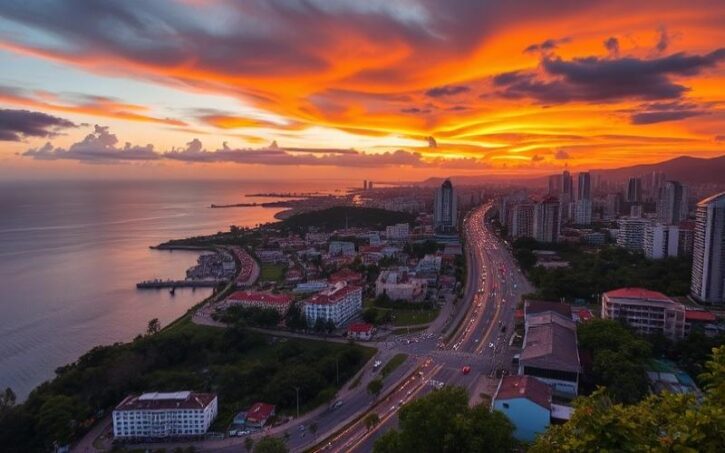
 Published on and written by Cyril Jarnias
Moving to the Central African Republic as an expatriate is not about choosing a “trendy” destination or an el dorado for digital nomads. It is a bet on a fragile country with enormous potential, but extremely precarious security, an under-resourced healthcare system, and limited infrastructure. Major Western governments, in fact, advise against all travel to the country, including for professional reasons.
Despite a difficult context, the Central African Republic hosts a community of expatriates. It is primarily composed of humanitarian staff, development workers, employees of international NGOs, mining sector managers, diplomats, and a few entrepreneurs. This guide aims to provide a realistic overview of life on the ground to properly prepare for a relocation project.
Understanding the context: a country at the heart of Africa, in chronic crisis
The Central African Republic is a landlocked country at the center of the African continent, bordered by Chad, Sudan, South Sudan, the Democratic Republic of the Congo, the Republic of the Congo, and Cameroon. Its capital, Bangui, stretches along the Ubangi River in the southwest of the country.
With an area of approximately 622,000 km² for just over 6.6 million inhabitants, the Central African Republic is sparsely populated. The economy is primarily based on natural resources (diamonds, gold, timber) and agriculture (cotton, coffee, tobacco), with a massive informal sector and an almost non-existent industrial base. The average income per capita remains extremely low: GNI per capita hovers around $530 per year, and GDP per capita is estimated between $394 and $516, placing the country at the very bottom of global human development rankings.
An unstable political and security framework
Officially, the Central African Republic is a multiparty republic, with a president (Faustin-Archange Touadéra) and a National Assembly. In practice, the country has experienced decades of coups d’état, dictatorships, armed rebellion, and inter-communal violence. State authority remains limited outside Bangui, where numerous armed groups still control entire swaths of territory.
Major Western powers (United States, United Kingdom, Canada, New Zealand) formally advise against all travel and call on their nationals to leave the country. Documented violence (attacks on civilians and humanitarian workers, kidnappings, armed robberies) and the presence of landmines, particularly in the northwest near Cameroon, justify this warning.
Even in Bangui, where the situation is relatively more stable, outbreaks of violence, demonstrations, and clashes can erupt without warning. Armed checkpoints, both official and informal, line the roads; corruption is widespread; and extortion by security forces is frequent, especially at night.
An affordable country, but ranked last for quality of life
Financially, the Central African Republic is one of the cheapest countries in the world: the cost of living is estimated to be about 2.2 times lower than the global average. Bangui ranks among the most affordable cities, falling within the bottom 9% of cities globally in terms of cost of living.
Life expectancy in the Central African Republic is around 57 years, a low indicator.
In other words, the low cost of living does not compensate for the insecurity, weak infrastructure, and harsh daily conditions.
Preliminary procedures: visas, health, insurance
Before even thinking about housing or children’s schooling, two dossiers must be solidly secured: immigration and health.
Visas and residence permits: no visa on arrival
For the vast majority of nationalities, a visa is mandatory to enter the Central African Republic, and it is no longer possible to obtain one on arrival. It is imperative to apply at an embassy, consulate, or, failing that, at a French diplomatic mission mandated to handle Central African applications.
Several types of visas exist: tourism, business, missionary, official, transit, work. For a relocation project as an expatriate, it is generally business or work visas that are relevant. A work visa requires that a Central African employer—company, NGO, international organization—has previously obtained a work permit from the Ministry of Labor.
The standard documents required typically include:
List of essential supporting documents to provide for a complete visa application dossier.
Must be valid for at least six months beyond the intended exit date and have blank pages for stamps.
Official form duly completed and signed.
Recent photos, standard format, white background.
Return or onward travel ticket.
Hotel reservation, letter of invitation, rental contract, etc.
Depending on the visa: professional invitation letter, employment contract, mission letter (NGO/administration).
Fees vary depending on the duration and type of visa. As a general guideline, costs range from approximately $150 to $300 for stays of one to three months, to which service fees are often added if using an intermediary. “Express” processing options exist, at a higher cost.
Vaccination and health entry requirements
Vaccination against yellow fever is mandatory for entry into the Central African Republic. The international vaccination certificate must be presented at the border, with the dose administered at least 10 days before departure.
Other vaccines are strongly recommended: hepatitis A and B, typhoid, meningitis, polio, measles, tetanus, diphtheria, pertussis, and even rabies for extended stays in isolated areas. The country lies within the meningitis belt and faces numerous infectious risks (malaria, cholera, dengue, chikungunya, waterborne diseases, etc.).
Malaria prophylaxis is highly advised, as malaria is endemic and sometimes severe in the region. Furthermore, tap water is not potable, even in the capital Bangui. It is imperative to plan for exclusive consumption of bottled or filtered water.
Health and evacuation insurance: non-negotiable
The Central African healthcare system is underdeveloped. Public hospitals are severely lacking in equipment, medication, and staff, and specialized services are very limited. Access to quality care largely depends on a few private facilities in Bangui and the presence of medical NGOs such as Médecins Sans Frontières, ICRC, WHO, and ALIMA, which provide some care in certain institutions.
For an expatriate, one point is essential: securing international insurance that includes medical expense reimbursement, but above all, coverage for medical evacuation to a neighboring country (often Cameroon, Kenya, South Africa, or even Europe) in case of serious illness or trauma. Evacuations are costly and are almost never covered without dedicated insurance.
A typical range for an international health insurance contract is between $40 and $200 per month, depending on age, coverage, and provider (SafetyWing is often cited for temporary stays). Monthly expenses should also be budgeted for consultations ($15 to $250 depending on the specialty), medication ($15 to $150), and short-term travel insurance if frequently leaving the country ($20 to $250 per month).
Bangui, the nerve center of expat life
Bangui concentrates the majority of infrastructure, skilled jobs, schools, and health services. For an expatriate, nearly all realistic relocation scenarios involve the capital.
Population, languages, and urban culture
Population estimates for Bangui vary, but the general magnitude is between 700,000 and one million inhabitants. It is by far the country’s largest city. The Central African Republic is home to over 80 ethnic groups, including the Baya, Banda, Mandjia, Sara, Mboum, M’Baka, and Yakoma. This diversity is reflected in Bangui, even as an increasing share of the population becomes urban.
In the Central African Republic, two languages structure communication: French, the official language essential for administrative procedures, business, and education; and Sango, the national language that serves as a lingua franca in daily life. For an expatriate, knowledge of French is essential, while a minimum of Sango greatly facilitates informal interactions and integration in popular neighborhoods. English, meanwhile, remains marginal, spoken by only about 3% of the population.
Society is very relational and structured by hierarchy and respect for elders. Greetings are essential: one greets, asks about the family, takes time. A prolonged handshake between men is common, sometimes accompanied by a slight bow of the head towards older people. Clothing remains generally modest: shoulders and knees covered, especially outside very expatriate circles.
Climate and environment
Bangui has a hot tropical climate year-round. “Feels like” temperatures most often oscillate between 29°C and 37°C, with high humidity, particularly during the rainy season. Actual temperatures average between 26°C and 31°C.
The climate is marked by two extreme seasons: a long rainy season (March to October/November) with heavy rainfall and violent storms that can cause flash floods, and a dry season (November to February/March) characterized by the Harmattan, a hot and dusty wind. These conditions have already caused deadly floods in Bangui, isolating entire neighborhoods.
Sunshine comes with a high UV index year-round (often 7 to 10), requiring constant sun protection. Air quality in Bangui is poor, with high levels of fine particles (reported around 37 µg/m³), linked to dust, traffic, and slash-and-burn agriculture.
Cost of living: affordable, but to be read with caution
Data on the cost of living in the Central African Republic is partial and partly derived from visitor contributions. Nonetheless, it provides useful general guidelines, to be used cautiously.
Monthly budget: local, expatriate, family
Estimates aggregate different lifestyle profiles. The following table summarizes typical monthly budgets (including housing):
| Profile | Estimated Monthly Budget (USD) |
|---|---|
| Local resident | 520 – 558 |
| Expatriate employee | 1,330 – 1,335 |
| Digital nomad | 1,989 – 2,251 |
| Family (4 people) | 1,822 – 1,954 |
These figures are partly explained by very different living standards: the median post-tax salary in Bangui is only about $105 per month, and an average salary around $197, far from expatriate budgets. Overall, the cost of living for a local is very low because consumption is focused on basic products and housing is often informal or shared.
Conversely, an expatriate wanting secure housing, access to mineral water, a stable internet connection (as much as possible), leisure activities, and regular travel must clearly aim higher than these minimums.
Housing: rents and purchases
The real estate market in Bangui is dual: on one side, modest dwellings, often self-built; on the other, a few residences, villas, and more secure apartments, sometimes grouped in compounds.
Available figures provide the following general ranges for long-term rental:
| Type of Property (Rental) | Location | Monthly Rent Range (USD) |
|---|---|---|
| Studio / 1 simple bedroom | City Center | ~220 – 330 |
| Studio / 1 simple bedroom | Outskirts | ~140 – 265 |
| 3-room apartment (80 m²) | City Center | ~400 – 500 |
| 3-room apartment (80 m²) | Outskirts | ~260 – 315 |
| Expatriate residences / secured villas | Sought-after neighborhoods | 500 – 3,000 |
| Main residence (depending on standard) | Bangui / surroundings | 110 – 850 |
Some data indicate much higher rents (several thousand dollars) for high-end furnished apartments, particularly for short-term rentals or via international platforms, but supply remains limited. Secure rentals with guards, a generator, and enclosed space are rare and expensive.
For purchase, estimates per square meter are:
| Type of Property (Purchase) | Location | Average Price (USD / m²) |
|---|---|---|
| Studio | City Center | ~800 |
| Studio | Outskirts | ~600 |
| 1 bedroom | City Center | ~1,200 |
| 1 bedroom | Outskirts | ~800 |
| 2 bedrooms | City Center | ~1,500 |
| 2 bedrooms | Outskirts | ~1,000 |
The median price for a house in Bangui is estimated around $46,400. The 20-year mortgage interest rate is around 12.9%, making credit costly in an unstable economic environment. For an expatriate, purchase remains rare; rental, often through the employer or an agency, is the norm.
Daily life: food, transport, services
Local products are affordable, imports much less so. Some average prices in dollars give an idea:
| Expense Item | Average Price (USD) |
|---|---|
| Simple meal at a local restaurant | ~3.1 |
| Dinner for two (mid-range restaurant) | ~20 |
| Fast-food meal | ~4.7 |
| Bread (0.5 kg) | ~0.60 |
| Milk (1 L) | ~1.18 |
| Rice (1 kg) | ~1.16 |
| Dozen eggs | ~1.57 |
| Chicken (1 kg) | ~4.35 |
| Beef (1 kg, round cut) | ~6.82 |
| Local beer (0.5 L in supermarket) | ~1.48 |
| Mid-range bottle of wine | ~7.7 |
For transportation in Bangui:
| Type of Transport | Average Cost (USD) |
|---|---|
| Bus/collective taxi ticket (per trip) | ~0.32 |
| Monthly public transport pass | ~12.2 |
| Taxi ride (8 km) | ~5.8 |
| Gasoline (1 L) | ~1.04 |
In practice, the public transport network is very limited, minibuses are overcrowded, and many expatriates use private drivers or vehicle fleets managed by their organizations. Outside Bangui, most roads are unpaved, often impassable during the rainy season, and the presence of armed groups or illegal checkpoints requires extreme caution.
Healthcare system: know its limits and options
The Central African healthcare system is one of the most fragile in the world. It is theoretically structured into three levels (health posts, prefectural hospitals, national reference hospitals), but in practice, many facilities operate far below international standards.
Hospitals and clinics in Bangui
The most functional hospital services are concentrated in Bangui. They include:
Overview of the main hospitals, clinics, and specialized centers providing medical care in the Central African Republic, particularly in the capital Bangui.
Bangui Community Hospital, Sino-Central African Friendship Hospital, Bangui Pediatric Complex, Castors Hospital (maternity), Bimbo Reference Hospital.
Friendship Clinic, Saint Joseph Hospital, Caisse Polyclinic, private practices, French Embassy Medical Center, Dr. Chouaib Clinic, Kingston-diaspora Medical Centre.
National Medical Imaging Center and National Dialysis Center.
Public hospitals offer low-cost basic care but suffer from a chronic lack of equipment, medication, qualified staff, and reliable electricity. Patients often have to buy their own bandages, medication, and sometimes even syringes. Wait times are long, rooms overcrowded.
Private clinics cater to expatriates and the affluent classes. They generally offer better technical facilities, quicker service, and often more experienced doctors, sometimes French- or English-speaking. However, they remain far from the standard of care in middle-income countries and may require full payment in cash before any procedure.
Health strategy for an expatriate
For an expatriate, a realistic strategy involves:
For a stay in the CAR, it is advisable to plan routine care at a reputable private clinic in Bangui and to check in advance the partner facilities of your international health insurance. In case of serious illness (cardiac, neurological, oncological, etc.), evacuation abroad is essential, as these specialties are not available locally. It is crucial to always carry a copy of your medical records, prescriptions, and vaccination certificate, as well as to maintain a personal pharmacy with chronic treatments, antimalarials, antibiotics, antidiarrheals, painkillers, and first-aid supplies.
The language barrier can complicate the doctor-patient relationship if one speaks neither French nor Sango; using an interpreter or a French-speaking colleague is then crucial.
Working in the Central African Republic: sectors, jobs, salaries
In practice, few expatriates come looking for a job locally without a host structure. Most are sent by their employer (international NGO, UN agency, mining company, diplomatic mission). Nevertheless, knowing the structure of the job market helps understand the local economic reality.
Employer sectors
The main sectors employing expatriates are:
Main fields of activity offering professional opportunities for expatriates and international specialists.
Recruitment of logisticians, program coordinators, health specialists, and HR/finance managers by actors like MSF, ICRC, or UN agencies.
Opportunities for engineers, geologists, site managers, and security specialists in gold, diamond, and other resource extraction.
Positions for agronomists and plantation or forestry concession managers.
Demand for network technicians, commercial managers, and subsidiary managers.
Opportunities within certain financial institutions or fintechs positioned in the region.
Positions for consulting or managing infrastructure projects or regional development programs.
The local formal market is small, with job offers heavily concentrated in Bangui. Salaries for Central Africans remain low, but packages for expatriates (especially within international organizations) can be higher, including risk allowances, housing, health insurance, and airfare.
Some indicative salary ranges for local positions in dollars per month:
| Sector | Salary Range (USD/month) |
|---|---|
| Mining | 800 – 3,000+ |
| Agriculture / Forestry | 400 – 1,500 |
| Telecoms | 500 – 1,800 |
| NGOs / Development | 600 – 2,500+ |
| Administration / Support | 300 – 1,000 |
Expatriates employed by international NGOs or foreign companies generally earn more than these ranges, but these figures give an idea of the local remuneration level.
Work culture and HR practices
The management style is highly hierarchical, with great importance placed on seniority and position in the organizational chart. Strategic decisions are often concentrated at the top, with top-down communication. Direct confrontation is avoided; communication can be indirect to preserve harmony.
Trust is built through personal relationships: sharing meals, talking about family life, and demonstrating patience and respect for local customs (greetings, titles, elders). Punctuality is valued, but one must remain flexible in the face of on-the-ground realities like traffic, breakdowns, rain, or insecurity.
For an expatriate tasked with recruiting or managing a local team, it is recommended to invest in training, clarify expectations, carefully check references (as diplomas and CVs can be difficult to authenticate), and rely on local partners to understand social dynamics.
Housing and neighborhoods: where to live in Bangui?
There is no clearly defined “expatriate neighborhood” as in some other African capitals, but a few areas concentrate hotels, secure residences, and businesses.
Neighborhoods like Avenue Barthélemy Boganda and the city center gather many hotels, restaurants, and services. More residential and relatively sought-after areas like parts of Bimbo offer quieter houses, sometimes favored by expatriates, at significantly higher rents (up to $3,000 per month for well-equipped villas). Other neighborhoods like PK5 are very active commercial zones but are also identified as sensitive from a security perspective.
For a long-term relocation, several parameters matter more than simply the “trendy neighborhood” aspect. It is essential to consider factors such as neighborhood stability, infrastructure quality, proximity to services, development prospects, and overall quality of life, rather than basing a decision solely on immediate popularity or fashion.
– the security level of the building (fencing, guard service, proximity to sensitive points);
– the reliability of access to water and electricity (presence of a generator, water tank);
– the distance from the workplace (as travel can be risky);
– proximity to a reference healthcare facility;
– the ability to reach the airport quickly in case of evacuation.
Many expatriates do not directly handle the housing search: the employer (NGO, organization, company) rents housing and manages security aspects. For individual initiative, using reliable local contacts, recognized agencies, or serious platforms (Airbnb lists a few offers, but in limited numbers) is strongly advised.
Education: a very sensitive point for families
The issue of children’s schooling is particularly delicate in the Central African Republic. The public system is free and school is theoretically compulsory between ages 6 and 14, but the reality is marked by school closures due to conflict, a lack of teachers, degraded infrastructure, and a low primary school completion rate.
The offer is very limited. The Lycée français Charles-de-Gaulle, accredited by the AEFE, follows the French curriculum from kindergarten to high school. The majority of students are Central African, with a share of expatriate children. Tuition fees, high by local standards, are generally covered by the employer for expatriates.
Apart from this French lycée, the offer of international schools (English-language curricula, IB, etc.) is virtually non-existent. Many high-risk expatriate families therefore choose either not to bring their children, or to enroll them in a more stable neighboring country (Cameroon, for example), in boarding school or in a “split family” arrangement.
Currency, banks, and money management
The Central African Republic is part of the CEMAC zone and uses the Central African CFA franc (XAF), issued by the Bank of Central African States (BEAC). The indicative exchange rate is around 1,000 CFA francs for $1.7 to $1.8 US dollars, or about 600 CFA francs for $1 according to some sources.
Typical amount in CFA francs that expatriates withdraw at once in the Central African Republic, equivalent to about $170-180, to cover several days of expenses.
Exchange controls in the CEMAC zone are strict. To open a local bank account, a foreign resident must generally present a residence permit, proof of address, passport, and sometimes a bank reference letter. The procedure is often lengthy and bureaucratic. Microfinance institutions and mobile money services (Orange Money, etc.) are beginning to structure more flexible payment solutions, but the ecosystem remains limited.
For a short or medium-term stay, many expatriates make do with an account in their home country, international transfers, and cash management on-site, while limiting the amounts carried for security reasons.
Daily security: constant vigilance
The security dimension is central for anyone considering moving to the Central African Republic. The risks are not limited to common crime; they include political instability, the presence of armed groups, kidnappings, illegal checkpoints, the use of explosives in some areas, and a police force that is itself sometimes a source of abuse.
The recurring recommendations from foreign embassies to nationals who remain despite everything are explicit:
For your safety in the Central African Republic, it is imperative to avoid non-essential travel, especially at night, and to limit travel outside Bangui to the strict minimum, preferably in secured convoys. Never travel alone in isolated areas. Stay informed in real-time via security networks (NGOs, UN, embassies, local radio). Maintain sufficient stocks of food, water, fuel, and medicine. Avoid displaying signs of wealth. Always carry your identity papers on you (passport or residence permit, as required by law). Finally, refrain from photographing official buildings, military installations, or scenes that could harm the country’s image.
Women and LGBTQ+ individuals are particularly vulnerable. Sexual assaults are frequent, and while homosexuality is not explicitly criminalized, “public display of affection” between persons of the same sex can lead to prison sentences and fines. Discretion is advised.
Social life, culture, and integration
The harshness of the context does not negate a reality often emphasized by those who live there: the human warmth, hospitality, and resilience of Central Africans. Values of solidarity, respect for elders, and sharing are strong, particularly in popular neighborhoods and rural areas.
For an expatriate, building a social network happens primarily through the professional sphere: Central African colleagues, other expatriates from the same organization, the diplomatic and humanitarian community. Platforms like InterNations or certain WhatsApp or Facebook groups also allow for making contacts before arrival and obtaining practical advice.
In Bangui, leisure activities, though limited, include cafes like Le Grand Café and Café de l’Opéra, bars along the Ubangi River, and restaurants offering local and international cuisine. There are also rare sports facilities (gyms or hotel pools), occasional cultural sites (Boganda Museum, cathedral, Place de la République), and events such as the Bangui International Carnival or music and jazz festivals.
Markets, especially the Central Market, offer an immersion into local life: fruits, vegetables, spices, crafts, fabrics, jewelry. Haggling is practiced, with respect and without displaying large sums of money. Music and dance hold an important place in daily life, with concerts and entertainment in some bars on weekends.
Religious practice is very present: Christianity (Catholic and Protestant), Islam, and traditional beliefs coexist, often intertwined. Religious tolerance is generally the norm, although politico-religious tensions have sometimes fueled inter-communal violence.
Infrastructure, digital, and remote work
The Central African Republic is not a suitable destination for independent remote work or digital nomadism. Internet connectivity is slow (2 to 5 Mbps on average), unstable, with frequent power and network outages. Coworking spaces are rare, although a few initiatives like Fablab Bangui or innovation “hubs” exist. Cafes with reliable Wi-Fi are few.
Power cuts are daily and can last several hours, affecting lighting, refrigeration, communications, and sometimes water supply. A private generator is therefore almost essential for comfort and work. The grid operates on 220–230 V, 50 Hz, compatible with most European appliances (bring a plug adapter if necessary).
For an expatriate whose mission relies on online work, one must plan for: an external battery, an inverter, dual connection (SIM cards from two different operators), offline backup solutions, and accept a level of service far inferior to that of other more connected African countries.
Transport and internal travel
Travel within the country is one of the most sensitive aspects of life in the Central African Republic. Road infrastructure is severely degraded: only a few routes around Bangui are paved (towards Bossembélé, Sibut, Mbaïki). The majority of roads are unpaved, quickly impassable during the rainy season.
Travel in the Central African Republic carries major security risks, including banditry, armed checkpoints, ambushes, and attacks on civilians on the roads. To connect Bangui to the prefectures, organizations like the UN and major NGOs often use humanitarian flights from UNHAS, whose routes and frequencies adapt to the evolving security situation.
Within the city, travel is by private or service vehicles, sometimes by taxi. Taxis are not equipped with meters: the fare must be negotiated before getting in, and it is prudent to use drivers recommended by a trusted contact. Public transport (minibuses, collective taxis) is generally not recommended for expatriates due to security and overcrowding concerns. Walking, especially after dark, should be avoided.
Conclusion: who is moving to the Central African Republic really for?
Moving to the Central African Republic as an expatriate today only makes sense in a few very specific cases: a humanitarian mission, a position within an international organization, an expert role in a company already established with a robust security apparatus. The country remains officially advised against by most embassies, and there is almost no “spontaneous” reason to emigrate there in search of a better standard of living or classic expatriation opportunities.
For those who, despite everything, take the plunge, this guide highlights three major requirements:
A successful expatriation rests on three essential pillars: rigorous administrative preparation (visas, health, insurance, security, employment contract), solid institutional anchoring (responsible employer, security protocol, secure housing, support network), and personal qualities of adaptability, resilience, and respect for local realities.
The Central African Republic offers, to those who discover it within this framework, an intense human experience: a warm and courageous people, a rich culture, unique savannah and equatorial forest landscapes, national parks sheltering gorillas and forest elephants. But this country can only be approached while keeping in mind the fragility of its balance, the gravity of its security and health situation, and the absolute necessity of never compromising on caution.
Disclaimer: The information provided on this website is for informational purposes only and does not constitute financial, legal, or professional advice. We encourage you to consult qualified experts before making any investment, real estate, or expatriation decisions. Although we strive to maintain up-to-date and accurate information, we do not guarantee the completeness, accuracy, or timeliness of the proposed content. As investment and expatriation involve risks, we disclaim any liability for potential losses or damages arising from the use of this site. Your use of this site confirms your acceptance of these terms and your understanding of the associated risks.

Cyril Jarnias is an independent expert in international wealth management with over 20 years of experience. As an expatriate himself, he is dedicated to helping individuals and business leaders build, protect, and pass on their wealth with complete peace of mind.
On his website, cyriljarnias.com, he shares his expertise on international real estate, offshore company formation, and expatriation.
Thanks to his expertise, he offers sound advice to optimize his clients' wealth management. Cyril Jarnias is also recognized for his appearances in many prestigious media outlets such as BFM Business, les Français de l’étranger, Le Figaro, Les Echos, and Mieux vivre votre argent, where he shares his knowledge and know-how in wealth management.





