
 Published on and written by Cyril Jarnias
The idea of settling in the Solomon Islands is alluring: turquoise lagoons, tropical rainforests, a tranquil pace of life far from frenetic cities. But beyond the postcard image, this small Pacific nation grapples with extreme climate vulnerability, fragile infrastructure, a surprisingly high cost of living, and an overstretched healthcare system. Before leaving everything behind for Honiara or an outer island, one must honestly weigh the pros and cons of expatriate life in this archipelago of roughly 900 to 1,000 islands and about 730,000 inhabitants.
A Unique Natural Setting… But on the Front Line of Climate Change
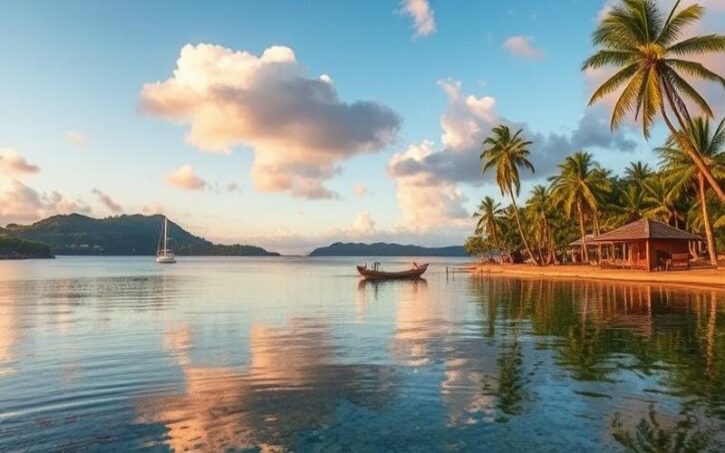
The Solomon Islands, northeast of Australia and east of Papua New Guinea, impress with the beauty of their landscapes. Over 5,000 km of coastline, near-pristine lagoons, spectacular coral reefs in many areas, lush vegetation, and warm seas year-round. For an expat, the lifestyle setting is undeniably a major asset.
The climate is typically tropical, with fairly stable temperatures between 24.5°C and 26.5°C, highs nearing 30°C, and permanently high humidity. Two seasons define the year: a wet season from November to April and a drier season from May to October, with no real cool period to speak of.
Located in the Pacific Ring of Fire and the cyclone belt, the Solomon Islands are highly exposed to natural disasters. The archipelago regularly faces earthquakes, tsunamis, cyclones, landslides, flash floods, and drought episodes.
The figures set the tone: the country is often ranked among the global top 10 nations most at risk from natural disasters, with some studies placing it second. Over the past three decades, at least seven major disasters have struck the archipelago. The 2007 tsunami in Western and Choiseul provinces caused 52 deaths and destroyed or damaged 6,000 buildings. In 2014, flash floods in Honiara and eastern Guadalcanal displaced 9,000 to 10,000 people and caused damage equivalent to over 9% of GDP. To this, add the indirect impacts of regional cyclones like Harold in 2020.
Sea levels have been rising by about 8 mm per year since 1993, increasing risks for the coasts.
The environment is thus both an asset and a drawback. For a diver, nature enthusiast, or conservation professional, the archipelago is an incomparable playground. But for a family seeking long-term stability, the combination of seismic and climatic risks with fragile infrastructure must be factored into the decision.
A Warm but Rural Society, Young and Sometimes Bewildering
Demographically, the Solomon Islands present an unusual profile for expats accustomed to aging societies. Approximately 41% of the population is under 15, and the population growth rate is around 2.8% per year. Over 80% of inhabitants live in rural areas, often in small coastal or inland communities, and 65% live within one kilometer of the sea.
The population is overwhelmingly Melanesian, with small Polynesian and Micronesian minorities. The official language is English, but Pidgin (Solomon Islands Pijin) is the true lingua franca of daily life. For an English-speaking expat, basic communication is possible, but one must accept that spoken English is far from standard and that Pidgin dominates informal exchanges. Learning a minimum of Pidgin greatly facilitates integration.
The warm welcome from curious and benevolent local populations revolves around a strong community culture and the wantok system. This solidarity among ‘people of the same language’ structures the informal economy, social life, and conflict resolution. For an expat, understanding this system is essential, as it influences hiring, land negotiations, project management, and daily security.
This community dimension has a downside for those coming from a more individualistic culture. The line between professional and private life is porous, demands can be constant, and the implicit pressure to help (financially or materially) the relatives of colleagues or employees is real. An expat perceived as “rich” may sometimes find themselves at the center of repeated requests for help, which can lead to fatigue and misunderstandings.
Between 1998 and 2003, the Solomon Islands were the scene of violent ethnic tensions, primarily between the Guadalcanal and Malaita communities, leading to population displacement. This turbulent period ended with the intervention of the Australian-led regional stabilization mission RAMSI. Although the situation is calm today, the legacy of this conflict, persistent land rivalries, and historical divisions continue to influence the country’s political and social climate.
For female expats, the context is not neutral. Several sources note that the country is not considered “family-friendly”, nor particularly safe for women, with risks of harassment, especially at night or in certain social venues. For LGBTQ+ individuals, the situation is significantly more problematic: same-sex relations are illegal, and the social climate is described as hostile. This is a key factor in choosing an expatriation destination.
Cost of Living: A Shock for a “Least Developed” Country
On paper, with a per capita GDP around $2,000 to $2,200 and a classification among least developed countries, one might imagine the Solomon Islands as a “cheap” destination. In reality, for an expat, the daily bill is far from low.
Cost of living data indicate that on average, an individual spends about $1,419 USD per month (including housing) in Honiara, and a family of four nearly $2,900 USD. Without rent, the figures are around $584 USD for a single person and $1,612 USD for a family. In other words, a significant portion of the budget is absorbed by housing and services.
This is the average local net monthly income in dollars, covering only about 0.1 months of a standard expat’s expenses.
A quick look at expense categories shows the extent of the gap.
Comparison of Some Average Monthly Costs (in USD)
| Profile | Total with Rent | Food | Rent + Utilities | Transportation |
|---|---|---|---|---|
| Single Person | 1,419 | 460 | 835 | 31.3 |
| Family of Four | 2,882 | 1,194 | 1,269 | 87.2 |
| Average Net Salary (reference) | 172 | – | – | – |
Accommodation is the first problematic expense. A one-bedroom apartment in central Honiara rents for around $600 USD per month, with a “cheaper” version still close to $570 USD. For a three-bedroom apartment downtown, expect to pay around $1,100 to $1,300 USD, with reported extremes much higher for high-end properties. To this add utilities that can be pricey: electricity is expensive, and intensive use of air cond…itioning quickly drives up the bill.
Regarding food, local staple products are relatively affordable (rice, some root vegetables, fish), but imported goods, out-of-season or imported fruits, dairy products, and quality meat are costly. For example, on average:
Average Prices of Common Products (in USD)
| Product | Indicative Price |
|---|---|
| Milk (1 L) | 2.65 |
| Bread (500 g) | 1.38 |
| Rice (1 kg) | 1.39 |
| Eggs (dozen) | 5.56 |
| Chicken Breast (1 kg) | 9.49 |
| Beef Steak (1 kg) | 14.8 |
| Apples (1 kg) | 6.56 |
| Bananas (1 kg) | 2.6 |
| Tomatoes (1 kg) | 3.8 |
| Local Beer (0.5 L) | 2.17 |
| Mid-range Wine (bottle) | 10.9 |
Services are no exception: high-speed internet subscription around $95 USD per month, gym membership near $90-100 USD monthly, private doctor consultation about $29 USD, movie ticket just over $3 USD, simple haircut about a dozen dollars. Nothing exorbitant for a Westerner paid by an international company, but far from a “low-cost paradise.”
Finally, comparing the Solomon Islands to developed countries presents a paradox. Overall, the cost of living is 1.24 times higher than the global average and, in some calculations, higher than that of Australia or the United States once rent is included, while local incomes are in no way comparable.
Cost of Living Comparison
The only real “discount” for the expat comes from rents, which remain significantly lower than in Sydney, Auckland, or San Francisco. But this difference erodes if one seeks secure, air-conditioned housing with a generator and reliable water in an expat-favored neighborhood.
Housing: Limited Supply, High Rents, Fragile Infrastructure
Honiara concentrates most economic activity and therefore the demand for housing for expats. Options include: downtown apartments, beachfront villas, single-family homes, hotel residence accommodations like at the King Solomon Hotel (which offers apartments for long stays), or Airbnb-style rentals.
However, supply remains limited, especially for quality properties meeting Western standards (security, reliable water, air conditioning, good insulation, workspace, decent internet connection). Rapid population growth, urbanization, and underinvestment in real estate have created a chronic shortage of acceptable housing in the capital, driving up prices and limiting the bargaining power of newcomers.
Outside the capital Honiara, infrastructure is very limited: electricity is intermittent or absent, water often comes from rain or wells, mobile coverage is spotty, internet is almost nonexistent, and access to medical care is very restricted. These conditions currently make settling for digital nomads or telecommuters very complicated in the provinces, despite the presence of simpler houses by splendid lagoons.
Another constraint: basic services remain unreliable. Power outages are frequent, tap water is not potable, and access to telecommunications networks still suffers from slowness and breakdowns, despite some progress. While some high-end properties offer generators, water tanks, and filtration systems, they come at a corresponding price.
Healthcare: Fragile System and Costly Evacuations
On paper, the Solomon Islands’ healthcare system is structured, with tertiary care concentrated at the National Referral Hospital in Honiara, provincial hospitals (Gizo, Auki, Lata), area health centers, and numerous rural clinics. The whole is coordinated by the Ministry of Health and managed through a ten-year strategic plan.
For an expat, it’s crucial to know that the healthcare system, even at the national hospital in Honiara, suffers from severe drug shortages, outdated equipment, and a lack of specialized staff. Access to reliable care becomes very uncertain outside the capital, with rural health centers often lacking potable water, stable electricity, and basic supplies.
The country faces a double burden of disease: infectious diseases (malaria, tuberculosis, diarrheal diseases, respiratory infections) and an explosion of non-communicable diseases (diabetes, hypertension, etc.). A recent assessment highlights that only 14% of hypertensive adults receive treatment, even as the epidemiological transition accelerates.
For an expat, this means two very concrete things:
The local public system does not cover specialized care or serious emergencies, often requiring costly medical evacuation to Australia. International health insurance including this coverage is essential for expats, as they do not benefit from public protection and private facilities are limited to Honiara.
Country-specific health risks must also be taken seriously: malaria endemic in all provinces, dengue, Zika, chikungunya, as well as risks of water and food-borne diseases. Tap water is not potable, and standard food precautions (hygiene, cooking) are non-negotiable.
Finally, some administrative requirements directly affect the expat: for a prolonged stay (visa or residence beyond 90 days), an HIV test may be required, with the possibility of refusal or deportation if the result is positive. Vaccination certificates (notably against measles for some travelers) are also required.
Safety: Moderate Crime, Specific Risks, and Fragile Governance
The question of personal safety in the Solomon Islands cannot be reduced to a single statistic. On one hand, many travelers describe welcoming populations, a reasonable sense of safety during the day, especially in tourist areas like some islands in the Western Province (Gizo, Munda). On the other, crime indicators report a perceived level rather high, especially in Honiara.
The most frequent crimes are pickpocketing, bag and phone snatching, as well as home or vehicle break-ins. Assaults, including of a sexual nature, occur, with foreigners potentially being targeted, especially at night or in certain areas of the capital. It’s important to note that the period leading up to Christmas often sees a rise in crime.
Police infrastructure is limited. The Royal Solomon Islands Police Force lacks resources, personnel, and territorial coverage. Response times are unpredictable, no comprehensive annual report has been made public for several years, and public trust remains fragile. In many areas, conflict resolution still largely relies on customary authorities, churches, and community networks.
The region is characterized by several illicit traffics: illegal logging and fishing, unregulated gold mining, human trafficking around logging and industrial fishing camps, and economic fraud. For the expat, this translates to a high level of corruption, unpredictable rule of law, and the risk of being inadvertently involved in dubious activities. It is therefore crucial to choose local partners with extreme caution.
Finally, “physical” risks are far from anecdotal: poor roads, chaotic traffic, aggressive stray dogs, crocodiles and sharks in some coastal areas, strong sea currents, remnants of World War II explosives in forests and seabeds. For an expat who enjoys diving, hiking, or boating, caution is essential and one cannot presume the presence of organized rescue in case of an accident.
Economy, Employment, and Professional Opportunities: A Niche Market
The Solomon Islands has a GDP around $1.8 to $1.9 billion, with per capita GDP in the $2,000 to $2,200 range. The economy relies mainly on subsistence agriculture, fishing, logging, and some cash crops (copra, palm oil, cocoa). However, the services sector accounts for nearly 60% of GDP, and about 70% of jobs are in agriculture.
In this context, opportunities for expats exist but remain concentrated in niches: international cooperation, NGOs, regional organizations, foreign companies in mining, forestry, telecoms, or tourism, technical missions (engineering, health, education, public administration, energy, information technology).
Overview of professions and business sectors experiencing high demand in the French labor market, offering opportunities for foreign profiles.
Sustained demand for managers, accountants, engineers, human resources directors (HRD), and IT specialists.
Significant needs for electricians, mechanics, plumbers, and construction artisans.
Active recruitment of qualified staff for the hospitality sector, especially in high-end establishments.
National telecom operators and IT service companies recruit technical and expert profiles.
Major infrastructure projects constitute potential employers for various technical and management profiles.
The technology sector, still modest, is beginning to develop (networks, local cloud solutions, cybersecurity, digital services for fishing or tourism). Some highly skilled technical positions can reach annual salaries in Solomon Islands dollars significantly above the local average. But it would be illusory to compare these remunerations to Australian or New Zealand standards: salary competitiveness remains a challenge, even for private actors.
The country offers long-term prospects in sectors like real estate, sustainable tourism, services, renewable energy, and local resource processing. However, the business climate is difficult due to a predominantly customary land system (about 80% of land), opaque procedures, the influence of custom, lack of infrastructure, political risks, corruption, and difficulties accessing finance. It is not suited to impatient or insufficiently prepared entrepreneurs.
To work legally, an expat must have a work permit granted by the Labour Division within the Ministry of Commerce and Industry, and an appropriate visa issued by Immigration. Work permits are typically granted for two years and are subject to fees, with pricing according to duration. Without these authorizations, engaging in paid work is illegal, even under the guise of “disguised” volunteer work.
Immigration, Visas, and Resident Status: Procedures to Anticipate
The entry regime for the Solomon Islands distinguishes between short stays (tourism, short-term business) and long stays (employment, investment, study, volunteering, family reunification).
Many nationals of Western countries (Europe, Australia, New Zealand, North America, certain Asian and Pacific states) can obtain a visitor visa on arrival, typically for a tourist stay of up to three months within a twelve-month period, provided they present a passport valid for at least six months, a return or onward ticket, and proof of sufficient financial means. Other nationalities must obtain prior authorization from the Immigration Division before departure.
For a long-term stay (work, study, family, volunteering, research), it is necessary to obtain a specific visa before your arrival. The application must be made to the immigration division in Honiara or via a Solomon Islands diplomatic representation abroad.
Key structural elements for a future expat to remember:
Main Types of Long-Term Stay
| Type of Visa / Permit | Typical Duration | Target Audience |
|---|---|---|
| Employment Visa | Up to 2 years | Foreign employees recruited locally |
| “Special Purpose – Volunteer” Visa | Variable (max 2 years) | Volunteers, development workers |
| “Special Purpose – Research / Other” Visa | Variable | Researchers, specific missions |
| Student Visa | Duration of studies | Students enrolled in a local institution |
| Dependent Visa / Family Member | 1 to 3 years | Spouse, children of foreign residents |
| Permanent Resident | 5 years renewable | After at least 5 years of continuous legal residence |
Obtaining permanent resident status is only possible after at least five years of regular residence under other long-term visas. The procedure involves fees in US dollars, a criminal record check, assessment of financial situation, integration, and compliance with local laws.
A visitor visa generally prohibits any paid professional activity, organized religious duties, or research without prior approval from the relevant authorities (such as the Ministry of Labour or Immigration). Compliance with these conditions is subject to control by authorities.
In practice, many expats rely on their employer (NGO, international organization, company) to manage immigration procedures. But it remains essential to verify in advance the exact nature of the visa offered, anticipate processing times – which can be long – and avoid any irregular situation that would complicate future residence or permit applications.
Education and Schooling: Limited Options, High Costs
For families, children’s schooling is a decisive part of the expatriation project. Yet, the offering in the Solomon Islands is very limited. The quality of education is generally considered low in the local public system, and teaching is mostly in English with a very variable standard.
Annual cost in USD for an international primary school in Honiara, according to cost of living data.
Expat families sometimes opt for distance learning (online international programs), boarding schools in neighboring countries (Australia, New Zealand, Fiji), or keeping children in the school system of their home country, with one parent staying with them elsewhere. In all cases, the schooling dimension adds costs and logistical complexity that should not be underestimated.
Connectivity and Telecommuting: Postcard Paradise, Wi-Fi Hell
As remote work becomes more common, some look at the Solomon Islands as a potential destination for digital nomadism or tropical telecommuting. The technical reality is still far from ideal.
Average internet connection speed in Mbps, sometimes deemed unusable, in some areas of the Solomon Islands, contrasting with the much higher speeds available in Honiara.
For a telecommuting employee, life in some neighborhoods of Honiara with a good fixed internet offering can be compatible with reasonable video conferencing and file transfers, provided one accepts frequent outages and a high cost. A 50–60 Mbps plan costs around $90–100 USD per month. In contrast, in the provinces, one often has to abandon the very idea of intensive telecommuting.
Unstable power supply (outages, surges) requires investment in protective equipment (UPS units, generators, batteries) to secure computing activity. Furthermore, inter-island travel, administrative procedures, healthcare, and climatic disasters regularly disrupt professional routines.
In short, the Solomon Islands are not yet a telecommuting hub, nor a “new Bali.” For a professional whose work relies on a stable and fast connection, choosing to live in the archipelago implies either negotiating significant constraints with their employer (flexible hours, tolerance for outages) or accepting that the location limits some remote work ambitions.
Healthcare System, Health Risks, and Insurance: An Item Not to Neglect
On a strictly personal level, the choice to settle in the Solomon Islands implies heightened vigilance regarding health. Beyond the uneven quality of facilities, several factors must be managed:
– permanent exposure to vector-borne diseases (malaria, dengue, Zika, chikungunya) ;
– risks of water and food-borne illnesses ;
– a rebound in chronic diseases in a population where the prevention system is fragile;
– difficulties accessing specific medications or specialized care.
For an expat, serious preparation is essential. This includes: updating vaccinations (hepatitis A and B, typhoid, measles, etc.), taking antimalarial prophylaxis if recommended for the destination, subscribing to international health insurance covering hospitalization and medical evacuation, assembling a minimal stock of personal medications, and consulting travel health clinics before departure.
Healthcare costs for a foreigner can be low per procedure in the public system, but the real price lies in insurance and emergency transport. A solid insurance plan, offered by specialists in expat coverage, becomes almost non-negotiable.
Advantages and Disadvantages: For Which Expat Profile?
Weighing the advantages and disadvantages of the Solomon Islands requires considering the expat’s profile.
For a development expert, a humanitarian worker, a climate or biodiversity researcher, a public health specialist, an infrastructure engineer, or a maritime sector professional, the archipelago represents a privileged field of work. The needs are immense, the scope for progress considerable, and the potential impact very high. The natural setting and cultural richness are a bonus.
For an experienced entrepreneur with a long-term vision, strong local support, and a high tolerance for risk, certain niches like sustainable tourism, specialized services, energy solutions, or adapted technologies may present opportunities. It is essential to account for the unpredictable environment in these sectors.
For a young couple without children, drawn by adventure, diving, community life, the accepted slowness of “Solomon Time”, with properly remunerated and protected expat contracts, the experience can be extremely enriching on a human level, provided one accepts a certain isolation, limited medical access, and a fairly undiversified cultural life.
In contrast, for a family with school-age children, for someone with regular healthcare needs, for LGBTQ+ individuals, or for telecommuters who depend on a high level of connectivity and services, the constraints become severe: a limited education system, fragile healthcare, a restrictive legal and social environment, surprising cost of living, significant climatic and logistical risks.
Preparing for Expatriation: Cultural Adjustment and Adaptation Strategies
Beyond economic or climatic data, the success of an expatriation depends greatly on psychological and sociocultural adaptability. Research on expat adjustment shows that expatriation failures are common (over half of assignments are prematurely terminated in some contexts) and often stem from personal or family integration difficulties rather than purely professional issues.
In the Solomon Islands, several factors increase this challenge:
Expatriation to this region involves navigating a high cultural distance from European or North American norms, within a society governed by strict social norms valuing custom, collectivism, and religion. It is often accompanied by geographical isolation, making quick returns in an emergency difficult. One must also be aware of a significant differential in living standards and daily vulnerability compared to the majority of the local population.
Research in cross-cultural psychology highlights the importance of traits like openness, emotional stability, cultural empathy, emotional intelligence, and cultural intelligence for adjusting to a new environment. An expat who is curious, stable, able to put things in perspective, manage their emotions, and learn new social codes will have a better chance of thriving in a context as particular as that of the Solomon Islands.
Concretely, this means: it involves specific actions and measures to take.
– preparing before departure (reading, exchanging with expats on site, cross-cultural training);
– arriving with an attitude of learning, not judgment;
– investing time in learning Pidgin and understanding the wantok system;
– building a support network both locally (colleagues, neighbors, religious or community groups) and among other expats;
– accepting to lower expectations regarding material comfort, product availability, and service speed;
– also preparing for the return, as readjustment to one’s home country can be equally destabilizing.
In Summary: A Demanding and Very Specific Expatriation Choice
The Solomon Islands offer a striking contrast: exceptional natural beauty, a community lifestyle, opportunities to contribute to global challenges (climate, biodiversity, development), but also extreme climate exposure, fragile infrastructure, unexpected cost of living, precarious healthcare, and a sometimes restrictive social environment.
For some profiles, this destination can become an unforgettable life experience, with a sense of closeness to the inhabitants, a rare immersion in an Oceanic culture, and the satisfaction of participating in projects that truly matter. For others, the price to pay in terms of comfort, perceived safety, schooling, and career may prove too high.
Before leaving, it’s crucial to define one’s priorities. The Solomon Islands suit those seeking adventure, meaning, and nature, and who accept certain discomforts and risks. For an expatriation combining a tropical setting with infrastructure close to Western standards, other, better-equipped Pacific destinations will be more suitable.
In any case, expatriation to the Solomon Islands should not be taken lightly. It’s a project that requires information, anticipation, administrative caution, solid medical coverage, cultural humility, and a genuine capacity for adaptation. Those who meet these conditions and accept the constraints may find a unique balance there, far from the usual comforts but close to the realities of an island world on the front lines of the major challenges of the 21st century.
Disclaimer: The information provided on this website is for informational purposes only and does not constitute financial, legal, or professional advice. We encourage you to consult qualified experts before making any investment, real estate, or expatriation decisions. Although we strive to maintain up-to-date and accurate information, we do not guarantee the completeness, accuracy, or timeliness of the proposed content. As investment and expatriation involve risks, we disclaim any liability for potential losses or damages arising from the use of this site. Your use of this site confirms your acceptance of these terms and your understanding of the associated risks.

Cyril Jarnias is an independent expert in international wealth management with over 20 years of experience. As an expatriate himself, he is dedicated to helping individuals and business leaders build, protect, and pass on their wealth with complete peace of mind.
On his website, cyriljarnias.com, he shares his expertise on international real estate, offshore company formation, and expatriation.
Thanks to his expertise, he offers sound advice to optimize his clients' wealth management. Cyril Jarnias is also recognized for his appearances in many prestigious media outlets such as BFM Business, les Français de l’étranger, Le Figaro, Les Echos, and Mieux vivre votre argent, where he shares his knowledge and know-how in wealth management.





