
 Published on and written by Cyril Jarnias
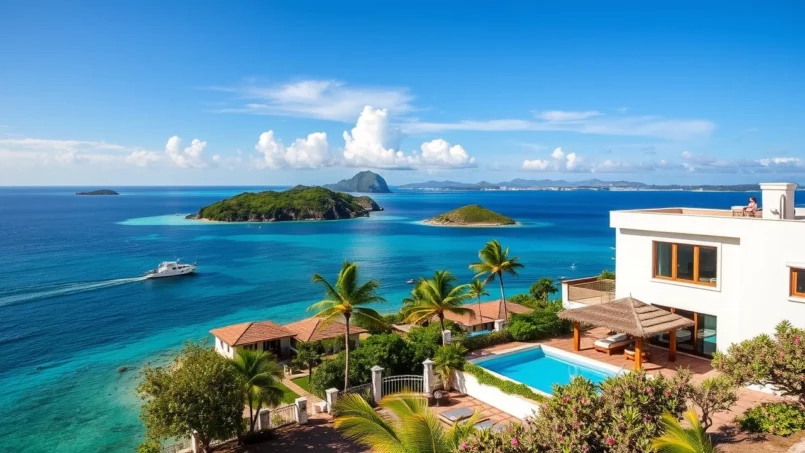
Relocating or investing internationally is a dream for many expatriates. However, not all markets are alike. Some combine growth potential, acute supply scarcity… and high risks. This is precisely the situation found in the Solomon Islands, a small island state in the South Pacific that remains largely unknown to investors but is undergoing significant transformation.
Real estate investment is almost exclusively concentrated in the capital, Honiara. This market is characterized by high prices, significant legal sensitivity, and increasing exposure to risks related to climate change. It is crucial to approach this opportunity with a factual and cautious perspective, avoiding idealization.
Understanding the Solomon Islands context before investing
Before initiating any discussion about a purchase, land lease, or rental project, it is essential to place the Solomon Islands within their political, economic, social, and environmental context. Here, more than in mature markets, the “country context” directly determines the viability of any real estate investment.
An archipelago where land is at the heart of identity
The Solomon Islands form an archipelago of nearly 1,000 islands in the South Pacific, northeast of Australia. Over 90% of the population is of Melanesian ethnicity, and land holds a central place in the local culture. It is not primarily seen as a financial asset but as a foundation of identity, a link to ancestors, and a safety net.
This cultural importance translates into law: approximately 95% of the land belongs to clans, lineages, or indigenous communities. This is referred to as “customary land.” It is not freely sold as in a conventional land market; it can be leased or subject to specific agreements, but any transaction requires navigating collective rights that are often complex and sometimes disputed.
Most easily accessible plots (with clear title, no dispute) are rare, especially near Honiara. Seeking land at a good price outside official channels exposes one to risks of litigation or local violence if customary rights are ignored.
A fragile, dependent, and still poor country
The Solomon Islands are classified among the Least Developed Countries (LDCs) by the United Nations. The economy remains highly dependent on a few sectors: logging, fishing, mining, and subsistence agriculture. Timber alone accounts for over two-thirds of export revenue and a significant portion of state income. A large fraction of the population lives on subsistence farming, artisanal fishing, and small-scale forestry work.
In this context, “formal” real estate is extremely concentrated around Honiara, which serves as the political, economic, and administrative capital. Infrastructure (roads, drinking water, electricity, telecommunications) is limited outside the capital. Many rural areas lack permanent access to clean water or quality healthcare, and roads are scarce or in poor condition.
For an expatriate investor, this means that in practice, virtually all truly viable real estate opportunities (rental to expatriates, businesses, NGOs, government officials, international tourism) are found in or around Honiara, and to a lesser extent in a few tourist pockets (lagoons famous for diving, preserved islets accessible by boat).
A political and security environment to monitor
Recent history shows that tensions over land and resources can quickly escalate. In the late 1990s, rivalries between communities on Guadalcanal (the capital’s island) and migrants from a neighboring island led to violence that required a regional intervention led notably by Australia. Australian troops have since returned intermittently to maintain order during recent episodes of unrest in Honiara.
The capital of the Solomon Islands concentrates the main crime risks (theft, burglaries of expatriate homes, sometimes violent car thefts, nighttime assaults in certain bars, pickpocketing). Given a police force with limited resources and restricted emergency services, investing in a rental property in Honiara requires planning for an additional level of security, such as fences, guards, or access control, and fully integrating this dimension into the project’s design.
Simultaneously, the country’s diplomacy recently shifted towards increased closeness with China, with the signing of a security agreement of unclear scope, which worries several regional powers. Without delving into geopolitics, this highlights one thing: the political and regulatory framework can change rapidly, and a foreign investor must maintain active monitoring.
A country increasingly exposed to climate change
The climate factor is not a mere detail for real estate in the Solomon Islands: it is already physically altering the country’s geography.
Sea levels have been rising by about 8 millimeters per year in the archipelago since the 1990s, a rate well above the global average.
Chain reactions – coastal erosion, soil salinization, coral bleaching, flooding – are already forcing communities, like that of Walande on Malaita Island, to migrate, first to the coast of a larger island, and then to consider yet another move due to a lack of long-term security. An investor who buys a beachfront property in an isolated village without asking questions about topography, coastline stability, and sea-level rise projections is taking an obvious asset risk.
From a market perspective, all recent studies converge: real estate exposed to severe climate risks (submersion, floods, cyclones) is gradually losing value, while areas perceived as safer attract more capital. In the Solomon Islands, these dynamics are not theoretical; they are already visible in population displacement and infrastructure damage.
Country access, visas, and relocation: what a real estate project must integrate
Before thinking about financing or profitability, an expatriate must ensure they can legally stay, work, or manage a property on-site.
Entry, stay, and residence
Depending on nationality, entry conditions vary. Some nationalities benefit from a visa waiver for a stay of 90 days, others for 30 days. For others still, prior authorization from the Director of Immigration is required before travel. In all cases, a passport valid for at least six months, a return or onward ticket, and proof of sufficient financial means are required.
An important point: the status of a simple visitor does not permit working, engaging in local commerce, or undertaking any remunerated activity (including religious missions or paid research) without specific authorization. Some very limited business activities, linked to employment based abroad, may be tolerated for a few days, but no more.
For a long-term relocation to the Solomon Islands (work, investment, studies, or long-term volunteering), an application for a long-stay entry visa must be submitted before arrival. Standard residence visas are valid for up to two years and are renewable. A five-year resident visa is available under certain conditions, notably justifying five years of continuous presence and strong integration, for example through investment, significant economic contribution, or established family ties.
These procedures are handled through a Solomon Islands diplomatic mission or directly with the Immigration Division in Honiara. Fees are paid to the Ministry of Finance, and a change of status on-site (from visitor to resident/worker) is theoretically possible but subject to a complete application and conversion fees.
To work legally in the Solomon Islands, two separate documents are required: an entry/residence permit and a work permit issued by the Labour Division. The employer must demonstrate the absence of a suitable local candidate and commit to respecting social legislation (wages, leave, contributions to the Provident Fund).
The processing of a work permit generally takes between four and eight weeks. Once granted, the entry permit still requires an additional two to four weeks. Although shorter theoretical deadlines exist for certain profiles like investors, it is recommended to anticipate practical delays and build in a safety margin in one’s plans.
Simultaneously, to create a business or invest via a local structure, a foreign investor must at a minimum:
– obtain a Foreign Investment Registration Certificate,
– register the company with the Companies Registry,
– obtain local business licenses (city, province),
– register the business with the tax administration and the Provident Fund,
– and apply for entry and work permits for expatriate managers.
All of this falls under the Foreign Investment Act 2005. In theory, the investment registration can be completed in a few days if the file (business plan, company structure, incorporation documents) is complete. In practice, successive authorizations lengthen the timeline, and using a local firm (lawyer, accountant, consultant) significantly facilitates the process.
For a real estate project, this means that structuring via a local company is often indispensable, if only to obtain land leases, employ staff (guard, gardener, maintenance), and invoice rentals to institutions.
Land and real estate framework: what an expatriate can (or cannot) do
The core issue for an expatriate remains knowing what form of right they can acquire over land or a building in the Solomon Islands, and under what conditions.
Customary land, public land, and long-term leases
Approximately 95% of the land belongs to indigenous communities under customary rules. This land can be leased for durations that can extend, for private commercial use, up to 75 years in some cases, with the government often acting as an intermediary or agent.
For a foreign investor, the classic scenario is therefore not the simple purchase of land as freehold, but the conclusion of a long-term lease, either directly with the communities or on land registered and managed through the state. Obtaining such a lease is anything but a formality: competing claims over the same plot are frequent, fueling conflicts and slowing projects.
The formalities generally require:
– clear identification of the customary rights holders,
– thorough (and sometimes lengthy) consultations with all parties,
– written agreements, ideally endorsed by the administration,
– and the registration of the lease or usufruct right with the competent authorities.
An expatriate acting alone, without local legal support or mediation with community leaders, exposes themselves very directly to subsequent disputes. The proliferation of poorly structured external projects has, in fact, fueled the distrust of many islanders towards ‘foreign investors.’
Isolated Expatriate
The particular situation of Honiara: a narrow but central market
Honiara concentrates the majority of opportunities for expatriates. The city is the political, economic, and administrative center, located on the north coast of Guadalcanal. It experiences steady demographic growth, fueled by rural exodus: inhabitants leave subsistence areas to seek work, services, and better infrastructure in the city.
The problem is that construction does not keep pace. Quality housing, particularly that meeting the expectations of expatriates (NGOs, international agencies, foreign companies, diplomats, high-income local managers) is scarce. Result: rents are high relative to local incomes and are increasing.
Available data for Honiara illustrates this tension between low incomes and extreme real estate prices.
Key Figures for Honiara
| Indicator | Estimated Value in Honiara |
|---|---|
| Average Monthly Net Salary (after tax) | 4,783.33 SBD |
| Average Rent 1 Bedroom City Center | 4,500 SBD / month |
| Average Rent 1 Bedroom Outside Center | 5,250 SBD / month |
| Average Rent 3 Bedrooms City Center | 10,300 SBD / month |
| Average Rent 3 Bedrooms Outside Center | 7,000 SBD / month |
| Purchase Price per m² (Apartment City Center) | 65,031.59 SBD |
| Purchase Price per m² (Apartment Outside Center) | 46,451.09 SBD |
| Average Mortgage Interest Rate (20 years) | 15.67 % |
| Gross Rental Yield City Center | 0.16 % |
| Gross Rental Yield Outside Center | 0.20 % |
This data, from a small sample, should be interpreted with caution, but two messages emerge very clearly: prices per square meter are extremely high relative to income levels, and mortgage rates are very burdensome. For an investor buying at the observed market price, the theoretical gross rental yield works out to negligible levels, well below 1%.
The Honiara real estate market does not function like a classic income-generating market. High prices are primarily explained by extremely scarce supply and informal segmentation by buyer type (international organizations, mining companies, NGOs, individual expatriates, local households). Furthermore, the local financial system is poorly suited to long-term real estate loans. For an expatriate, purchasing residential real estate financed by a local loan under standard conditions is generally not economically justified.
In practice, it is likely that some transactions occur at prices significantly lower than those highlighted in the few available databases, notably through private negotiations, long-term lease agreements, or hybrid structures. However, this remains an opaque market without robust official statistics.
Types of properties and accessible projects
Despite these constraints, several types of investments are feasible, depending on the expatriate’s profile, time horizon, and risk tolerance.
For expatriates, several options exist for housing, from simple renting to asset investment.
The simplest solution for an expatriate employee or someone working for an international organization. It can involve a medium-term lease negotiated with a local owner or a company.
Although not an investment per se, this rental can be seen as a first immersion, allowing for an assessment of the local market before a potential asset project.
Next, for a longer-term investor, acquiring rights to land or a residential complex in neighborhoods on the outskirts of Honiara, gradually benefiting from road improvements and service connections, can constitute a bet on urban growth. Several international donors are currently financing infrastructure projects: roads, water, electricity, telecoms, airport extension. As these facilities are deployed, the relative value of the serviced areas increases.
Finally, a specific segment exists around accommodation for visiting expatriates: well-equipped studios, secure houses in gated compounds, eco-lodges, or bungalows in lagoon areas. Platforms like Airbnb already list modern studios in Honiara (with Wi-Fi, air conditioning, airport transfers, backup generator), lagoon-front houses with full-board type services, or overwater bungalows in remote lagoons.
These products illustrate a reality: a small clientele willing to pay a high price for an “international” level of comfort and reassuring security already exists, even if volumes remain modest.
Climate, natural hazards, and real estate value: integrating climate data
Investing in the Solomon Islands without integrating the climate factor would be a serious analytical error. The country is exposed to a rare combination of risks: cyclones, heavy rains, floods, landslides, earthquakes, tsunamis, coastal erosion, and sea level rise.
Concrete impact on properties and communities
Documented events in the archipelago show a range of impacts:
– physical disappearance of small islands,
– coastline retreat, house submersion and collapse into the sea,
– salinization of aquifers and soils rendering agricultural land unfit for cultivation,
– recurrent damage to infrastructure (roads, bridges, networks),
– forced displacement of entire communities, often with little financial support.
Reports by organizations such as Human Rights Watch illustrate the concrete case of Walande, a community of 800 people. It had to leave a small reef island to settle on the coast of a larger island. However, it finds itself threatened again at this new site due to seawater intrusion and the failure of makeshift protective seawalls.
For an investor, these examples are not just human interest stories: they foreshadow a future where some properties will become physically uninhabitable or will require very costly protective works.
What climate experts say about small islands
IPCC work on small coral islands, including in the Pacific, converges: beyond a certain level of warming, low-lying islands risk becoming difficult to inhabit by the end of the century, not only due to submersion but because of cumulative factors: loss of reefs, freshwater scarcity, repeated infrastructure destruction by storms, degradation of coastal ecosystems.
Natural hazards like floods have a direct effect on property value. This translates into more expensive insurance, the need for protective works, and potential devaluation, especially if the area is officially classified as high risk. Urban real estate markets, particularly in seaside or flood-prone neighborhoods, are highly vulnerable to these factors.
Adapting an investment strategy to climate risk
For an expatriate considering a rental or asset investment, this leads to several prudent reflexes:
– prioritize sites located on higher ground or outside known submersion zones, even at the cost of less immediate access to the sea;
– check the history of flooding and erosion in the considered area;
– anticipate resilience works (raising buildings, protective walls, more storm-resistant materials) and integrate them into the financial model;
– keep in mind that planned relocations of communities and infrastructure are already on the agenda of local authorities.
The adaptation strategies mentioned by research (coastal works, relocation, nature-based solutions like mangrove restoration) are relevant but often costly and dependent on external financial support. An individual real estate project can only rely on itself to become more resilient.
Financing a real estate investment in the Solomon Islands
Available information shows that local mortgage loans exist but with very unattractive conditions for a non-resident: rates around 15–16% over 20 years, requirement for solid guarantees, and limited borrowing capacity relative to market prices.
Local credit: a tool to handle with the utmost caution
In such a context, financing an Honiara property purchase on-site at full price is almost impossible to make profitable via standard rentals. The combination of “very high prices / very high interest rates / low gross yields” clearly argues against this scheme.
An expatriate who already has significant real estate or financial assets in their home country will often have an interest in mobilizing financing solutions in that country rather than in the Solomon Islands: mortgage on a property held in a mature market, pledge of financial portfolios, consumer credit for a limited amount, or even a cash purchase using already available liquid assets.
The general principles of financing a real estate purchase abroad remain valid:
– higher personal contribution than for a primary residence, often at least 30 to 40% of the project,
– a very complete banking file (identity, income, asset situation, source of funds),
– modeling of the real total cost (exchange rate, transfer fees, taxation, insurance),
– recourse to a notary or lawyer specialized in international transactions.
Cash, subsequent refinancing, and other approaches
Some investors choose to purchase a property or land right for cash, then attempt refinancing later once the project is stabilized (e.g., a small rental complex with leases signed with an NGO or company). This approach allows for quick completion and strengthens one’s position with sellers but exposes one to the risk of unfavorable changes in interest rates, prices, or banking rules.
Establishing a local company or an offshore vehicle to acquire land and undertake construction facilitates partnerships with local investors, allows for risk sharing, and makes a foreigner’s investment more acceptable to communities.
Whatever the structure, using escrow accounts is recommended to secure transaction-related payments, especially in an environment where notarial practices are not as robust as in major financial capitals.
Rental market, tourism, and the special case of Honiara
Real estate investment in the Solomon Islands primarily unfolds along two axes: residential rental in Honiara, targeting expatriates and solvent local households; and niche accommodations in tourist areas (diving, ecotourism, lagoons, preserved islets).
Honiara: a market of captive tenants
Honiara concentrates government offices, cooperation agencies, NGOs, headquarters of mining or forestry companies. Many of these organizations house their expatriates in secure, international-standard accommodations, often in gated compounds with 24/7 guards, backup generators, and stable internet access.
The justification for high rents lies less in the intrinsic quality of the housing than in the scarcity of products meeting these tenants’ criteria: security, service reliability, accessibility. A well-designed, air-conditioned, connected studio in a secure neighborhood can rent for significantly more than a larger but poorly serviced and unsafe dwelling.
A single type of housing, the ‘high-end studio’, illustrates the disparity in living standards in Honiara with exclusive services like filtered water and Starlink.
For an expatriate investor, targeting this segment means:
– calibrating a very specific product, oriented towards an institutional or expatriate clientele,
– investing in security (fences, lighting, access control, guard),
– planning for energy backup (generator, sometimes solar panels) and a reliable internet solution,
– accepting a potential vacancy rate linked to the frequent rotation of missions and the budgetary uncertainties of organizations.
Niche accommodation and ecotourism
Outside Honiara, some areas have a special appeal for diving and ecotourism: isolated lagoons, preserved reefs, uninhabited or sparsely populated islands. Community initiatives, like the Tetepare eco-lodge, show that an accommodation model aligned with conservation is possible and can generate income while protecting ecosystems.
To overcome common constraints of ecotourism (difficult access, weather dependency, low volumes), it is crucial to cooperate closely with local communities and conservation associations. The Tetepare example demonstrates the effectiveness of a hybrid model where generated profits fund scholarships, create local jobs, and support marine protected area management, rather than focusing solely on private returns.
An expatriate wishing to engage in this niche must be prepared to be more of a “social entrepreneur” than a pure rentier: partnerships with NGOs, guided tours around local culture, integrating the community into project governance, respecting protected areas and environmental regulations.
Short stay vs. long stay
The short-stay market (like Airbnb) remains limited in volume but allows for capturing a transient clientele: consultants, divers, managers of short-term missions. However, the expected standards are high, even in a poor country: impeccable cleanliness, safe drinking water, internet connection, assistance in case of health or security issues.
The long-stay market relies more on negotiated leases with institutions, sometimes with clauses for integrated services (cleaning, laundry, maintenance). These contracts can provide greater income visibility but demand a level of professionalism close to that of the hotel industry.
Risk management: security, health, infrastructure
Investing in the Solomon Islands implies accepting increased risks compared to a developed market. It’s not just about price volatility, but about physical, health, and logistical risks.
Roads are scarce, often unpaved, and poorly maintained. Power outages are frequent. Access to drinking water is not guaranteed everywhere. Inter-island ferries are often overloaded and don’t always meet safety standards. Emergency services (sea rescue, well-equipped hospitals) are limited.
The profitability of a property can be significantly reduced by specific and recurring expenses. These additional costs typically include acquiring and maintaining a 4×4 vehicle, installing and maintaining a generator, creating water reserves, subscribing to contracts with private security agents, and stocking spare parts for equipment maintenance. It is crucial to integrate these budget lines into any profitability analysis.
Health, insurance, and liability risks
The health risk concerns not only the expatriate but also their tenants: Zika, malaria in some areas, injuries from road or sea accidents, uneven quality of care. International health insurance is strongly recommended for anyone staying on-site, and any project involving hosting tourists or tenants must integrate questions of civil liability insurance, fire safety, and minimum construction standards.
A serious incident (electrocution, fall, bite…) in an inadequately secured dwelling can lead to lawsuits and significant costs. In the absence of frequent inspections, the owner must anticipate these risks by applying common-sense safety standards that go beyond the strict legal minimum.
Civil security and crime
The rise in crime in Honiara, particularly burglaries of foreigners’ homes and car theft, requires integrating security into any real estate project. This can range from a simple reinforced fence to a closed compound with permanent surveillance, including alarm systems, perimeter lighting, and guard dogs.
Recommendations for foreigners not to move around alone at night, to keep windows and car doors locked, to avoid displaying signs of wealth, and to avoid certain areas after dark must be taken seriously. A poorly located property (risky neighborhood, isolated street) can become difficult to rent to expatriates, even at a discount.
Practical steps for an expatriate interested in Solomon Islands real estate
Given all of the above, the reasonable approach is not to arrive as a tourist-investor to sign too quickly, but to follow a gradual process.
Take time to observe
Spending several weeks, even a few months first in Honiara and targeted areas allows one to get a feel for the market, identify neighborhoods where expatriates live, understand transport habits, and test the quality of services (guarding, electricity, internet, health). It’s also the ideal time to build contacts: local real estate agents, lawyers, NGO managers, already established entrepreneurs.
On the purchase side, the absence of reliable databases on prices, combined with weak land registries, requires gathering information from multiple sources and systematically asking for written proof of land rights (registered titles, official leases, court decisions validating customary agreements).
Seek local advice
A local lawyer experienced in real estate transactions involving foreigners is essential. They can help with:
Essential steps to guarantee the security and legality of a land acquisition or lease
Verifying the chain of title on the desired land to ensure the seller’s or lessor’s legitimacy.
Identifying potential customary conflicts or ongoing disputes that could affect the transaction.
Structuring a lease or purchase in compliance with the law and local practices for a valid transaction.
Securing payments and counterparties to guarantee the execution of each party’s obligations.
Similarly, a local accountant can advise the investor on applicable taxation, reporting obligations, and best practices to avoid friction with the administration (potential VAT, corporate taxes, local taxes, etc.), even if the body of rules is less detailed than in major countries.
Clarify your time horizon and accepted risk level
The Solomon Islands is not a market for impatient investors. Between setting up leases, necessary works to reach an acceptable standard, and the slow ramp-up of demand, it is prudent to think in terms of a long, even very long, horizon.
This investment is particularly suitable for an expatriate planning to stay in the region for several years, who already has solid assets elsewhere. It is seen as a diversification with a strong “life project” dimension rather than a pure financial return operation.
In a country where land is mostly communal and climate change is destabilizing entire villages, a real estate investment that ignores social and environmental impacts is highly likely to generate rejection. Conversely, projects co-constructed with communities, contributing to local job creation, scholarship funding, or sustainable resource management, will be perceived more positively and durably.
Experiences like that of Tetepare show that win-win models exist: the descendants of the island’s owners gave up selling to logging companies to develop, with international support, a marine protected area and an ecotourism activity generating revenue and jobs. They established governance mechanisms explicitly including female representation and scholarship programs for youth.
An expatriate who draws inspiration from these approaches, instead of simply seeking the “good deal”, better aligns their project with local realities.
Conclusion: an insider’s market, demanding, to be approached with humility
Investing in real estate in the Solomon Islands has nothing to do with buying a stable-yield apartment in a major capital. It is an undertaking that combines: the search for land, an understanding of local regulations, and an assessment of economic opportunities.
95% of land is communal, illustrating a land tenure system dominated by custom.
For a well-informed expatriate, well-supported, with a long horizon and strong resilience capacity, this market can offer very specific opportunities: developing a small complex of secure housing oriented towards NGOs and international agencies, participating in an ecotourism project in partnership with communities, securing a long-term land lease on a well-chosen site away from areas most exposed to climate risks.
To succeed in a real estate investment overseas, one must go beyond the search for a simple quick return. It involves accepting a significant level of uncertainty and investing in a balanced way: in human relationships, understanding local customs, and the technical robustness of constructions, as much as in the real estate asset itself.
In a world where the safest real estate markets are sometimes saturated or offer low returns, the Solomon Islands represent an entirely different bet: that of a frontier market, expensive and risky, where success relies first on patience, caution, and the ability to work with, and not against, the country and its inhabitants.
Disclaimer: The information provided on this website is for informational purposes only and does not constitute financial, legal, or professional advice. We encourage you to consult qualified experts before making any investment, real estate, or expatriation decisions. Although we strive to maintain up-to-date and accurate information, we do not guarantee the completeness, accuracy, or timeliness of the proposed content. As investment and expatriation involve risks, we disclaim any liability for potential losses or damages arising from the use of this site. Your use of this site confirms your acceptance of these terms and your understanding of the associated risks.

Cyril Jarnias is an independent expert in international wealth management with over 20 years of experience. As an expatriate himself, he is dedicated to helping individuals and business leaders build, protect, and pass on their wealth with complete peace of mind.
On his website, cyriljarnias.com, he shares his expertise on international real estate, offshore company formation, and expatriation.
Thanks to his expertise, he offers sound advice to optimize his clients' wealth management. Cyril Jarnias is also recognized for his appearances in many prestigious media outlets such as BFM Business, les Français de l’étranger, Le Figaro, Les Echos, and Mieux vivre votre argent, where he shares his knowledge and know-how in wealth management.





