
 Published on and written by Cyril Jarnias
Pursuing higher education in the Solomon Islands remains a little-known option, often overshadowed by the major university hubs of Oceania like Australia or New Zealand. However, the country has its own public university, an academic environment that is being structured, and a unique scientific context centered on the ocean, climate, and biodiversity.
An immersive destination for marine, environmental, or health studies, the Solomon Islands require rigorous preparation due to a high cost of living, limited infrastructure, intense tropical climate, fragile healthcare system, and strict visa procedures.
, This guide provides a detailed overview to understand what pursuing higher education in the Solomon Islands truly entails, focusing on the capital, Honiara, and the workings of the Solomon Islands National University (SINU).
Understanding the Context: Country, Climate, and Living Environment
Before even discussing degrees and enrollment, one must gauge the environment in which studies take place. The Solomon Islands are a Pacific archipelago, south of the equator, east of Papua New Guinea. The largest island, Guadalcanal, is home to the capital Honiara, located on the north coast.
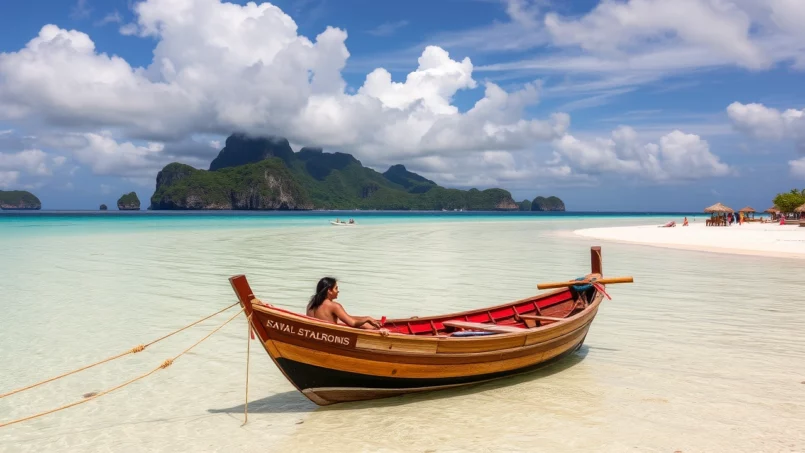
The country consists of large mountainous islands covered in forests, and hundreds of small islands and atolls. The marine landscapes – lagoons, coral reefs, deep drop-offs – are of remarkable biological richness. This is a major asset for scientific fields related to the sea, but also a demanding everyday environment.
A Permanent Equatorial Climate
The Solomon Islands experience a warm, humid, and rainy climate year-round. Temperatures average around 80.6 °F (27 °C), with highs generally between 84.2 and 89.6 °F (29 and 32 °C) and lows between 69.8 and 77 °F (21 and 25 °C). The feeling of heat is intensified by a humidity level that often fluctuates between 74% and over 90%.
The year is punctuated by: seasons, lunar cycles, traditional holidays, cultural events, birthdays, and sports seasons.
– a generally drier season from May to October, slightly less muggy and breezy with southeast trade winds;
– a wetter season from November to April, with heavier rains, a higher risk of storms, and an official tropical cyclone period.
Rainfall remains significant year-round. In the capital, Honiara, annual precipitation is around 86.6 inches (2,200 mm), with a pronounced peak between January and March. Even the so-called “dry” period shows monthly averages around 3.3 to 3.9 inches (85 to 100 mm).
The hot and humid climate implies sometimes fragile infrastructure, travel disruptions due to heavy rain, the need to manage heat in class, and enhanced health prevention against diseases like malaria, dengue, or Zika.
A Country Exposed to Natural Hazards
The Solomon Islands are located in an active seismic zone. Earthquakes and tsunami risks are among the country’s structural dangers. Storm surges and coastal flooding threaten some coastal areas, to the point that the town of Choiseul, built less than 6.5 feet (two meters) above sea level, is subject to a gradual relocation project.
Cyclones remain less frequent than elsewhere in the South Pacific, but the cyclone season generally extends from November to mid-May, with possible exceptions. The southeastern provinces are the most exposed.
For a foreign student, this means integrating risk culture into their preparation: knowing evacuation procedures, inquiring about housing sturdiness, and ensuring the host institution has emergency plans.
Honiara, the Student Capital… and an Expensive City
Honiara concentrates the core of the country’s political, economic, and academic life. It is home to the Solomon Islands National University, several training institutions, ministries, the main medical facilities, and the international Henderson airport, about 7.5 miles (twelve kilometers) from the city.
Population, Accessibility, and Language
The city has between 65,000 and 84,500 inhabitants depending on sources. It welcomes about 22,000 visitors per year, which remains low on an international scale. English is one of the official languages and the language of instruction at the university, although in daily life, the local pidgin (Solomons Pijin) dominates in the streets and markets.
A foreign student can usually manage in English for all administrative and academic procedures. Learning pidgin, however, facilitates social integration and understanding of local codes.
A Cost of Living Near the Global Average… But Crushing for Locals
Available data on Honiara shows a paradox:
– the cost of living is close to the global average,
– but totally disproportionate to local incomes.
The median net salary is about 172 USD per month, while:
The estimated monthly cost of living for a single person, including rent, is around 1,419 USD.
In other words, the cost of living represents over eight times the local average salary. For a student funded by a foreign scholarship or personal funds in dollars, the city may seem simply “moderately expensive.” For a local student without support, the situation is significantly more problematic.
The table below gives a summary overview of the main expense categories in Honiara (in US dollars).
| Expense Category (Monthly) | Single Person | Family (4 pers.) |
|---|---|---|
| Living Costs (Excluding Rent) | 584 USD | 1,612 USD |
| Rent + Utilities | 835 USD | 1,270 USD |
| Total Estimated (Rent Included) | 1,419 USD | 2,882 USD |
| Estimated “Expat” Budget | 2,339 USD | 3,773 USD |
| Estimated “Digital Nomad” Budget | 3,766 USD | — |
Student Housing in Honiara: Types, Prices, and Platforms
The housing supply for students and researchers remains limited, but it exists, mainly through:
– standard rentals (apartments, studios, houses);
– long-stay hotels and guesthouses;
– furnished rental platforms like Flatio or Airbnb;
– some student accommodations or shared housing.
Flatio, for example, offers very diverse furnished accommodations in Honiara: beachfront villas, resorts, city apartments, shared rooms, condos, motels, hostels. One of the platform’s arguments is no security deposit and flexible contracts, an advantage for academic stays from a few months to two years.
For budget travelers, hostels and motels in Honiara offer an alternative, although rates are notably higher than cheap youth hostels in other countries. According to Travelocity, prices are generally between 170 and 261 USD per night. These establishments are actually simple hotels or small tourist complexes, rather than very low-cost dormitories.
For long-term rentals, a one-bedroom apartment in the city center is around 600 USD per month, with ranges sometimes lower or significantly higher depending on quality and location. A three-bedroom apartment downtown could exceed 1,100 USD monthly. To these amounts, add utilities:
– a basic electricity-water bill can be around 160 USD per month for an individual residence;
– a decent internet connection costs about 95 USD per month.
The following table summarizes some average price ranges for accommodation.
| Type of Accommodation in Honiara | Indicative Price |
|---|---|
| 1 Bedroom City Center (430 sq ft, monthly rent) | ~ 601 USD |
| 3 Bedrooms City Center (860 sq ft, monthly rent) | ~ 1,111 USD |
| Hotel (median monthly price, long stay) | ~ 2,545 USD |
| Airbnb (median monthly price) | ~ 4,254 USD |
| Hostels (nightly, via Travelocity) | 170–261 USD |
To reduce the bill, many local students live in shared housing or with relatives. For an international student with no local network, the most realistic option is often a shared room or a small studio, starting the search well in advance.
Quality of Life: Strengths and Limitations
Available reviews paint a contrasting picture of Honiara:
Positive Points:
The city offers very low air pollution, reduced urban density, and less congested traffic than major regional capitals. Its warm climate is pleasant for those who tolerate it well. Furthermore, the common use of English facilitates daily communication.
Important Negative Points to Consider for a Study Project:
– extremely slow internet connection (around 0.5 Mbps on average, 1 Mbps in some shared workspaces), which greatly complicates studies relying on online resources, video conferences, or documentary research;
– limited leisure options, underdeveloped nightlife;
– healthcare system considered weak, poorly equipped hospitals, frequent need for costly medical evacuation in case of serious problems;
– overall quality of education perceived as low on an international scale;
– mixed sense of safety, with occasional violent crime issues, particularly in Honiara;
– mobility difficulties: poor roads, overcrowded minibuses, taxis requiring negotiation, unsafe inter-island ferries.
This environment will therefore not suit every profile. But for motivated students drawn by a very specific research field (ocean, climate, customary law, biodiversity, community health), these constraints come with rare scientific opportunities.
The Solomon Islands National University (SINU): Pillar of Local Higher Education
For those wishing to study directly in the Solomon Islands, the Solomon Islands National University (SINU) is the central actor. It is a public, non-profit university, officially recognized by the Ministry of Education and Human Resources Development.
A Young University, Resulting from a Merger of Institutes
SINU was created in 2012–2013 by an Act of Parliament, from the merger of several specialized public schools: teacher training institute, public administration school, maritime training center, nursing school, technical institute.
It now has about 4,000 to 4,999 students and 200 to 299 teachers, giving a ratio of around five students per teacher. Admission is selective, with an estimated acceptance rate between 30 and 39%. The language of instruction is English for all programs.
Faculties and Fields of Study
The university is structured into several major academic entities covering the country’s primary needs:
Discover the different faculties, institutes, and specialized centers that make up the university’s educational offerings.
Accounting, management, tourism, and hospitality.
Training in health and medical fields.
Expertise in agriculture, forest management, and fisheries.
Programs in education, teaching, and humanities.
Fundamental sciences, building, and transport.
Specialized training in the maritime sector.
Studies in governance, diplomacy, and development.
Preparatory pathways for university entry.
Distance and flexible mode accessible programs.
SINU offers various level degrees: certificates, diplomas, bachelor’s degrees, and some master’s degrees (e.g., in business management or educational leadership). Most programs are delivered in-person. Some modules or courses benefit from distance or hybrid formats via the center for flexible learning, but the country’s digital infrastructure still severely limits this mode.
Examples of Programs and Academic Requirements
Entry requirements reflect the local secondary system (Form 5, 6, 7) and provide several pathways:
– standard access after high school, based on minimum results in certain subjects;
– access via a previous diploma or certificate;
– “mature” pathway for candidates with several years of relevant professional experience;
– admission to a master’s program based on a bachelor’s degree and significant professional practice.
To give a concrete idea, a Bachelor of Accounting may require:
– Form 7 with a minimum average (e.g., GPA 3.0);
– or a relevant diploma with a certain level;
– or Form 6 with a good record supplemented by three years of practice related to the field.
A Master of Business Administration typically requires:
– a bachelor’s level diploma with a minimum GPA (e.g., 2.0);
– plus at least two years of significant professional experience.
In the health fields (nursing, public health, pharmacy), requirements often include:
– a science pathway in secondary school;
– minimum grades in biology and sciences;
– sometimes experience as a nursing aide;
– passing an entrance exam.
Education programs frequently require:
– a bachelor’s degree or equivalent;
– registration as a teacher;
– an employer’s recommendation for continuing education movements.
Student Services and University Costs
SINU has libraries, some sports facilities, an administrative service for enrollment and residence permits, and a support system for international students for visa procedures.
Estimation of monthly living expenses for a student in Honiara, in euros.
For international students, there is currently no major scholarship program fully managed by SINU covering living expenses. Most funding schemes come through foreign governments, multilateral agencies, or the Solomon Islands government for its own citizens.
Study Visas for the Solomon Islands: Conditions, Duration, and Limits
Studying in the Solomon Islands as a foreigner requires obtaining a “student visa” type visa issued by the Immigration Division within the ministry responsible for commerce, labor, and immigration.
Duration and Features of the Student Visa
The student visa:
– is designed for foreign nationals enrolled full-time in an accredited institution in the country;
– can also cover immediate family members (spouse, children) accompanying the student;
– is generally valid for up to two years, with a maximum stay duration of two years;
– allows multiple entries during its validity period;
– does not authorize work: any paid activity requires a separate permit.
Extending a student stay is not done through a simple administrative “extension.” A new visa application must be submitted with a new institution nomination form, even if continuing the same program beyond the initial visa validity.
Fees and Procedures
The official fees for this visa are structured as follows:
The application fee for an eVisa is 150 USD.
All payments are made to the Ministry of Finance and Treasury; the receipt must accompany the application. Applications are submitted either online via the immigration portal or at a diplomatic mission, using the specific “Form 10” type form.
The announced processing time for electronic applications is generally between one and three business days. In practice, it is prudent to anticipate more, especially during peak season or if documents are incomplete.
Eligibility Conditions
To obtain a student visa, one must provide:
To obtain a student visa for the Solomon Islands, the application must imperatively include: an official letter of admission specifying the program, a validated nomination form from the institution, proof of tuition fee payment, proof of sufficient financial resources, private medical insurance valid on site (essential due to the weakness of the public system and the cost of evacuations), and proof of intent to return to the home country after studies.
For students under 18, the following are additionally required: parental authorizations.
– satisfactory accommodation and guardianship arrangements in the country (family, guardian, boarding school, or supervised housing);
– guarantees that the arrival does not conflict with the custody rights of another parent.
Any false statement or misleading information in the application can lead to criminal prosecution, both for the applicant and the institution, with penalties of up to six months imprisonment.
Health, Safety, and Legal Framework: What a Student Must Know
The Solomon Islands require particular health and safety vigilance for any new arrival, especially for a long-term stay.
Health Risks: Malaria, Dengue, Vaccination, and Infrastructure
The country is a malaria transmission area. In most cases, taking antimalarial medication is recommended for travelers, including those staying several months. The commonly advised drugs are doxycycline, atovaquone-proguanil, or mefloquine, to be discussed with a doctor before departure.
Other vector-borne risks exist: dengue, Zika, Japanese encephalitis. Precautions rely on:
– using mosquito repellent;
– wearing covering clothing, especially in the evening;
– using mosquito nets, ideally impregnated ones.
Tap water in Honiara is not potable. Prefer bottled water or boiled and filtered water. Digestive issues are common, so maintain strict hygiene: regular handwashing and consumption of well-cooked food.
Health services are limited across the territory, including in Honiara. Hospitals lack equipment and medications, and the treatment of certain serious conditions depends on evacuation to neighboring countries, at very high costs. It is therefore essential to have insurance covering medical evacuation.
Certain vaccination obligations or recommendations exist:
– up-to-date basic vaccines (measles, diphtheria, tetanus, pertussis, polio, chickenpox);
– recommended vaccination against hepatitis A and B, typhoid, seasonal flu;
– proof of measles vaccination required upon entry for travelers coming from certain Pacific region countries and Australia/New Zealand, under penalty of refusal of entry.
In some cases (long stay or residence application), an HIV test is required, with potentially severe implications if the result is positive (up to the possibility of detention or deportation). Importing personal antiretroviral treatments may attract authorities’ attention.
Personal Safety and Transport
Honiara has issues with petty and serious crime:
The holiday season around the end of the year is marked by an increase in theft (pickpocketing, bag snatching, burglaries) and assaults, including sexual ones, which can sometimes specifically target foreigners.
Police services have limited resources. Nighttime travel, especially on foot or in less frequented areas, is discouraged. Informal collective transport like minibuses is often overcrowded, unsafe on the road, and can be the scene of theft.
The roads, even in the capital, are in poor condition, with many potholes. Outside Honiara, tracks often require a 4×4 vehicle. Inter-island ferries are known to be overloaded and poorly maintained. Again, the student must factor in a margin of risk for their travel and choose trusted providers for excursions or sea trips.
Beaches are generally not supervised and have strong currents, increasing drowning risks. Furthermore, dive operators do not always adhere to international safety standards.
Finally, the archipelago still contains unexploded ordnance from World War II, notably around Guadalcanal, Tulagi, the Russell Islands, and New Georgia. It is strongly advised not to handle metal objects suspected of being munitions or to dive freely on unmarked sites.
Legal Framework and Social Codes
Laws on narcotics are particularly severe. The possession, use, or trafficking of drugs (including cannabis) is punishable by heavy prison sentences and fines.
Socially, public behavior is governed by conservative norms:
– relatively modest dress, especially in villages and rural areas;
– avoid public displays of affection;
– ban public insults and gestures perceived as arrogant;
– always ask for permission before photographing people.
The local climate can be hostile towards LGBTQ+ individuals, with little social tolerance. Female students should also consider an environment not perceived as very safe for women, particularly in the evening.
Research, Marine Environment, and Unique Academic Opportunities
While the Solomon Islands do not rival the world’s major universities in terms of global ranking, they stand out instead in a few scientific niches that are increasingly strategic: climate change, oceanography, tropical biodiversity, ocean governance.
A Living Laboratory for Ocean Study
Recent scientific projects well illustrate this potential:
Multidisciplinary initiatives for studying marine ecosystems, underwater heritage, and the impacts of climate change.
Expedition mobilizing oceanographers, marine biologists, and archaeologists to map deep reefs (98–492 ft / 30–150 m) and World War II wrecks.
Of over 200 warship wrecks, about a hundred are potentially polluting. Some, like the USS Aaron Ward, have been modeled in detail via photogrammetry.
The Solomon Islands National University coordinates a research team on this phenomenon, supported by The Ocean Foundation and international networks (GOA-ON, PI-TOA).
The Pacific Community (SPC) organizes training sessions using specialized kits for collecting and analyzing water samples.
In this context, a student in marine science, climatology, environmental policy, or law of the sea can find an extremely rich field for internships or thesis work in the Solomon Islands, in cooperation with SINU, local ministries, or regional programs like the Coral Triangle Initiative.
Ocean Governance, Customary Law, and Decolonial Research
Another emerging field of excellence concerns ocean governance and the articulation between international law, legislation inherited from the colonial era, and customary rights of island communities.
Their work questions, for example, the impact of British maritime law and customary rules on current legislation, or how to integrate indigenous knowledge into the ecosystem-based management of marine spaces.
Solomon Islands researchers, beneficiaries of the UN-Nippon program
These projects can open opportunities for co-supervision, PhDs, or post-doctoral positions for foreign students interested in law of the sea, environmental justice, or decolonial qualitative research in social sciences.
Funding Your Studies: Scholarships and Schemes Related to the Solomon Islands
The scholarship landscape is divided into two main categories:
1. Scholarships managed by the Solomon Islands Government for its own citizens (SIG Scholarships, bilateral agreements, etc.). 2. Scholarships offered by partner countries to host Solomon Islands students abroad (Australia, China, Japan, New Zealand, United Kingdom, etc.).
For a foreign student wishing to come study in the Solomon Islands, the main opportunities are more likely from mobility or scientific cooperation programs than from classical scholarships covering a full degree. However, it is useful to understand how scholarship schemes structure the country’s higher education.
Solomon Islands Government (SIG) Scholarships
The Solomon Islands Government manages a significant scholarship program for the 2025–2026 period, with two main formulas:
– fully funded scholarships;
– tuition fee-only scholarships.
These scholarships aim to train Solomon Islands citizens in skills needed by the country. Beneficiaries may be sent to SINU (Solomon Islands National University), partner institutions abroad, or other establishments within the Pacific region.
The categories are varied:
– pre-service (young people without significant experience, fresh from secondary school);
– in-service (personnel employed in the public, private, or education sector, wishing to upskill).
Applications are made via an online platform managed by the higher education authority (SITESA), with specific timelines, age ceilings for certain levels (e.g., under 45 for a bachelor’s, 50 for a master’s), and an inability to change program or institution after award.
These scholarships are reserved for Solomon Islands citizens, but they effectively structure the flow of students into and out of the country, and explain the presence of Solomon Islands students in many universities in Australia, New Zealand, China, Japan, Fiji, or Europe.
International Scholarships Targeting Solomon Islands Students
Several states offer scholarships specifically open to Solomon Islands nationals:
An overview of the main international scholarship opportunities available for students, covering various fields of study and countries.
For bachelor’s, master’s, or PhD studies in Australia. Priority areas: economics, governance, infrastructure, STEM, environment, health, education, community development. Covers tuition, airfare, establishment allowance, health insurance, and living allowance.
Around 30 full scholarships for bachelor’s, master’s, or PhD students in the People’s Republic of China.
Scholarships offered by Japan for training abroad.
Scholarship opportunities to study in New Zealand.
Chevening and Commonwealth programs for studies in the UK.
ICDF and Taiwan–PIF scholarships for training in Taiwan.
For a foreign student coming to the Solomon Islands, the interest in these schemes lies mainly in the possibilities for co-operations and joint projects, for example through shared research programs between a partner university and Solomon Islands institutions.
Are the Solomon Islands a Good Destination for Higher Education?
The answer strongly depends on the student’s profile and expectations.
The Solomon Islands can be a relevant destination if:
This type of project is suitable if your research focuses on a very specific field (tropical oceanography, law of the sea, climate adaptation…), fits within a collaboration with an institution like SINU or a regional agency, and is solidly funded (enhanced insurance, evacuation budget, margin for contingencies). It also requires being prepared for a demanding tropical environment, with limited infrastructure (internet, healthcare) and safety constraints.
On the other hand, for an international student seeking:
– a very broad and diverse course offering;
– high-performance digital infrastructure;
– prospects for part-time work during studies;
– very structured academic supervision and high international rankings;
destinations like Australia, New Zealand, or other OECD countries remain much more suitable.
In the Solomon Islands, the challenge is less about finding “the best university” on a global scale, than about leveraging a unique local context for highly targeted projects. In this specific framework, the Solomon Islands National University and the country’s many ocean and environmental initiatives become leading partners.
How to Practically Prepare a Higher Education Project in the Solomon Islands?
For a foreign student or researcher, a realistic approach looks like this (without entering a detailed administrative step-by-step):
To conduct an academic project in the Solomon Islands, one must: define a project linked to local specifics (sea, climate, customary law, tropical health, governance); identify contacts at SINU or in relevant ministries; secure external funding covering all expenses; obtain a hosting agreement or invitation letter for the visa; anticipate housing on site; and prepare medically (vaccines, antimalarials, health insurance with evacuation).
In summary, the Solomon Islands are not a “turnkey” study destination. But for those who accept these constraints and have a good safety net, the archipelago offers what few campuses in the world can provide: a study field immersed at the heart of the major 21st-century challenges – climate, oceans, biodiversity – in a country where these issues are not abstractions, but the very daily reality of local communities.
Disclaimer: The information provided on this website is for informational purposes only and does not constitute financial, legal, or professional advice. We encourage you to consult qualified experts before making any investment, real estate, or expatriation decisions. Although we strive to maintain up-to-date and accurate information, we do not guarantee the completeness, accuracy, or timeliness of the proposed content. As investment and expatriation involve risks, we disclaim any liability for potential losses or damages arising from the use of this site. Your use of this site confirms your acceptance of these terms and your understanding of the associated risks.

Cyril Jarnias is an independent expert in international wealth management with over 20 years of experience. As an expatriate himself, he is dedicated to helping individuals and business leaders build, protect, and pass on their wealth with complete peace of mind.
On his website, cyriljarnias.com, he shares his expertise on international real estate, offshore company formation, and expatriation.
Thanks to his expertise, he offers sound advice to optimize his clients' wealth management. Cyril Jarnias is also recognized for his appearances in many prestigious media outlets such as BFM Business, les Français de l’étranger, Le Figaro, Les Echos, and Mieux vivre votre argent, where he shares his knowledge and know-how in wealth management.





