
 Published on and written by Cyril Jarnias
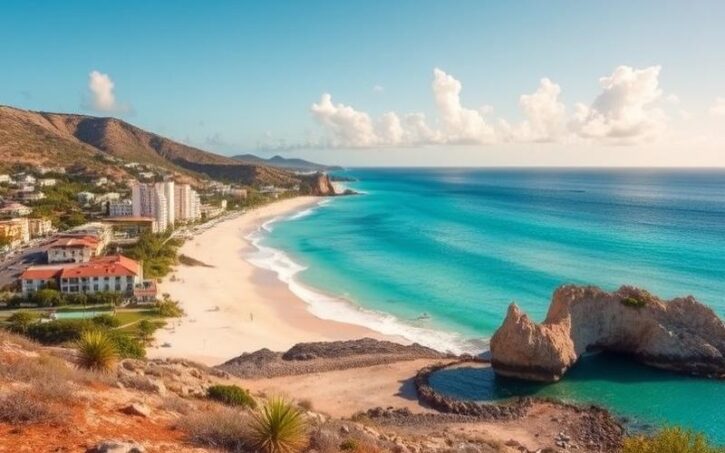
Anguilla is attracting a new generation of expatriates: retirees seeking sunshine, mobile entrepreneurs, investors looking for a light-tax environment, but also families and remote workers tired of big cities. This small British Caribbean island cultivates a rare blend of tranquility, safety, political stability, and sophisticated financial services, all on 35 square miles of white sand and turquoise water.
Good to Know:
Settling permanently in Anguilla requires careful preparation. One must consider immigration rules, the cost of living, the island’s healthcare system, children’s schooling, and investment-based residency options. This guide, based on official sources, helps build a realistic and secure project.
Understanding Anguilla: Lifestyle, Population, Economy
Anguilla is a British Overseas Territory located in the Lesser Antilles, in the Eastern Caribbean. The territory comprises the main island and a few islets. The capital, The Valley, concentrates the bulk of public services, commerce, and educational institutions.
English is the official and by far the most commonly used language. An Anguillian Creole circulates in daily life, but the entire administrative, educational, banking, and medical ecosystem operates in English. For a French speaker, a minimum of operational English is almost essential to settle.
Important:
The island’s economy rests on three key sectors: high-end tourism (33 white sand beaches), an offshore financial center, and fishing (lobster), complemented by construction and a significant public sector. Its warm tropical climate (around 27°C/81°F) is moderated by its location in a hurricane zone, making consideration of hurricane risk essential for any real estate or settlement project.
The local population is predominantly of African descent, with an expatriate share estimated at nearly 28% of the total population according to some sources. Nationals from the United States, the United Kingdom, Canada, other Caribbean islands, and Europe form the bulk of this foreign community. The atmosphere remains very different from overdeveloped major tourist hubs: no skyscrapers or mega-hotel complexes, but a human-scale, quiet island where you’re more likely to run into your neighbors than hordes of cruise ship tourists.
Good to Know:
Anguilla applies British Common Law, under the jurisdiction of the Eastern Caribbean Supreme Court. This legal framework, combined with a very advantageous tax system, has made the island a reputable international center for company formation, trusts, wealth management, and, more recently, for certain projects in the crypto-asset sector.
Entering Anguilla: Visas, eVisa, and Basic Formalities
Before thinking about permanent residence, you first have to get here. Anguilla has its own immigration regime, distinct from the UK’s, even though its status as a British Overseas Territory implies certain links regarding citizenship.
For all travelers, a passport valid for the entire duration of the stay is required. The authorities also ask for a return or onward ticket, proof of accommodation (hotel reservation, rental contract, invitation letter), and proof of sufficient financial means to support oneself.
Good to Know:
British nationals can stay visa-free for up to 90 days for tourism or business. U.S. citizens benefit from the same regime, upon presentation of a return ticket, proof of accommodation, and sufficient resources. Holders of a valid U.S. Green Card, a valid British, U.S., or Canadian visa, as well as holders of diplomatic passports, are also exempt from the visa requirement to enter Anguilla.
For nationalities subject to a visa, the general rule is that the application must be submitted before travel at the nearest British embassy or High Commission. A list of visa-required countries is available online, and the official website allows you to check if your nationality requires a specific visa.
The eVisa System
Anguilla has implemented an eVisa system for short-term tourism or business stays. The procedure takes place in three steps: online form to fill out, payment on a secure platform, then receipt of an eVisa in PDF format to print. The application is made via the official portal evisa.gov.ai.
Tip:
The processing of a permit to stay application in Anguilla typically takes 8 to 10 working days, with potentially longer delays during peak demand periods. To facilitate the process, email all supporting documents to the dedicated address, making sure to include your application file number in the subject line. The complete file must include: a passport-style photo, a copy of your passport (valid for at least six months), an active email address, and proof of accommodation. If you are staying with a relative, that person must be an ‘Anguillian Status Holder’ or a legal resident. Also plan to provide additional documents specific to your professional situation or age, especially for applicants under 18.
Two main options exist:
| Type of eVisa | Entries Allowed | Maximum Stay per Visit | General Validity | Indicative Fee |
|---|---|---|---|---|
| Single Entry eVisa | 1 | 90 consecutive days | To be used within 90 days of issue, expires upon entry | 140 USD |
| Multiple Entry eVisa | Unlimited | 90 days per visit | 1 year | 140 USD |
To extend a stay beyond the 90 days of a tourist visit, you must contact, once on the island, the Immigration Department. This service manages requests for stay extensions and the first steps towards a more durable status.
All travelers must go through customs and immigration either at Clayton J. Lloyd International Airport or at the Blowing Point ferry terminal. Private boaters must report to Sandy Ground. Upon departure from the territory, a departure tax is due – its amount depends on age, destination, and length of stay.
Working, Studying, Remote Working: Long-Stay Visas
Settling in Anguilla does not necessarily mean retiring there in luxury. The island is beginning to attract a broader audience: digital nomads, remote employees, students attending Caribbean medical schools, employees seconded to finance or hospitality.
Good to Know:
To work in Anguilla, a work permit sponsored by a local employer is mandatory. Its validity can be up to four years depending on the category, and it is subject to significant annual fees. For details on rules and permit types, contact the Department of Labour, notably at [email protected].
Specific visa categories also exist for students and, under certain programs, for temporary remote workers via a Digital Nomad Visa. These schemes regulate the possibility of residing on the island while working for a foreign employer or pursuing studies at a local institution (medical schools, University of the West Indies campus, etc.).
For a professional expatriation project, it’s best to start dialogue very early with a potential employer, a local lawyer specialized in immigration, and, if needed, the Immigration Department, which remains the decision-making authority for any stay extension and status change.
Residence by Investment and Tax Residence: Anguilla’s “Golden Visas”
Anguilla has developed a range of very attractive residency schemes for investors and major taxpayers. Two programs stand out for expatriates considering a patrimonial or tax-based settlement.
The Residence by Investment (RBI / Golden Visa) Program
The first program, often called Residence by Investment (RBI), or the permanent residence program, offers direct access to permanent residence in exchange for a significant investment. It is managed by a dedicated government agency, Select Anguilla, created by specific legislation in 2019.
The principle: an investor at least 18 years old, with a clean criminal record, in good health, and posing no risk to national security or the territory’s reputation, can submit an application via an approved agent or lawyer. Direct applications are not accepted; using an authorized intermediary is mandatory. After a review and due diligence (integrity check) phase, the administration may issue a Letter of Approval in Principle, which authorizes the applicant to finalize the investment. Once all conditions are met, permanent residence is granted, materialized by a resident card.
Good to Know:
The program allows for the inclusion of the spouse and dependent children. Children can be considered dependents until age 26 if they are full-time students and financially dependent. A major advantage is the absence of physical presence requirements to maintain permanent resident status: no minimum number of days of presence is required.
Three investment pathways coexist:
1. Contribution to the Capital Development Fund (CDF), a public fund intended to finance development projects.
2. Approved residential real estate investment (hotels, villas, residences, condos).
3. Mixed formula combining business and real estate investment.
For expatriates primarily seeking a home base and a secure status, the first two options are the most commonly used.
CDF Option: Non-Refundable Contribution
The simplest option to manage is the contribution to the Capital Development Fund. The minimum donation is 150,000 USD for a single applicant, with an additional 50,000 USD for each spouse or child added to the application. This sum is non-refundable; it is a donation to the island’s development budget.
Real Estate Option: Investing in Caribbean Property
The real estate route appeals to those seeking to combine residence and investment. The advertised entry ticket is 750,000 USD for a family of four, with an additional 100,000 USD per extra dependent. The property must be located in Anguilla, reach at least the required value at the time of application, and be held for at least five years. The purchase must occur within six months following approval, with proof of ownership submitted.
Important:
For investors, the acquisition can generate interesting rental income in a high-end tourism market and offer long-term capital appreciation. However, obtaining the specific real estate permit (Real Estate Permit) incurs separate administrative fees.
Ancillary fees (application, due diligence, real estate permit if applicable) are added to the investment:
| Type of Fee | Indicative Amount |
|---|---|
| Due diligence (≥ 18 years) | 7,500 USD per adult |
| Due diligence (12–17/18 years) | 2,500 USD per child |
| Processing fee (family ≤ 4) | 3,000 USD, +500 USD per additional dependent |
| Real Estate Permit (real estate option) | 10,000 USD (single applicant) / 20,000 USD (family ≤ 4) + 5,000 USD per extra dependent |
The whole process takes on average three to four months for a straightforward application.
High Value Resident (HVR) Program: Tax Residence with No Income Tax
Alongside the RBI, Anguilla launched a separate program aimed at very high international earners: the High Value Resident (HVR), sometimes called the Tax Residency Program. The idea is to offer a stable and very light tax framework in exchange for a known, fixed contribution, for individuals ready to relinquish tax residence in their country of origin.
Unlike the RBI, the HVR is not based on a donation or massive real estate investment, but on a medium-term tax commitment. To be eligible, the expatriate must:
– Be at least 18 years old.
– Pass due diligence checks (criminal record, reputation, solvency).
– Commit to becoming a non-tax resident in their country of origin.
– Pay a flat annual tax in Anguilla for at least five years.
– Own a residence in Anguilla of a defined minimum value.
– Spend a minimum number of days on the island each year, while staying below a certain number of days in any other single country.
– Create “real ties” with the island (local bank account, memberships, driver’s license, etc.).
The key parameters are as follows:
| Key HVR Condition | Indicative Requirement |
|---|---|
| Annual tax contribution | 75,000 USD per year for at least 5 years (375,000 USD total) |
| Residence in Anguilla | Value ≥ 400,000 USD (of which > 100,000 USD land value) |
| Minimum presence on the island | ≥ 45 days per year |
| Maximum presence in another country | < 183 days/year (or even < 90 days in a single jurisdiction according to some sources) |
| Connection to the territory (“center of vital interests”) | Local accounts, clubs, permits, etc. |
In exchange, the expatriate obtains tax resident status in a territory that applies no income tax, no wealth tax, no capital gains tax, and no inheritance duties. Foreign-source income is not taxed in Anguilla and does not have to be declared there.
500000
The estimated total cost for a family of four over the program’s minimum period.
From Residence to Citizenship
Both major residency programs – RBI and HVR – open a pathway to British Overseas Territory Citizenship (BOTC). After five years of legal residence, an expatriate can, under conditions (English test, citizenship exam, financial stability, criminal record check, interview before judicial authorities), apply for naturalization as a British Overseas Territory Citizen.
This status allows obtaining a specific passport, granting visa-free access to about 95 countries. Subsequently, and subject to meeting British criteria, it becomes possible to apply for full British citizenship, with a passport allowing visa-free or visa-on-arrival travel to approximately 180 countries.
There is no requirement to renounce one’s original nationality: dual citizenship is permitted.
Taxation in Anguilla: An Almost Tax-Free Environment
For many expatriates, taxation is one of the main arguments in favor of Anguilla. The territory applies a very atypical system: there are practically no direct taxes on individuals or companies.
Concretely, there is no:
– income tax,
– corporate tax,
– capital gains tax,
– wealth tax,
– nor widespread inheritance or gift taxes.
Foreign-source income is not taxed and does not have to be declared to the local authorities. There are also no CFC (controlled foreign corporation) type rules, no exit taxes, and no capital controls.
Good to Know:
To finance public services, Dominica reformed its former 13% general tax on goods and services. The new system includes a 9% tax on imported goods and a 13% tax on services, with an exemption for certain unsweetened basic products. Businesses with annual turnover exceeding 300,000 XCD must register and file these taxes monthly.
Regarding real estate, an annual property tax applies, around 0.75% of the value for residential or undeveloped land and 0.9% for commercial properties, often with adjustments for primary residences. Real estate transactions are subject to stamp duties (0.01% to 5%), a land transfer tax of 5%, and, for foreigners, an Alien Land Holding surcharge of about 12.5% on the purchase price. Tourist rentals (hotels, vacation apartments) also incur an accommodation tax of about 10%.
Example:
In Saint Lucia, resident employees fund social protection via a social security contribution of 5% of their monthly salary, capped at 7,000 XCD. An additional “Stabilization Levy” of 3% applies beyond a certain income threshold. The employer also contributes 5% for social security and up to 3% for the Stabilization Levy, the latter also being subject to a cap.
Anguilla does not have classic double taxation avoidance treaties. However, the territory has signed Tax Information Exchange Agreements (TIEA) and participates in international mechanisms like the OECD’s CRS standard and FATCA. For an expatriate, it is therefore essential to coordinate with a tax advisor in their country of origin to avoid unpleasant surprises related to tax residence, especially for citizens of countries taxing their nationals based on citizenship (like the United States).
Cost of Living: A Paradise… at a High Price
The beauty of the beaches and the absence of direct taxes should not obscure another major aspect: life in Anguilla is expensive, sometimes significantly more so than in major North American cities. Most food, household equipment, and some construction materials are imported, with import duties passed on to the final consumer.
For an expatriate, it is useful to think in terms of an overall monthly budget. Available estimates suggest an individual living comfortably spends around 4,500 to 5,000 USD per month, while a family of four is more likely around 9,000 to 10,000 USD, depending on the desired standard. A more frugal lifestyle is possible, but food, housing, and transport remain major expenses.
A “typical” monthly budget for a single person can be summarized as follows:
| Expense Item | Approximate Amount (USD / month) |
|---|---|
| Rent | 1,500 |
| Utilities (elec., water, internet) | 300 |
| Groceries | 800 |
| Transportation | 600 |
| Health Insurance | 400 |
| Leisure/Miscellaneous | 400 |
| Indicative Total | 4,000–5,000 |
For a family of four, a commonly cited structure is: the nuclear model, which typically includes two parents and two children.
| Expense Item | Approximate Amount (USD / month) |
|---|---|
| Rent | 3,000 |
| Utilities | 500 |
| Groceries | 1,500 |
| Transportation | 800 |
| Health Insurance (4 persons) | 1,200 |
| Schooling (2 children, private) | 2,000 |
| Leisure/Miscellaneous | 800 |
| Indicative Total | 9,000–10,000 |
The amounts vary significantly depending on type of housing (apartment vs. luxury villa), eating habits (home cooking vs. beach restaurants), whether or not a personal car is used, and the level of health coverage chosen.
10000
The monthly rent for a quality villa in Anguilla can exceed this amount in US dollars.
Water and electricity bills are significant, especially as air conditioning is energy-intensive. Count on average 200 to 500 USD in monthly utility charges. High-speed internet, now available via fiber optic from providers like Digicel or Flow, adds 80 to 250 USD monthly depending on the chosen speed, with professional plans for remote workers or businesses being more expensive.
30-50
Imported food products cost 30 to 50% more than in North America or Europe.
Transportation completes the picture. There is no real public transport; travel is by taxi or private vehicle. Gasoline per liter is expensive, taxis charge short trips between 20 and 50 USD, and long-term car rental runs around 1,200 to 1,800 USD per month. Buying a used vehicle often represents an investment of at least around 15,000 USD, plus customs formalities for importation if applicable.
Housing: Rental Market, Buying Real Estate, Residential Areas
For a new arrival, the first step is almost always to rent. The market offers a wide variety of properties: furnished apartments, family homes, duplexes, detached villas, bungalows, sometimes accommodations integrated into hotel residences. The supply is particularly abundant in some sectors following real estate projects that have remained partially unoccupied, creating an environment rather favorable to tenants.
Tip:
Many expatriates recommend first staying a few weeks in temporary accommodation (like a mid-range hotel, an Airbnb apartment, or a beachfront residence). This period allows you to visit the island, scout neighborhoods, and negotiate a long-term lease calmly. Opting for a one-year contract often allows for better rates. The standard security deposit equals one or two months’ rent. Some rentals include internet and TV, but electricity is rarely included.
Among the popular residential sectors:
Example:
To illustrate the diversity of residential areas in Anguilla: The Valley is appreciated for its proximity to services, schools, and administration. Sandy Ground is also known for its beach bars and small nightlife. Blowing Point is convenient for trips to Saint-Martin due to its proximity to the ferry terminal. Island Harbour and East End offer a more authentic, peaceful, village-like atmosphere. Finally, Meads Bay and other bays on the north coast are more oriented towards high-end, beachfront tourism.
For real estate purchase, foreigners must obtain an Alien Land Holding License and pay various taxes (including the 12.5% surcharge on the purchase price). Using a local lawyer specialized in real estate transactions is strongly advised to secure the process, verify property titles, and anticipate ancillary fees and taxes.
Healthcare: A Decent but Limited System, Evacuation Essential
Living on a small island implies an unavoidable reality: healthcare infrastructure is limited. Anguilla has a mixed healthcare system, combining a public hospital and several private clinics, but for serious or highly specialized conditions, one must look to facilities outside the island.
The public Princess Alexandra Hospital, located in The Valley, is the main medical facility, with a capacity of about thirty beds and a 24/7 emergency department. It handles common emergencies, childbirths, some basic surgery, and pediatric care. Significant investments have allowed the restoration of the facility after damage from a major hurricane, adding notably a maternity ward and a CT scanner. Several public clinics complement the network, offering primary care in different districts.
Good to Know:
Several private clinics operate in The Valley and its surroundings. They offer general medicine services, chronic disease management, gynecology, minor surgery, laboratory tests, and occasional access to visiting specialists. Facilities like the Hughes Medical Center or the Atlantic Star Center of Medical Excellence have a good reputation for the quality of their outpatient care.
But the limits quickly appear: no private hospital, few intensive care beds, no decompression chamber for diving accidents, advanced diagnostics (MRI, some specialized tests), and complex surgeries must be performed abroad. Medical evacuations are frequent, particularly to Saint-Martin, Puerto Rico, or the United States (Miami), with costs easily exceeding tens of thousands of dollars.
In this context, health insurance is a crucial component of an expatriation project to Anguilla. U.S. authorities clearly recommend insurance that includes medical evacuation, since no scheme like Medicare or Medicaid applies abroad. Doctors and hospitals expect prompt, often immediate, payment in cash or via solid insurance guarantee.
For an expatriate, the most realistic solution is an international health insurance covering at a minimum:
International Medical Coverage
Essential coverage for comprehensive health protection abroad, including emergency situations and specialized care.
Hospital Care
Coverage of expenses related to treatment and hospitalization in a medical facility abroad.
Major Interventions
Coverage for complex surgical procedures and specialized medical treatments requiring specific equipment.
Medical Evacuation
Organization and funding of medical repatriation to a suitable medical facility in case of a life-threatening emergency.
Acute Exacerbation
Coverage for sudden and severe complications of pre-existing conditions, ideally covered from the start.
Premiums vary by age and level of coverage, but it’s not uncommon for families to pay several thousand dollars per year for quality worldwide coverage. A couple in their sixties may thus pay around 7,000 USD per year, while younger adults will see their bill halved.
Pharmacies are well-present, notably in The Valley, but some medications must be imported, which increases cost and sometimes implies delays. Dental care and mental health services exist, but complex cases are referred off-island.
Local health risks remain moderate: no malaria, no rabies, few tropical fevers although cases of dengue or chikungunya can occur. Foodborne illnesses like ciguatera are occasionally reported. Tap water is generally drinkable in hotels and villas. However, as everywhere in the tropics, protection against mosquitoes, intense sun, and dehydration must be taken seriously.
Education: Public Schools, Private and International Options
For families, the schooling question is critical. The Anguillian education system closely follows the British model. Public school is free and compulsory from age 5 to at least 15 (some texts mention 17). Schooling is structured into primary, lower secondary, and upper secondary, with regional exams from the Caribbean Examinations Council at the end of secondary school.
Tip:
The territory has six public primary schools and one large public high school, the Albena Lake-Hodge Comprehensive School. Teaching is in English, following curricula aligned with Caribbean and British standards. While classes can be relatively large and resources sometimes limited, the academic framework remains solid. Public assistance, such as scholarships and partial coverage for uniforms and transport, is available for low-income families.
Expatriates, however, often favor private or international structures, which are smaller and more flexible. Two private schools stand out:
Primary Schools in The Valley, Anguilla
Two institutions offering primary education with distinct pedagogical approaches and programs.
Omololu International School
Program from kindergarten to primary aligned with national standards and the International Baccalaureate (IB). Welcomes children from over 25 nationalities. Main language: English, with French and Spanish as foreign languages. Active pedagogy and strong parental involvement. Annual fees: between 5,850 and 7,350 USD (excluding uniforms, supplies, and activities).
Central Christian School
School for early childhood and primary combining the government curriculum and a biblical (Abeka) curriculum. Fees are not always published and require direct contact with the institution.
For international secondary education, some families opt for a cross-border scheme: schooling in private institutions in Sint Maarten / Saint-Martin (for example Caribbean International Academy or Learning Unlimited), with daily boat school trips. This solution requires precise logistical organization but opens access to complete Canadian or American programs up to high school graduation.
For higher education, Anguilla has a few local options (University of the West Indies campus, Anguilla Community College, medical schools like Saint James School of Medicine), but most students look to the United Kingdom, North America, or other Caribbean islands for university.
Opening an Account, Managing Finances and Business
Anguilla is home to a robust financial sector, regulated by the Eastern Caribbean Central Bank (ECCB) and the Financial Services Commission for all matters related to companies, insurance, funds, and payment services. The local currency, the Eastern Caribbean Dollar (XCD), is firmly pegged to the US dollar at a fixed rate of approximately 2.7 XCD to 1 USD, which facilitates transactions and reduces exchange risk. The US dollar is also widely accepted in retail.
Important:
For an expatriate, opening a local bank account is possible, whether as a resident or non‑resident, provided compliance requirements are met (KYC, anti-money laundering). Most banks offer personal and business checking accounts, with debit cards, online services, and multi-currency accounts. Opening can sometimes be done remotely, without a physical visit, but banks generally require specific documents.
– application form,
– official identification (passport, possibly driver’s license),
– proof of address,
– bank references,
– and, for companies, all incorporation documents and proof of business activity.
Good to Know:
The conditions for opening and managing a bank account, such as minimum deposit and monthly fees, vary by institution and account type. For example, some checking accounts require an initial deposit (like 200 USD) and a higher minimum balance (between 300 and 500 USD) to avoid fees. Interest-bearing accounts, like NOW accounts, often require an even larger balance to generate interest.
Beyond basic banking, Anguilla positions itself as a favorable jurisdiction for company formation (especially IBCs and LLCs), trusts, and foundations, with quick registration (often within a few days) and no tax on profits and capital gains. For an entrepreneur or investor, this opens interesting prospects for wealth structuring. However, any planning must imperatively consider anti-avoidance laws in the country of origin, CRS standards, and reporting obligations.
Infrastructure, Connectivity, Utilities: What’s Available… and What’s Missing
Anguilla is connected to the world by Clayton J. Lloyd International Airport, served mainly via connections through Saint-Martin, Puerto Rico, or Antigua, and by a system of frequent ferries linking Blowing Point to Saint-Martin/Sint Maarten in about twenty minutes. There are no, to date, direct flights from Europe or mainland North America, often making a stopover necessary.
Important:
The island has no structured public transport, and the car is the dominant means of transportation. One must drive on the left on often narrow and uneven roads, with sometimes minimal signage. Extreme caution is required when driving, as some cars are poorly equipped and drivers may stop suddenly. Accessibility for people with reduced mobility is poor, with uneven sidewalks and few ramps.
Regarding energy, electricity is supplied by Anguilla Electricity Company (ANGLEC). Getting a new connection can take 30 to 90 days, with fairly formal procedures: cadastral plan, building permit, electrical compliance certificate, electrician’s details, payment of connection fees. Tenants typically open an account in their name with a deposit, which earns interest if bills are paid correctly until account closure. The bill can be paid online, and late payment penalties are applied for non-payment.
Good to Know:
The deployment of fiber by operators like Digicel and Flow has allowed connections of up to 500 Mbps download. Subscriptions generally include a modem and sometimes meshed WiFi systems for full coverage. While ideal for remote work, outages can occur during bad weather or network incidents.
Water supply relies on a mix of public mains and private cisterns fed by rain or trucks, depending on neighborhoods and types of housing. Villas and individual houses are often equipped with collection tanks, which better cushion service interruptions.
Safety, Local Law, Daily Life
Anguilla benefits from an image as a safe island, with one of the lowest crime rates in the region. This does not mean a total absence of crime: as everywhere, opportunistic theft (bags on the beach, unlocked cars, open homes) can occur. More serious incidents (assaults, armed robberies, even homicides) exist, though they remain rare. Authorities, like foreign embassies, recommend common-sense precautions: do not display valuables, lock doors and windows, be vigilant in isolated places at night, and avoid excessive alcohol before water activities.
Important:
Offenses related to drugs or firearms are severely punished. Carrying or importing weapons requires prior approval from the British government. In case of arrest, travelers are fully subject to local law, with no application of foreign law on the spot, and possible notification to their embassy.
Customs rules are precise: any goods likely to be prohibited or taxed must be declared. Dangerous objects (explosives, corrosive products, certain gases) are prohibited from importation. Quotas exist for cigarettes, alcohol, perfumes, foodstuffs. Residents returning from a stay abroad can bring back a determined value of gifts duty-free, beyond which duties are due. Customs fraud is heavily sanctioned, with fines that can reach three times the value of the goods.
Good to Know:
Local legislation imposes no specific restrictions on LGB travelers and residents: same-sex relationships are legal, and organizing community events poses no known legal problem.
Lifestyle: Beach, Gastronomy, Caribbean Culture
Beyond figures and forms, settling in Anguilla is also choosing a certain lifestyle. The island claims the nickname “Culinary Capital of the Caribbean”, with an astonishing density of high-end beach restaurants, gourmet tables helmed by renowned chefs, and small shacks where you can enjoy lobsters, grilled ribs, whole fish, and accras just meters from the water.
Example:
Leisure activities in Anguilla are primarily sea-focused and include snorkeling on the reefs, scuba diving with certified centers, kayaking, paddleboarding, sailing, kitesurfing, as well as boat trips to islets like Sandy Island or Prickly Pear Cays. Wildlife watching, notably sea turtles in season and humpback whales during their winter migration, is also possible. On land, there is a Greg Norman-designed golf course, tennis courts, moderate hikes, and sunrise yoga sessions for those seeking gentler activities.
Nightlife remains limited compared to more party-oriented islands, but a few pockets of activity exist, notably at Sandy Ground, where beach bars and small live concerts create a relaxed atmosphere, especially in high season. Major calendar events – Festival del Mar, Anguilla Summer Festival, Moonsplash reggae festival – punctuate the year with festivals, parades, nautical competitions, and concerts, offering as many opportunities to immerse oneself in local culture.
Tip:
The expatriate community in Anguilla, though modest in number, is very close-knit. To facilitate your integration, use online forums, groups, and informal networks. They are valuable for sharing practical tips (health, schooling, housing, vehicle import) and for building a social circle. Accepting the slowed-down pace of “island time” and the relative smallness of the territory is key to fully enjoying the surprisingly complete living environment the island offers.
In Conclusion: An Expatriation Project to Consider with Rigor
Settling in Anguilla as an expatriate means betting on an environment both simple and sophisticated: simple in size, pace of life, proximity of residents and authorities; sophisticated in the level of financial services, complexity of residency programs, high cost of living, and logistical constraints of a small island.
Good to Know:
The main assets are very low taxation, political stability, safety, pleasant climate, magnificent beaches, and a British status offering citizenship prospects. The main drawbacks to anticipate are a high budget, dependence on medical evacuations for serious care, a certain isolation, complex administrative formalities, and the absolute necessity of respecting a strict legal framework (visas, investment or tax-based residence).
For a wealthy retiree, a global entrepreneur, or a remote worker with international income, Anguilla can be an extremely interesting choice, provided you work with competent financial, tax, and legal advisors. For a family with children, reflection must carefully integrate schooling, healthcare, and the real cost of living. For everyone, the preliminary step of an exploratory stay of a few weeks or months, on-site, remains the most valuable tool to verify that the Caribbean dream truly matches the daily reality you seek.

Cyril Jarnias is an independent expert in international wealth management with over 20 years of experience. As an expatriate himself, he is dedicated to helping individuals and business leaders build, protect, and pass on their wealth with complete peace of mind.
On his website, cyriljarnias.com, he shares his expertise on international real estate, offshore company formation, and expatriation.
Thanks to his expertise, he offers sound advice to optimize his clients' wealth management. Cyril Jarnias is also recognized for his appearances in many prestigious media outlets such as BFM Business, les Français de l’étranger, Le Figaro, Les Echos, and Mieux vivre votre argent, where he shares his knowledge and know-how in wealth management.





