
 Published on and written by Cyril Jarnias
Moving to the U.S. Virgin Islands often feels like living out a postcard dream: turquoise water, lush green hills, beach evenings, and a slower pace of life than back on the mainland. Yet behind the sunsets over Magens Bay or snorkeling trips to Buck Island, many newcomers discover a less Instagrammable reality: homesickness.
The mix of awe at a paradise setting and longing for home is very common, no matter the reason for moving (work, retirement, studies, remote work). The goal is to understand and concretely manage this unease, keeping in mind the specific context of the U.S. Virgin Islands.
Understanding Homesickness in a Dreamlike Setting
Homesickness is not a whim or a lack of gratitude for the luck of living in a sought-after place. Psychologists describe it as a form of emotional distress tied to being separated from what feels like “home”: loved ones, habits, language, social codes, even familiar smells.
That’s the percentage of people who have experienced homesickness at least once.
In a setting like the U.S. Virgin Islands, the contradiction can be even stronger: everything looks idyllic from the outside, which can add a layer of guilt. How can you dare to say you’re struggling when you live on St. Thomas, St. Croix, or St. John, surrounded by some of the world’s most beautiful beaches? Understanding that homesickness is close to a real grieving process—mourning your old life—helps you stop judging yourself.
Two Parallel Psychological Movements
Dutch researchers described homesickness as the coexistence of two reactions:
When moving abroad, two main reactions can be observed. The first is a **separation** reaction, focused on the former ‘home,’ often characterized by nostalgia, regret, and idealization of what was left behind. The second is an **adaptation** reaction, focused on the new environment, requiring energy, curiosity, and sometimes courage to integrate and understand the new culture.
In the U.S. Virgin Islands, these two dynamics are very visible. You can go from awe on the Reef Bay Trail in St. John to deep sadness returning at night to a still impersonal apartment in Charlotte Amalie or Christiansted. The key is not to get stuck only in the separation phase, but to gradually nurture the adaptation phase.
The U.S. Virgin Islands: A Beautiful Setting… But Disorienting
To manage homesickness effectively, it helps to understand the environment you’re actually stepping into, beyond the tourist brochures.
The U.S. Virgin Islands, with roughly 87,000 to 100,000 residents, form a close-knit community. The population is predominantly Afro-Caribbean, with often matrifocal family structures and very tight kinship ties. This translates into a strong sense of community, but also a “everyone knows everyone” effect that can surprise newcomers.
A Daily Life “on a Human Scale”
Social interactions are direct, warm, and formalities drop quickly. Saying “Good morning” or “Good afternoon” before asking for anything is not just a politeness detail; it’s an essential social code. Conversations are longer, more personal than in many large North American or European cities. You might easily find yourself invited to a neighborhood barbecue, or a Sunday “liming” with grilled fish and soca music.
This closeness has two contradictory effects on homesickness. On one hand, it can recreate a protective village feel, sometimes similar to what you left behind. But it can also amplify the feeling of being “the outsider,” the one who doesn’t yet understand jokes in the local dialect (Virgin Islands Creole), or the political and family references that come up at parties.
Virgin Islands Creole
A Slower Pace of Life… Not Always Relaxing
People often talk about “island time“: flexibility with schedules, less obsession with punctuality, a more relaxed approach to deadlines. For someone already struggling with homesickness, this slowness can become a source of frustration. A slow internet hookup while you’re working remotely, an unavailable car part, a postponed government appointment—these little sand grains can increase the feeling of isolation.
Supplies largely depend on ships or planes, with many imported products at high costs. Understanding this system helps you not experience it as a personal persecution and to better integrate it into your routines.
Daily Life and Cost of Living: An Invisible Factor in Homesickness
Your wallet plays a bigger role in homesickness than you might think. When the cost of living is significantly higher than on the mainland, even a simple grocery trip can become a source of anxiety.
The comparisons are telling: estimates show that the overall cost of living in the U.S. Virgin Islands exceeds that of the mainland by 11% to nearly 47% depending on the source. Without rent, the gap is even bigger (over 30%, sometimes over 50%). Everyday items—food, transportation, clothing—are very often more expensive than what newcomers were used to paying.
Summary table of some prices recorded in the territory. Values are indicative and may vary depending on sources and islands.
Average prices for accommodation, from hostel to boutique hotel.
Cost of a meal, coffee, or local beer in different types of establishments.
Indicative rates for fuel, car rental, or public transit.
Price range for excursions, guided tours, and main leisure activities.
Prices for basic items (bread, milk, fruit) at local supermarkets.
Common Price Examples in the U.S. Virgin Islands
| Expense Category | Typical Price Range (USD) |
|---|---|
| Inexpensive restaurant meal | 18 – 25.50 |
| Meal for two in a mid-range restaurant | 62 – 130 |
| Fast-food combo meal | 9.20 – 12 |
| Cappuccino | 6 – 7.70 |
| Small bottle of water (store) | 2.05 – 2.42 |
| Dozen eggs | 4.30 – 7.30 |
| White bread (approx. 1 lb) | 2.10 – 5.70 |
| Chicken (fillets, 1 lb) | 4.40 – 11.70 |
| Beef (round steak, 1 lb) | 7.40 – 12.80 |
| Mid-range bottle of wine | 15 – 20 |
| Local beer (0.5 L, supermarket) | 1.96 – 2.95 |
| Gasoline (per gallon equivalent) | approx. $3.40 – $5.30 per gallon |
| Monthly internet subscription | 69 – 120 |
| Mobile phone plan (10 GB+) | 57 – 130 |
| Monthly gym membership | 45 – 117.50 |
For housing, the differences are just as significant.
Average Monthly Rent by Type of Housing
| Housing Type | Monthly Rent Range (USD) |
|---|---|
| Studio / 1-bedroom in city center | 1,515 – 1,950 |
| Studio / 1-bedroom outside center | 1,216 – 1,900 |
| 3-bedroom apartment in city center | 2,720 – 3,400 |
| 3-bedroom apartment outside center | 2,250 – 3,800 |
| Utilities (elec. + water + garbage) for ~915 sq ft | 203 – 370 |
When you realize a realistic budget for a single person often runs between $2,200 and $3,000 per month (excluding extras), and a family of four can spend between $5,000 and $7,000, it’s easy to see why some newcomers find themselves missing their old low-cost supermarkets.
The link to homesickness is simple: every time you check out, it reminds you of financial fragility. Your brain tends to romanticize your old life, where everything seemed simpler, more affordable. This nostalgic filter can constantly feed the separation reaction.
Making the Archipelago Your Own: Choosing Your Island, Your Neighborhood, Your Vibe
One of the most effective ways to ease homesickness is to feel you have control over your environment. This means making housing and location choices that fit your personality, work, and sensitivity to noise and isolation.
Real estate professionals on the islands often recommend renting for 6 to 12 months before buying, to get a feel for the areas that suit you.
St. Thomas, St. Croix, St. John: Three Temperaments
Feedback from residents paints a fairly consistent picture of the three main inhabited islands.
| Island | Main Perceived Advantage | Often-Cited Lifestyle Profile |
|---|---|---|
| St. Croix | More affordable, more space and land | Retirees, remote workers, artists, those seeking tranquility |
| St. Thomas | Livelier, better connected, dense infrastructure | Active professionals, families, people who enjoy urban energy |
| St. John | Very quiet, very green, lots of protected nature | Lovers of peace, hiking, need for privacy |
On St. Thomas, for example, neighborhoods like Northside (Mandahl, Peterborg, Mahogany Run, Skyline, Rosendal, Wintberg, Magen’s Bay…) offer spectacular views and a slightly cooler climate due to elevation. Peterborg Peninsula is known for its private, luxury villas; Hull Bay, popular with locals and surfers, has a more laid-back vibe with a beach bar and weekend concerts. To the east, Red Hook is packed with restaurants, nightlife, and ferries—a good base for those who need activity to avoid dwelling on nostalgia.
On St. Croix, each coast has its own character and implications. The East End offers great views of Buck Island, with exclusive neighborhoods like Shoy’s. The North Shore, from Cane Bay to Carambola, is known for its lush vegetation and relaxed atmosphere. Areas like Judith’s Fancy, though well-structured, require extra maintenance due to corrosive sea air. Finally, the beautiful West End may have more safety considerations.
Moving to a place that matches your temperament (need for activity, quick access to services, or conversely solitude and greenery) mechanically reduces the occasions to ruminate on what you’re missing. Homesickness feeds on daily frustrations; limiting them through a good choice of where to live (is already a strategy in itself).
Building Routines: From “Tourist” to “Resident”
The most decisive shift to overcome homesickness in the U.S. Virgin Islands is moving from being an extended tourist to a full-fledged resident. As long as you stay in the mindset “I’m enjoying the beaches while waiting to go back,” your old life remains dominant.
Research on cultural adaptation emphasizes the power of routines. Creating local habits helps anchor your brain in the present rather than an endless back-and-forth with the past.
In the U.S. Virgin Islands, these routines can take advantage of an exceptional environment. You could decide that Wednesday night is snorkeling at Sapphire Beach or Coki Beach, that Sunday morning is reserved for a hike on the Reef Bay Trail in St. John, or a jog on Rainbow Beach in St. Croix. Your body gradually associates well-being with these new experiences.
Physically Embodying Your New Life
Physical activity is one of the best antidotes to the physical and mental symptoms of homesickness (fatigue, anxiety, sleep problems). The U.S. Virgin Islands offer unlimited natural playgrounds: swimming, kayaking in St. Thomas’s mangroves, hiking to Crown Mountain, diving around Buck Island, paddleboarding at Maho Bay, sunset catamaran trips…
The more you schedule these activities regularly, the more you create appointments with yourself that don’t depend on your mood that day. And if they’re shared with others (dive clubs, hiking groups, running clubs like the Virgin Islands Pace Runners), they also become social moments that break isolation.
Building a Network: Don’t Stay Alone in Your Nostalgia
A major cause of homesickness is the loss of your support network: family, friends, neighbors, colleagues with whom you shared implicit codes. You suddenly find yourself without “those who know you,” and the temptation to withdraw is strong, especially in an island environment where you might feel there’s “no way out.”
The island of St. Croix illustrates the density of local community organizations. One foundation lists dozens of varied organizations: sports clubs (swimming, tennis, hiking), arts associations, service clubs (Rotary, Lions), youth clubs, environmental groups, religious structures, and social service NGOs for women, children, or people with disabilities.
Getting involved in one of these organizations lets you forge bonds beyond just professional acquaintances. You’ll meet long-time residents, as well as “transplants” who’ve been there for years, who have gone through the same doubts and can share how they moved from arrival crisis to a balanced life in the archipelago.
There are also more targeted support groups: women’s support groups on St. Thomas, Alcoholics Anonymous meetings, mutual aid associations for violence victims or those with mental health difficulties. The important thing is not to limit your network to fellow expats or colleagues, even if they can be a reassuring first anchor point.
Maintaining the Connection to “Home” Without Being Trapped by It
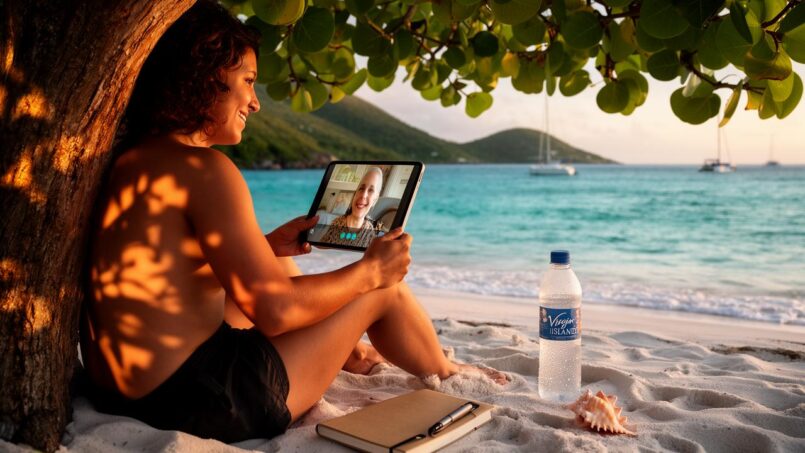
In the age of unlimited video calls, it might be tempting to think technology erases homesickness. It eases it, certainly, but it can also paradoxically prolong it if you spend your evenings scrolling through photos of your old life or feeling every family event you’re missing in real time.
Specialists on the subject insist on balance: stay connected, but leave room for building your new life.
Set Communication Rituals
Rather than waiting “to have time” to call family or friends, scheduling regular slots helps stabilize expectations on both sides. A weekly or biweekly call with parents, a call with best friends every two months, short but frequent messages with siblings… these anchor points calm the fear of “being forgotten.”
To maintain the connection without frustration despite the time difference, it helps to plan regular check-ins. This avoids the feeling of rejection from a delayed reply. As a complement, flexible tools like family WhatsApp groups, sharing photos via a dedicated app, or sending short daily videos help nurture the relationship without overwhelming your mind.
Part of homesickness comes from feeling that loved ones “don’t understand” your new life. You then feel misunderstood on both sides: a stranger where you are, and increasingly out of sync with those back home.
To make your expatriation tangible for your loved ones, it’s effective to share ordinary moments: a photo of waiting for the ferry to Water Island, a short video of a visit to the farmers’ market, a view from your place in La Grande Princesse or Peterborg. Mentioning concrete challenges—like difficulty finding certain products in stores or the surprising amount of your first electricity bill—also helps illustrate the local reality very concretely.
The key is to do this without falling into systematic comparison (“it was better before,” “everything is better here than back home”). It’s a different world, with its strengths and limitations.
Creating a “Home” in Your Living Space
Persistent homesickness can often be read in the state of your home: half-unpacked suitcases, bare walls, few personal items. As if unconsciously, you remain in transit, ready to leave at any moment.
In the U.S. Virgin Islands, where it’s common to first rent for 6 to 12 months, the desire to invest in decoration might feel limited. Yet a few targeted choices are enough to turn an impersonal space into a reassuring base.
To anchor your daily life and signal that you live here, it’s advisable to decorate your interior with personal items from your home country (family photos, symbolic objects, fabrics, books) and combine them with local creations. These include ‘Made in the USVI’ crafts, works by local artists, ceramics from St. Croix workshops, or colorful textiles bought at Sunday markets.
The kitchen plays a key role: learning to prepare a local dish inspired by the markets of Charlotte Amalie or Christiansted while also making a recipe from your home country on weekends creates sensory bridges between the two worlds. The smell of a familiar recipe in the Caribbean air can be a powerful balm.
Giving Yourself Permission to Seek Professional Help
When homesickness becomes persistent—with constant sadness, loss of interest, social withdrawal, sleep or appetite issues, decreased work performance—it’s no longer just a rough patch. Studies show a clear link between intense, prolonged homesickness and disorders like depression, anxiety, or adjustment disorders.
The islands of St. Thomas and St. Croix have multidisciplinary practices offering psychotherapy, psychiatry, psychological testing, and integrated approaches that address sleep, nutrition, and chronic stress.
Practices like Island Therapy Solutions or Holistic Wellness and Psychiatry, for example, work on the links between mental state and biological factors (nutrition, hormones, inflammation, toxin exposure, etc.), potentially complementing traditional therapy with lifestyle adjustments. Other facilities on St. Croix or St. John focus more on classic psychotherapeutic interventions (cognitive behavioral therapy, family therapy, support groups).
The territory has set up a specific fund to guarantee access to mental health care, preventing people from forgoing it for financial reasons. Although targeted, this measure shows institutional recognition of psychological distress—a reality taken seriously beyond the islands’ tourist image.
Finally, for those who prefer to consult a professional outside the territory—due to concerns about lack of confidentiality in an island setting, or to speak in their native language—there are teleconsultation platforms for people living abroad. They connect you with psychologists and psychotherapists accustomed to issues of expatriation, culture shock, and homesickness.
Embracing Local Culture Rather Than Enduring It
Feeling at home also means understanding the codes around you. In the U.S. Virgin Islands, culture is a lively mix of African, Caribbean, and European influences, with a history shaped by Danish colonization and the current connection to the United States.
Major cultural events like Carnival or J’ouvert are not just shows. They embody a collective memory through music, dance, costumes, steelpan, and street food. Participating, even as a spectator, allows you to move beyond seeing the archipelago as an exotic backdrop and immerse yourself in its living social fabric, of which you can gradually become a part.
In daily life, details like the use of the local dialect, the quick move to first names, the role of churches in social life, and large Sunday family gatherings are all clues. Rather than judging them by the standards of your home country, trying to understand them—by asking questions, observing, sometimes accepting that you won’t grasp everything right away—eases the inner tension.
Looking Ahead: Accepting That Adaptation Takes Time
Research on life abroad shows that it’s not uncommon for homesickness to return in waves, even after several years. A missed birthday, a distant bereavement, a birth far away, a health crisis, a hurricane—all these events can rekindle the pain of being far from loved ones.
Homesickness typically follows a downward curve over one to two years, but can resurface periodically. It’s better to anticipate it than fear it. To cope, adopt strategies like strengthening your local routines, reconnecting with your support network, planning a trip back or a visit from loved ones, and engaging in beneficial physical and social activities.
Looking ahead also means thinking about your horizon: do you want to stay for a few years, settle long-term, or do you clearly plan to return eventually? There’s no universal right answer, but having a vision—even a flexible one—keeps you from staying in an anxious in-between where you feel you belong neither here nor there.
The Paradox of the U.S. Virgin Islands
Living in the U.S. Virgin Islands means accepting a constant paradox. On one hand, a living environment many envy: beaches listed as natural heritage, national parks, warm water, near-constant light, a relaxed vibe, warm and direct human relationships. On the other hand, a high cost of living, sometimes stifling insularity, a small community where anonymity barely exists, and a real cultural adaptation with its share of homesickness.
This homesickness is not a sign of failed integration, but of a strong attachment to what came before. Managing it does not mean denying your history or turning away from what you left behind. Rather, it’s about building a bridge between two worlds, so that one does not cancel out the other.
Reflection on homesickness
By leaning on what the archipelago offers best—tight-knit communities, omnipresent nature, a rich associational life, mental health resources, opportunities to create active and social routines—it’s possible to gradually transform this tug-of-war into a more peaceful form of nostalgia: one that tells where you come from, without preventing you from putting down roots where you are.
Homesickness, in the U.S. Virgin Islands as elsewhere, is a stage. It can be rough, sometimes long, but it is surmountable. And often, those who overcome it become the best guides for those who come after them, proving by example that you can live between two shores without losing yourself, and even find a richer identity.
Disclaimer: The information provided on this website is for informational purposes only and does not constitute financial, legal, or professional advice. We encourage you to consult qualified experts before making any investment, real estate, or expatriation decisions. Although we strive to maintain up-to-date and accurate information, we do not guarantee the completeness, accuracy, or timeliness of the proposed content. As investment and expatriation involve risks, we disclaim any liability for potential losses or damages arising from the use of this site. Your use of this site confirms your acceptance of these terms and your understanding of the associated risks.

Cyril Jarnias is an independent expert in international wealth management with over 20 years of experience. As an expatriate himself, he is dedicated to helping individuals and business leaders build, protect, and pass on their wealth with complete peace of mind.
On his website, cyriljarnias.com, he shares his expertise on international real estate, offshore company formation, and expatriation.
Thanks to his expertise, he offers sound advice to optimize his clients' wealth management. Cyril Jarnias is also recognized for his appearances in many prestigious media outlets such as BFM Business, les Français de l’étranger, Le Figaro, Les Echos, and Mieux vivre votre argent, where he shares his knowledge and know-how in wealth management.





