
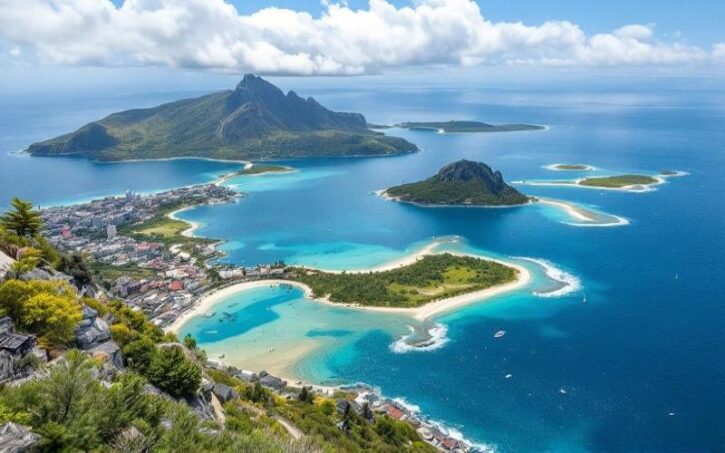
 Published on and written by Cyril Jarnias
Beyond the palm-fringed beaches and cruise ships, the history of the U.S. Virgin Islands is a dense narrative of ancient migrations, European conquests, slavery, revolts, transfers of sovereignty, and repeated rebuilding after hurricanes. This small Caribbean territory concentrates, across a few islands and islets, a history that touches on Indigenous peoples, European colonial empires, the Atlantic slave trade, American military strategy, and contemporary issues of resilience and self-determination.
From the First Peoples to the Arrival of Europeans
Long before the sails of Christopher Columbus appeared on the horizon, the islands of St. Croix, St. Thomas, and St. John had been inhabited for nearly 3,000 years. Archaeologists have uncovered pottery, stone, bone, and shell tools, as well as petroglyphs, that testify to continuous and diverse human occupation.
The Indigenous Societies of the Virgin Islands
The earliest known inhabitants are generally associated with the Ciboney—sometimes called the Ortoiroid—a nomadic people from South America. Arriving around 300 to 400 BCE, these groups lived by fishing, hunting, and gathering. They did not cultivate the land, used stone tools, and built simple shelters. Traces of this culture have been found, among other places, at Krum Bay on St. Thomas.
From 400 BCE, the Igneri, also known as the Saladoid culture, settled in the islands for nearly 1,000 years. These agricultural communities cultivated cassava, mastered pottery, lived in large circular houses, and had a complex social organization. Their archaeological remains are visible at several coastal sites, notably at Tortola, Salt River Bay, and Cinnamon Bay.
Later, the Taíno emerged, an advanced branch of the Arawaks. They spoke the Taíno language, built structured villages with hereditary chiefs (caciques), played ball games on ceremonial ball courts, and produced a rich material and artistic culture. At Salt River Bay on St. Croix, the only pre-Columbian ball court still visible in the entire Caribbean is found. On St. John, petroglyphs at Reef Bay and sites near Lameshur Bay complete this archaeological landscape.
The Island Caribs, or Kalinago, arrived last, between the 14th and 15th centuries, from the Lesser Antilles. A warrior people, they gradually pushed back and absorbed the Taíno populations. On St. Croix, they called the island Cibuquiera (“stony land”), while the Taíno referred to it as Ay Ay (“land of rivers”).
The diversity of these settlement waves is still seen in pottery: thermoluminescence analyses have revealed the coexistence, between 600 and 1200 CE, of Ostiones, Monserrate, Santa Elena, La Hueca, and Cuevas styles, a sign of a true pre-Columbian cultural crossroads.
The Violent Encounter with Christopher Columbus
When Christopher Columbus reached the archipelago on his second voyage in November 1493, the Indigenous societies were still present and organized. He named the entire group of islands Santa Ursula y las Once Mil Vírgenes—in honor of Saint Ursula and her “eleven thousand virgins”—a name that would later be simplified to Las Vírgenes.
On November 14, 1493, during his second voyage, Christopher Columbus anchored in Salt River Bay, on the north side of St. Croix. A skirmish broke out between his men and Kalinago (Carib) warriors. Historians consider this episode the first documented fight between the Spanish and the Indigenous peoples of the “New World.” Impressed by the hail of arrows he had endured, Columbus named the site *Cabo de la Flecha*, meaning “Cape of Arrows.”
In the following days, he sighted St. Thomas and then St. John without landing. But very quickly, beyond these fleeting contacts, Spanish colonial pressure made itself felt. From Puerto Rico, the Spanish launched repeated raids to capture Indigenous people destined for the mines of Hispaniola and other large islands. At the beginning of the 16th century, the Crown even explicitly authorized war and the extermination of the Caribs. European diseases did the rest: by the end of the 16th century, the Indigenous population of the Virgin Islands was virtually annihilated.
European Rivalries and the First Colonial Era
Freed, in the eyes of the European powers, of their original inhabitants, the islands became a strategic and economic prize. On the Caribbean Sea, French, English, Dutch, Spanish, and Danish flags crossed, clashed, and replaced one another.
St. Croix, a Battleground
St. Croix is the island where this colonial game of musical chairs was most clearly played out. Starting in 1625, English and Dutch settlers coexisted there, working the land with a few enslaved Africans. Internal tensions and external competition were not long in coming: after a conflict in 1645, some of the Dutch withdrew to St. Eustatius, and then in 1650, a Spanish expedition from Puerto Rico drove out the English.
A few months later, French colonists, organized by Governor General Philippe de Longvilliers de Poincy, retook the island and integrated it into the French colonial realm. St. Croix then passed through the hands of various French companies, including the Order of Malta, before returning to the Company of the American Islands and then to the Company of the West Indies. Despite slavery and plantations, the colony remained fragile, and at the end of the 17th century, France resolved to abandon it, undermined by insufficient profitability and high mortality.
Denmark Enters the Scene
Meanwhile, a new actor stepped forward: the Dano-Norwegian kingdom. In 1671, King Christian V granted a charter to the Danish West India Company, which received a monopoly on colonization and trade in certain Atlantic territories. As early as 1672, the company seized St. Thomas, where it established a first settlement of about 113 colonists. The following year, the first enslaved Africans were landed there.
Very quickly, St. Thomas became a pivot of the Atlantic slave trade and Caribbean smuggling. Its deep harbor, future Charlotte Amalie, offered safe anchorage for slave ships, but also for pirates like Blackbeard or Captain Kidd. The status of free port, proclaimed in 1755, further reinforced this role as a hub.
St. Thomas
St. John, smaller, was long disputed with the British, settled on Tortola. The Danes claimed it as early as the 1680s, but it was not until 1718 that they managed to establish a real settlement at Coral Bay. Within a few years, the jungle was covered with sugar, cotton, and tobacco plantations. On St. John, there were already about a hundred plantations by 1733, whose workforce relied almost entirely on slavery.
That same year, 1733, the Danish setup was completed with the purchase of St. Croix from France for 750,000 livres. The treaty, ratified by Louis XV, stipulated that the island could not be ceded to another power without France’s consent. Frederik Moth was appointed the first Danish governor of St. Croix and set about transforming the island into a vast colonial sugar plantation.
The Era of Plantations and the Atlantic Slave Trade
St. Croix, St. Thomas, and St. John, now united under the name “Danish West Indies,” entered their sugar age. The landscape became covered with mills, slave quarters, sugar factories, and distilleries. Profits, fueled by the sweat and blood of Africans, flowed to Copenhagen and European trading houses.
The Danish Atlantic Triangle
The Danish West India and Guinea Company orchestrated a triangular trade comparable to that of its British and French rivals. From Danish forts on the Gold Coast (present-day Ghana)—notably Christiansborg and Fredensborg—ships left Africa loaded with enslaved men, women, and children. They were landed at St. Thomas, St. John, or St. Croix, sold at the market in Charlotte Amalie, or directly to planters.
Estimated number of Africans deported to the colonies by Danish companies.
The Danish crown, aware of the financial stakes, resumed direct control of the colonies in 1754, which officially became the “Danish West Indies.” This centralization did nothing to alleviate the harshness of the slavery system; quite the contrary.
Life Under Slavery in the Danish West Indies
Life on the plantations was punctuated by exhausting labor in the sugar cane fields, in the sugar processing workshops, or in the distilleries. Mortality was high, especially since it was often more profitable in the planters’ eyes to import new captives than to ensure the natural reproduction of the enslaved.
The table below illustrates the extent of the demographic imbalance and the growth of the enslaved population on St. Croix.
A minority of the total population, mainly consisting of European colonists and a few freedmen.
The vast majority and rapidly growing, composed of individuals held in slavery.
| Period / Island | Estimated Enslaved Population | Estimated White Population |
|---|---|---|
| St. Croix, 1742 | 1,906 | 360 |
| St. Croix, 1754 | 7,566 | – |
| St. Croix, late 18th c. | 18,000 – 20,000 | 1,500 – 2,000 |
| All colonies, ca. 1850 | approx. 41,000 inhabitants (majority descendants of enslaved) | – |
Faced with this oppression, resistance took multiple forms: work slowdowns, destruction of tools, poisonings, escapes. In northwestern St. Croix, fugitive slaves founded a settlement known as Maroonberg. It is also estimated that about 300 people managed to escape to Puerto Rico.
But several open uprisings profoundly marked the history of the U.S. Virgin Islands.
Revolts, Abolition of Slavery, and the Crisis of the Sugar System
In the heart of the 18th and 19th centuries, the islands experienced a series of revolts and mobilizations that would eventually shake the slavery system and then the Danish colonial order.
The St. John Insurrection of 1733
On St. John, the combination of drought, epidemic, and a tightening of the slave codes created an explosive climate. In November 1733, about 150 enslaved people from the Akan-Akwamu group, recently arrived from the Gold Coast, rose up. They seized several plantations, killed colonists, and managed to control the island for about six months.
The Danish response mobilized troops from Martinique, both French and Swiss, to retake the island plantation by plantation. The repression was fierce. Many insurgents, refusing capture and torture, chose suicide. The insurrection, officially crushed at the end of the summer of 1734, left a lasting imprint: it led the authorities to drastically strengthen surveillance and punishment measures, and it inspired other plots. Between 1733 and 1776, at least 14 slave revolts are recorded in the Danish West Indies.
Abolition of the Slave Trade and Persistence of Slavery
At the end of the 18th century, under the influence of the ideas of the Enlightenment and the debates stirring Europe, Denmark was a relative pioneer in proclaiming, in 1792, the future abolition of the Atlantic slave trade in its colonies. In reality, the measure only took effect in 1803, and slavery continued to thrive on the plantations. The British, for their part, abolished the slave trade in 1807 and slavery in 1834, freeing more than 5,000 people in the neighboring British Virgin Islands.
Despite the abolition of the legal trade, slavery remained the foundation of the sugar economy in the Danish West Indies until the mid-19th century. Living conditions for the enslaved remained extremely difficult, while social tensions intensified with the spread of emancipation ideas throughout the Caribbean region.
1848: Emancipation Won on St. Croix
In the mid-19th century, the crisis was particularly brewing on St. Croix, where a large majority of the population was still in servitude. In 1848, there was talk in Copenhagen of a gradual abolition plan, deemed unacceptable on the ground. Around Frederiksted, a charismatic leader, Moses Gottlieb—better known as General Buddhoe—organized the mobilization, supported by other figures like “Admiral” Martin King.
On July 2, about 8,000 people converged on Fort Frederik, an enormous number for the island’s scale. The next day, an ultimatum was issued: immediate freedom or generalized insurrection. Faced with this pressure and the fear of a bloodbath, Governor General Peter von Scholten, although lacking royal instructions to that effect, proclaimed on his own authority the abolition of slavery in all the Danish West Indies. This was July 3, 1848, a date that would become Emancipation Day.
The planters initially tried to challenge this decision, arguing the illegality of the proclamation. But the deed was done; Denmark would eventually ratify the end of slavery, even though tensions persisted for years over wages, working conditions, and the mobility of the former enslaved.
After Emancipation: Labor Revolt and Sugar Decline
The end of slavery meant neither the end of social domination nor prosperity. One year after emancipation, an 1849 law strictly regulated wages and the organization of agricultural work, making plantation jobs unattractive. The colonial power, worried about losing its workforce, limited freedom of movement.
Over the decades, competition from European beet sugar and the rise of Cuba as a sugar giant weakened the Danish islands. From the 1820s onward, plantation profitability had already been declining. After 1848, the system faltered outright. Large estates became depopulated, many domains were abandoned, and the total population began to stagnate or even decline through emigration.
In 1878, exasperation culminated in a great workers’ revolt on St. Croix, known as the “Fireburn.” Refusing what they considered unjust wages, workers set fire to more than 50 plantations. Three women, soon nicknamed “Queen Mary,” “Queen Agnes,” and “Queen Matilda,” led the movement. Mary Thomas, the most famous, was sentenced to death, a sentence commuted to life imprisonment in the metropole, in Copenhagen, before returning to St. Croix in the 1880s.
This insurrection is considered the most important labor riot in Danish history. It revealed the dead end of the agro-colonial model. At the end of the 19th century, the Danish West Indies, also struck by hurricanes and a tsunami in 1867, appeared increasingly as a financial burden for Copenhagen.
From Danish Burden to American Strategic Pivot
The repeated economic difficulties and geopolitical marginality of the islands fueled a long debate in Denmark: should it cling to this deficit colony or derive a final profit by selling it to an interested power?
A Territory for Sale
As early as the 1860s, the United States, in the midst of the Civil War, took an interest in the islands as a potential naval base. In 1867, a first treaty was signed for the cession of St. Thomas and St. John for $7.5 million, with guarantees for the inhabitants (local referendum, property rights, choice of nationality). Copenhagen ratified the agreement, and a vote was organized in the islands in 1868, where the population overwhelmingly approved the sale. But the U.S. Senate, in the midst of a political storm surrounding President Andrew Johnson, refused to give its approval before the deadline expired in 1870.
Amount in millions of dollars of the U.S. offer to purchase the three main islands in 1902.
Denmark even briefly explored the idea of exchanging the islands for territories lost in Europe (Schleswig), without success. Meanwhile, the colony’s budget deficits deepened, and the sugar economy collapsed almost entirely.
The World War Changes the Game
At the beginning of the 20th century, two events reshaped American priorities: the opening of the Panama Canal, which made the Caribbean basin a vital strategic zone, and the outbreak of World War I. In Washington, concern grew that Germany, an ally of Denmark and already present in the region through its shipping lines, might gain a foothold in the Danish West Indies to establish a submarine base.
In 1915, a labor leader from the islands, D. Hamilton Jackson, traveled to Denmark to expose the social misery of the inhabitants and plead for economic and political integration with the United States. His plea found an echo with a majority of Danish parliamentarians, convinced it was time to turn the colonial page.
Price set in millions of dollars in gold for the sale, equivalent to over $600 million in present value.
An important element was added to the discussions: Copenhagen wanted to obtain from Washington explicit recognition of its sovereignty over Greenland. Lansing agreed and issued a declaration by which the United States pledged “not to object” to the extension of Danish political and economic interests over all of Greenland. This “Greenland Compromise” would later become a legal reference point in debates over the two territories.
The Transfer of 1917 and the Birth of an American Territory
Once the agreement was concluded, the treaty had to be ratified on both sides. The U.S. Senate gave its approval in September 1916. In Denmark, an advisory referendum was held in December: 64.2% of voters supported the sale. The Danish Parliament ratified this choice, and King Christian X signed the treaty.
On March 31, 1917, the cession of the Danish Virgin Islands (St. Thomas, St. John, and St. Croix) to the United States became effective. In Washington, Secretary of State Lansing handed Danish Minister Constantin Brun a gold draft for $25 million. In the islands, at 4:00 p.m., synchronized ceremonies marked the transfer of sovereignty. At St. Thomas, in front of the barracks, the Danish flag was lowered to the sound of the national anthem and saluted by 21 cannon shots, then replaced by the Stars and Stripes, honored by an identical salute and an American patriotic song.
Danish Admiral Henri Konow and American Admiral Edwin T. Pollock exchanged a sword salute, while a prayer was offered by a bishop. The former colony changed its name to officially become the “Virgin Islands of the United States.” March 31 would become “Transfer Day,” a holiday commemorated each year with parades, historical reenactments, and ceremonies.
At that time, most inhabitants did not have a voice in an official referendum. But a symbolic vote, organized on St. Croix by D. Hamilton Jackson, showed near-unanimous support for the sale: over 4,000 votes in favor, only seven against.
The integration of the islands into the U.S. legal order was gradual and marked by a constant tension between military strategy, local democratic aspirations, and economic constraints.
In the immediate aftermath of the sale, the islands were managed by the U.S. Navy. Congress, through the Organic Act of March 1917, created a governor position appointed by the president, with extensive civil, military, and judicial powers. In practice, senior Navy officers succeeded one another at the head of the territory, starting with Rear Admiral James H. Oliver.
The priority for the United States was strategic: secure the port of Charlotte Amalie, strengthen naval presence in the Caribbean, and control routes to the Panama Canal. To that end, the Navy invested in infrastructure, health programs, and a school system aimed at “Americanizing” the population, promoting English exclusively at the expense of local languages and cultures, including the Danish heritage.
On the economic front, the situation remained delicate. Agriculture, already exhausted, continued to decline; cultivated area decreased by about 60% during the naval period. The total population shrank by about 16%, as many young people sought opportunities elsewhere, despite an improvement in mortality. The islands became a “poorhouse” for the United States, according to the acerbic remark of President Herbert Hoover during a visit in 1931.
Faced with these difficulties, a movement organized in the islands to demand more political rights and the end of military rule. Figures like D. Hamilton Jackson and Rothschild Francis, supported by the ACLU, argued for full citizenship and civilian administration.
In 1931, authority over the Virgin Islands was transferred from the Navy to the Department of the Interior, with the decommissioning of the naval base at St. Thomas and the appointment of a civilian governor. U.S. citizenship was granted to most inhabitants in 1927, then extended to all native-born islanders residing in the United States in 1932.
At the same time, monetary reform continued: the Danish currency, the West Indian daler, remained in circulation until 1934, when the U.S. dollar became the only legal tender.
The following table summarizes some milestones of this institutional shift:
| Year | Major Institutional Event |
|---|---|
| 1917 | Cession to the United States, administration by the U.S. Navy |
| 1927 | U.S. citizenship granted to most inhabitants |
| 1931 | Transfer of administration to the Department of the Interior |
| 1934 | Replacement of the daler by the U.S. dollar |
| 1936 | First civilian Organic Act: expanded suffrage and elected councils |
| 1954 | Revised Organic Act: unified territorial government |
Toward Internal Autonomy: Organic Acts and Political Evolution
Once naval tutelage was lifted, the U.S. Virgin Islands began a slow path toward greater self-government, without attaining the status of a federated state.
Birth of Local Institutions
In 1936, the revised Organic Act established a number of political rights. Suffrage was widely expanded, ending the very restrictive property-based criteria inherited from Danish colonial law, which had allowed only about 5.5% of the population to vote. Two elected municipal councils were instituted, one for St. Thomas–St. John, the other for St. Croix, with the possibility of meeting as a joint Legislative Assembly. The governor, still appointed by the President of the United States, retained an extensive veto power, but it could be overridden by a two-thirds vote of the Assembly. The U.S. Congress reserved the right to annul any local law.
In 1954, the Revised Organic Act reorganized the government of the Virgin Islands. It abolished the municipal councils to establish a centralized territorial government with a unicameral legislature (Legislature of the Virgin Islands) and a clearer separation of executive, legislative, and judicial powers. The act also authorized the creation of a Department of Education and a Board of Education, thereby strengthening local management of public instruction.
At the same time, the political landscape structured itself around parties such as the Democratic Party of the Virgin Islands, the Independent Citizens Movement, and the Republican Party of the Virgin Islands.
Governors, Suffrage, and Constitutional Debates
For several more decades, the governor remained appointed by the White House. In 1946, William H. Hastie’s appointment by President Harry Truman was historic: he became the first Black governor of a U.S. territory, breaking a racial taboo and symbolizing a tentative recognition of the territory’s predominantly African-descended majority.
Year of the first direct election of the governor of the U.S. Virgin Islands, won by Melvin H. Evans.
Since the 1970s, several constitutional conventions have attempted to provide the territory with its own constitution, replacing the 1954 Organic Act. To date, five conventions have drafted proposals, including the one in 2009, ultimately rejected by the governor, the president, and Congress for incompatibility with federal law. A 2020 referendum approved the convening of a sixth convention, a sign of a persistent desire to clarify political status and local rights.
On the international front, the UN continues to list the territory among non-self-governing entities. A recent poll shows public opinion rather favorable to remaining within the Union in a modernized form: a majority of respondents support the prospect of full statehood and reject the idea of independence. The institutional reality, however, remains that of an unincorporated territory, where the U.S. Constitution does not apply in its entirety and representation in Congress is limited.
Economic Transformations: From Sugar to Tourism and Oil, Then Back to Services
Alongside these political developments, the economy of the U.S. Virgin Islands underwent several dramatic shifts, moving from a sugar-based model to heavy dependence on tourism and, for a few decades, a major oil industry.
Sugar Lagoon, Tourist Sea
In the aftermath of the transfer to Washington, agriculture was in ruins. Sugar cane could no longer compete with European beet sugar or Cuban production. Abandoned plantations were fragmented, and fallow land expanded. Until the mid-20th century, the islands’ economy relied on a mix of subsistence agriculture, small port trade, and Danish, then American, financial transfers.
After World War II, the context changed radically. The strategic position of the ports, the improvement of air and sea links, and the ban on travel to Cuba from the late 1950s directed American tourist flows toward new Caribbean destinations. The U.S. Virgin Islands, a territory under the American flag with no complex customs formalities for U.S. citizens, became a preferred choice.
This is the percentage of St. John covered by the Virgin Islands National Park, created in 1956.
The following table provides an overview of the structural shift in the economy:
| Period | Dominant Economic Characteristic |
|---|---|
| Before 1820 | Sugar plantations, cotton, tobacco, indigo, slave trade |
| 1820–1950 | Sugar decline, weak agriculture, ports and transfers |
| 1950s–1970s | Rise of tourism, role of free ports |
| 1960s–2000 | Tourism + large industry (refinery, alumina, watchmaking) |
| After 2010 | Tourism, services, finance, rum, with industrial legacy |
By the late 1960s, tourism represented a major share of GDP. Today, it contributes nearly 60% of the wealth produced, and more than half of all jobs are directly or indirectly linked to this sector. Each year, between 2.5 and 3 million visitors arrive, of whom about 93% are from the United States, the majority arriving by cruise ship.
The Oil Saga of St. Croix
While the islands’ image remains tied to beaches and duty-free shopping, St. Croix underwent massive industrialization from the 1960s, driven by energy.
Refining capacity reached in the mid-1970s, in barrels per day, making the HOVENSA site one of the largest complexes in the world.
The refinery became the largest private employer in the archipelago, providing up to 20% of the territory’s GDP and about 2,000 direct jobs, not counting induced jobs in construction, logistics, and services. In the 1990s, a massive investment program generated a historic peak in overall employment in the Virgin Islands.
In parallel, an alumina plant processed imported bauxite, and watch assembly workshops were established starting in 1959, benefiting from tax advantages and privileged access to the U.S. market.
The End of an Industrial Cycle and Ultra-Dependence on Tourism
However, this industrial model proved fragile. Faced with high costs, increased international competition, and environmental constraints, the HOVENSA refinery ceased operations in 2012. Within months, more than 2,000 jobs disappeared. The macroeconomic consequences were brutal: in 2012, territorial GDP fell by 13%, mainly due to an 80% collapse in exports, largely composed of refined petroleum products.
Targeted refining capacity in barrels per day for the attempted partial restart of the site in 2016.
The watchmaking industry also closed its doors: the last watch assembly plant shut down in 2015. The alumina plant had already ceased operations in 2009. This withdrawal left tourism, the public sector, and a few industries such as rum distilling, construction, pharmaceuticals, and electronics as the pillars of activity.
Recent figures highlight this structure:
| Sector (ca. 2012) | Estimated Share of GDP | Comment |
|---|---|---|
| Services (including tourism) | ~78% | Main economic driver |
| Industry | ~20% | Oil (declining), rum, construction, etc. |
| Agriculture | ~2% | Very limited local production |
Rum distilleries occupy a unique place in this configuration. Agreements with giants like Diageo or Fortune Brands provide for significant industrial investments on St. Croix and guarantee a flow of “cover-over” — the reimbursement to the Virgin Islands of nearly all federal excise taxes collected on rum exported to the mainland. These mechanisms represent major revenues, estimated at about $100 million for a recent reference year, and are accompanied by cumulative financial commitments valued at several billion dollars over three decades.
Hurricanes, Resilience, and Heritage Protection
Located in the heart of the Atlantic hurricane belt, the U.S. Virgin Islands live to the rhythm of hurricane seasons. Since the 18th century, archives and collective memory record devastating storms, tsunamis, and repeated rebuilding.
From Hugo to Irma and Maria: A History of Storms
Accounts already mention, in 1780, a “great hurricane” that led to the abandonment of a Quaker community. In the 19th century, major cyclones struck St. Thomas and St. Croix, including the one in 1867, which coincided with a major earthquake in the Anegada Passage, generating a tsunami in the harbor of Charlotte Amalie. The RMS Rhone sank, causing over a hundred casualties.
In the 20th century, hurricanes continued to sweep the region, but their local frequency was variable: five between 1916 and 1932, then a long respite of more than half a century before the return of major storms. Starting in 1989, a new sequence began.
Hugo, in 1989, crossed southern St. Croix with its eyewall, causing massive destruction and an immediate employment drop of about 10%. In 1995, the archipelago was hit by a series of systems, including Marilyn, which left about 20% of the population homeless and caused over $2 billion in damage. This disaster led authorities to tighten building codes, especially for roofs.
The late 1990s and 2000s saw a succession of Bertha, Georges, Lenny, Omar, and others. Then, in 2017, the territory faced what many describe as the hardest test in its recent history: two major Category 5 hurricanes, Irma and Maria, separated by only two weeks, with a third, Jose, passing nearby between them.
The figures give the measure of the shock:
| Parameter (2017) | Estimate for the Territory |
|---|---|
| Homes destroyed or damaged | > 22,500 (over 52% of housing stock) |
| Buildings heavily destroyed | > 5,000 |
| Percentage of buildings damaged | > 80% |
| Power poles affected | ~13,500 |
| Total economic damage | $3.5 – $4 billion |
| Indirect economic losses | > $1.5 billion |
| Residents evacuated for medical care | ~800 patients |
| First responders and military mobilized | ~13,000 people |
Public infrastructure was hit hard: schools, community centers, government buildings, roads, ferry docks, ports, and airports sustained heavy damage. The three main hospitals were damaged; at St. Thomas, the Schneider Regional Medical Center lost part of its roof, saw its emergency department flooded, and its cancer center destroyed. Electronic medical records were lost, and the emergency room had to operate under tents for several weeks.
Electricity supply was almost completely interrupted, with 90% of overhead lines affected. Drinking water, telephone, and internet were cut off. For several months, many residents faced precarious living conditions, with difficulties accessing healthcare, medication, housing, and employment, especially with the near-total shutdown of the tourism industry.
Building Back Stronger: Resilience Policies
From fall 2017, a vast reconstruction effort was organized. Governor Kenneth E. Mapp created a Task Force for Recovery and Resilience, bringing together territorial officials, elected representatives, experts, federal representatives, business leaders, and civil society members. Over 500 people participated in workshops and public meetings on St. Croix, St. John, and St. Thomas to define priorities.
Nearly $8 billion in federal funding was allocated for reconstruction.
In the healthcare sector, specific appropriations were granted to institutions, with for example several million dollars for the Schneider Regional Medical Center, supplemented by recovery loans. Schools were rebuilt or renovated, such as the new campus of the Elmore Stoutt High School in the region, and temporary ferry terminals were established to quickly restore inter-island connections.
The national parks — Virgin Islands National Park on St. John, Buck Island Reef National Monument near St. Croix, and other protected sites — underwent a vast restoration program. Divers replaced over 400 mooring buoys, some anchored to two-ton concrete blocks, while teams gradually reopened beaches, trails, and roads (Maho Bay, Trunk Bay, Hawksnest Beach, Honeymoon Beach). Archaeologists assessed damage to historical and pre-colonial sites, aware that hurricanes damage not only modern infrastructure but also millennia-old remains.
Preserving Heritage in the Age of Climate Change
The recurrence of major cyclones, combined with sea level rise and coastal erosion, poses a sharp challenge to the preservation of cultural and natural heritage. Territorial authorities rely on both federal legislation, such as the National Historic Preservation Act of 1966, and local laws, such as the Virgin Islands Antiquities and Cultural Properties Act of 1998, to strengthen conservation efforts.
Over $10 million was set aside for the rehabilitation of historic sites in the Virgin Islands after Hurricanes Irma and Maria.
Preservation guides have been developed for the historic districts of Charlotte Amalie, Christiansted, Frederiksted, and Cruz Bay, detailing standards to follow regarding materials, colors, signage, or architectural restoration. Innovative initiatives, such as 3D modeling of plantation ruins like Annaberg, enrich the conservators’ toolkit.
The goal is twofold: protect tangible heritage (synagogues, Moravian churches, forts, townhouses, sugar mill remains) and intangible heritage (stories, songs, Creole languages, traditional agricultural practices), while integrating climate resilience as a new imperative.
A Caribbean Society in Motion
The history of the U.S. Virgin Islands is not just about changing flags or economic curves. It is also reflected in the composition of its population, the languages spoken on its streets, and the emergence of public figures who have shaped education, politics, and collective memory.
Demographic Mosaic
According to the 2020 census, the territory has just over 106,000 inhabitants. St. Thomas is home to about 48%, St. Croix 47%, St. John 4%, while Water Island remains nearly uninhabited. People identifying as Black or African American make up about three-quarters of the population, Whites slightly less than one-sixth, with the rest divided among Asians, American Indians, people of multiple origins, and other categories. Nearly one in five residents identifies as Hispanic or Latino.
The history of 20th-century immigration explains the diversity of the Virgin Islands. Migrants arrived from Puerto Rico (1930s–1950s), the English-speaking Lesser Antilles, the Dominican Republic, Haiti, Jamaica, the Philippines, and South America. From the 1960s, a significant Palestinian community settled on St. Croix, often active in commerce. This workforce was attracted by the closure of sugar bases and the development of tourism and the oil industry.
On St. Croix, more than half of residents were born in the territory, about 16% in the rest of the United States, nearly 4% in other U.S. territories or Puerto Rico, and 29% abroad — of which over 90% from elsewhere in the Caribbean.
English is the official language and most used in administration, schools, and media. But Creole English, with local variants such as “Crucian” on St. Croix, remains omnipresent in everyday conversation. French Creole (notably from Haiti), Spanish, and Arabic complete the linguistic landscape, making the streets of Charlotte Amalie or Christiansted a true Caribbean crossroads.
Notable Figures and the Memory of Emancipation
Over the centuries, many personalities have marked the territory’s trajectory. Some are directly associated with the struggle against oppression, such as General Buddhoe, who animated the 1848 mobilization, or the three “queens” of St. Croix, Mary Thomas, Agnes, and Matilda, symbols of the 1878 Fireburn.
Several women have left their mark on various sectors of Virgin Islands society: Bertha C. Boschulte in education; Arona Petersen for preserving oral traditions; Clarice Bryan, the archipelago’s first female lawyer; Lorraine Berry, a senator who initiated many laws; LaVerne Ragster, the first female president of the University of the Virgin Islands; and Donna Christensen, a delegate to Congress who represented the territory and highlighted the work of activists like attorney Edith Bornn.
Official commemorations reflect this social history. July 3, Emancipation Day, is celebrated as a founding moment, blending ceremonies, speeches, historical reenactments in Frederiksted, and cultural activities. March 31, Transfer Day, recalls the shift to American sovereignty and still sparks debate today about the benefits and limitations of that change.
Between Dependence and Aspiration for Self-Determination
More than a hundred years after the sale to the United States, the U.S. Virgin Islands remain caught in a tension between, on one side, the advantages of being attached to a wealthy power—military protection, budget transfers, access to the U.S. market, citizenship—and, on the other, the frustrations of a territorial status that grants neither full political representation nor complete constitutional autonomy.
Repeated attempts to establish a constitutional convention in Puerto Rico fail due to a lack of local consensus on the form of self-governance, which also must be acceptable to the U.S. Congress. Debates regularly oscillate between options of becoming a full-fledged state, increasing autonomy, or opting for free association with the United States. Recent polls indicate that public opinion leans more toward strengthening ties with the United States, even full statehood, rather than independence.
At the same time, the archipelago’s vulnerability to external shocks—devastating hurricanes, closures of key industries like HOVENSA, fluctuations in global tourism, the COVID-19 pandemic—reminds us that economic dependence remains strong. The territory must contend with high debt, some of the highest energy costs in the world (largely due to the use of hydrocarbons for electricity generation and water desalination), and a very concentrated productive base.
It is within this framework that sustainable planning and cultural policy initiatives, such as Vision 2036 or strategies for enhancing tangible and intangible heritage, are situated. They aim to articulate economic development, social cohesion, and historical memory, in order to transform a past often marked by pain—slavery, colonial domination, and natural disasters—into a resource for building a more resilient future.
The history of the U.S. Virgin Islands, from its first Taíno villages to its contemporary constitutional debates, through sugar plantations, slave revolts, the 1917 transfer, and post-hurricane reconstructions, is thus that of a small territory at the center of large global dynamics. A history where the Atlantic winds carry, still and always, the echoes of voices that, for centuries, have demanded dignity, recognition, and the ability to decide their own destiny.
Disclaimer: The information provided on this website is for informational purposes only and does not constitute financial, legal, or professional advice. We encourage you to consult qualified experts before making any investment, real estate, or expatriation decisions. Although we strive to maintain up-to-date and accurate information, we do not guarantee the completeness, accuracy, or timeliness of the proposed content. As investment and expatriation involve risks, we disclaim any liability for potential losses or damages arising from the use of this site. Your use of this site confirms your acceptance of these terms and your understanding of the associated risks.

Cyril Jarnias is an independent expert in international wealth management with over 20 years of experience. As an expatriate himself, he is dedicated to helping individuals and business leaders build, protect, and pass on their wealth with complete peace of mind.
On his website, cyriljarnias.com, he shares his expertise on international real estate, offshore company formation, and expatriation.
Thanks to his expertise, he offers sound advice to optimize his clients' wealth management. Cyril Jarnias is also recognized for his appearances in many prestigious media outlets such as BFM Business, les Français de l’étranger, Le Figaro, Les Echos, and Mieux vivre votre argent, where he shares his knowledge and know-how in wealth management.





